
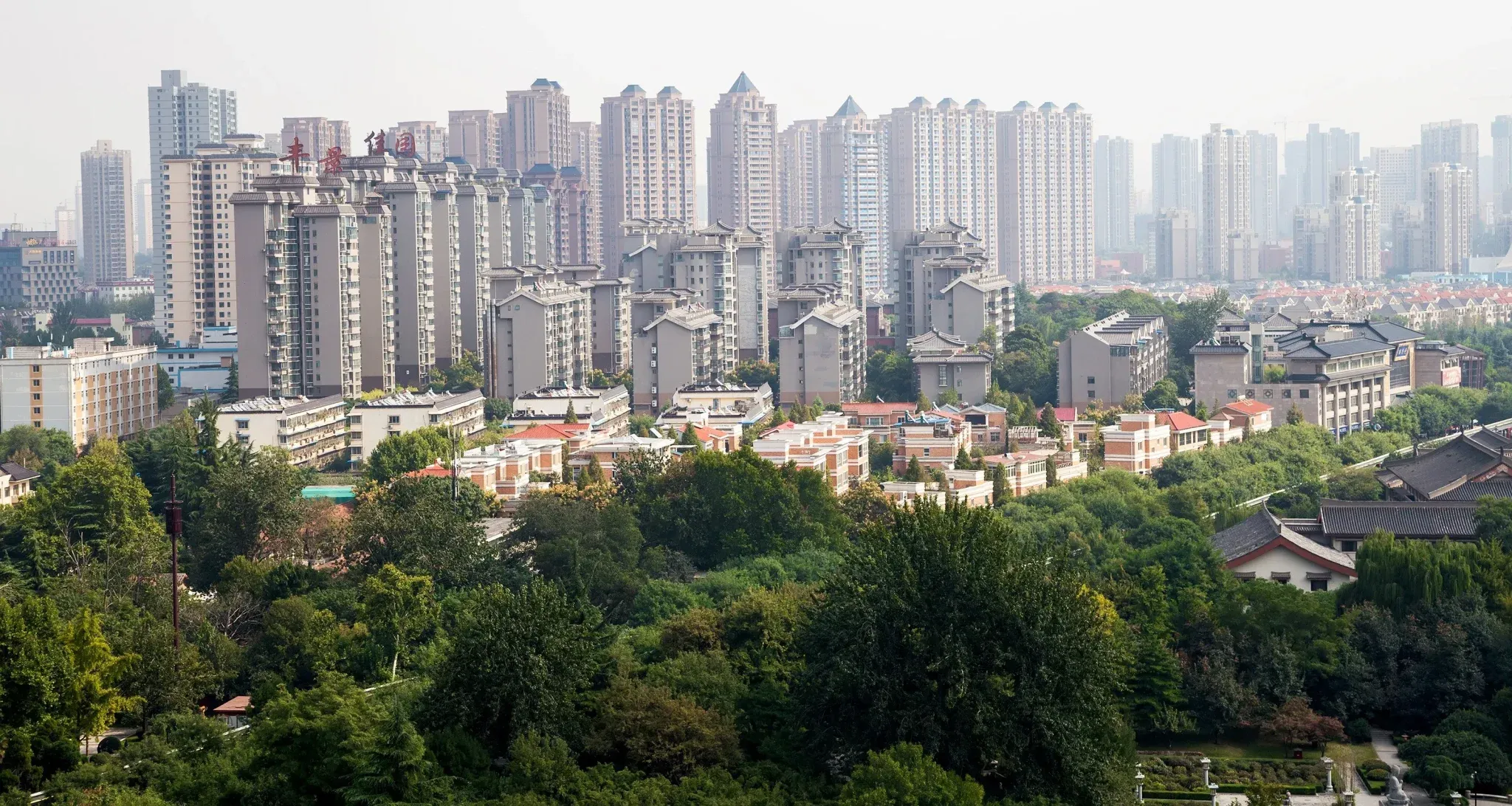
The drive to build cities has fueled growth and left Beijing with a debt puzzle it can no longer ignore.
Building the Future, Borrowing the Present
For four decades, China’s economic rise has been synonymous with urbanization. Highways, skyscrapers, and sprawling metro systems transformed a largely rural society into the world’s largest urban experiment. By 2025, more than 65% of Chinese citizens live in cities, compared with less than 20% in 1980.
But the gleaming skylines come with a price: debt. Local governments, the engines of urban expansion, have relied heavily on land sales and off-balance-sheet borrowing to fund infrastructure. As property markets weaken and land revenues shrink, debt burdens are becoming unsustainable.
The Numbers Behind the Dilemma
China’s total debt — including government, corporate, and household now exceeds 300% of GDP. Local government financing vehicles (LGFVs), created to bypass borrowing restrictions, have accumulated trillions of yuan in liabilities. Some regions spend more on debt servicing than on education or healthcare.
The slowdown in the real estate sector compounds the problem. Developers once paid handsomely for land, supplying local governments with steady income. With property sales slumping since 2021, that lifeline is drying up.
Urbanization at a Crossroads
The dilemma is acute: cities still need investment in housing, transit, and green infrastructure, yet the fiscal model is cracking. Beijing has pledged to upgrade urban housing and reduce inequality between megacities and smaller towns, but without reform, funding remains uncertain.
Rural-to-urban migration is slowing, and in some cases reversing, as younger workers seek opportunities abroad or in digital sectors rather than construction sites. The old engine of growth building more cities for more migrants is losing momentum.
Policy Experiments in 2025
In response, Beijing has rolled out a series of measures:
- Debt Swaps: Allowing local governments to exchange high-interest LGFV debt for lower-cost municipal bonds.
- Targeted Bailouts: The central government has selectively supported regions at risk of default to prevent contagion.
- Urban Renewal Programs: Instead of building new cities, emphasis is shifting to retrofitting existing housing, improving sustainability, and investing in social services.
Yet these measures are piecemeal. Without structural change, the cycle of borrowing to build and building to borrow may persist.
The Social Dimension
Urbanization was not just an economic project but a social contract. Migrant workers moved to cities with the expectation of better wages and services. But debt constraints now limit local governments’ ability to expand healthcare, education, and pensions. Rising inequality between wealthy coastal hubs and indebted interior cities threatens social stability.
Protests over unpaid wages, unfinished housing projects, and shrinking public services reflect growing frustration. For the Communist Party, managing expectations in urban areas is as critical as balancing budgets.
Global Ripples
China’s debt-urbanization puzzle has global consequences. Construction slowdowns reduce demand for steel, cement, and energy, hitting exporters from Australia to Brazil. Financial markets watch nervously for defaults that could undermine confidence in Chinese bonds.
Meanwhile, multinational firms reliant on China’s infrastructure boom, from engineering to luxury housing, are recalibrating strategies. The world’s appetite for “the China story” is tempered by concerns that its urban growth miracle may no longer deliver the same returns.
Conclusion: Rethinking the Model
China’s urbanization has been one of the most ambitious projects in human history, lifting hundreds of millions into cities and creating new centers of wealth. But the debt underpinning this transformation now demands a reckoning.
In 2025, the challenge for Beijing is not whether to urbanize, but how to urbanize sustainably. Balancing growth, debt, and social expectations will define the next phase of China’s development. Without a new model, the miracle risks turning into a burden that future generations must carry.

