
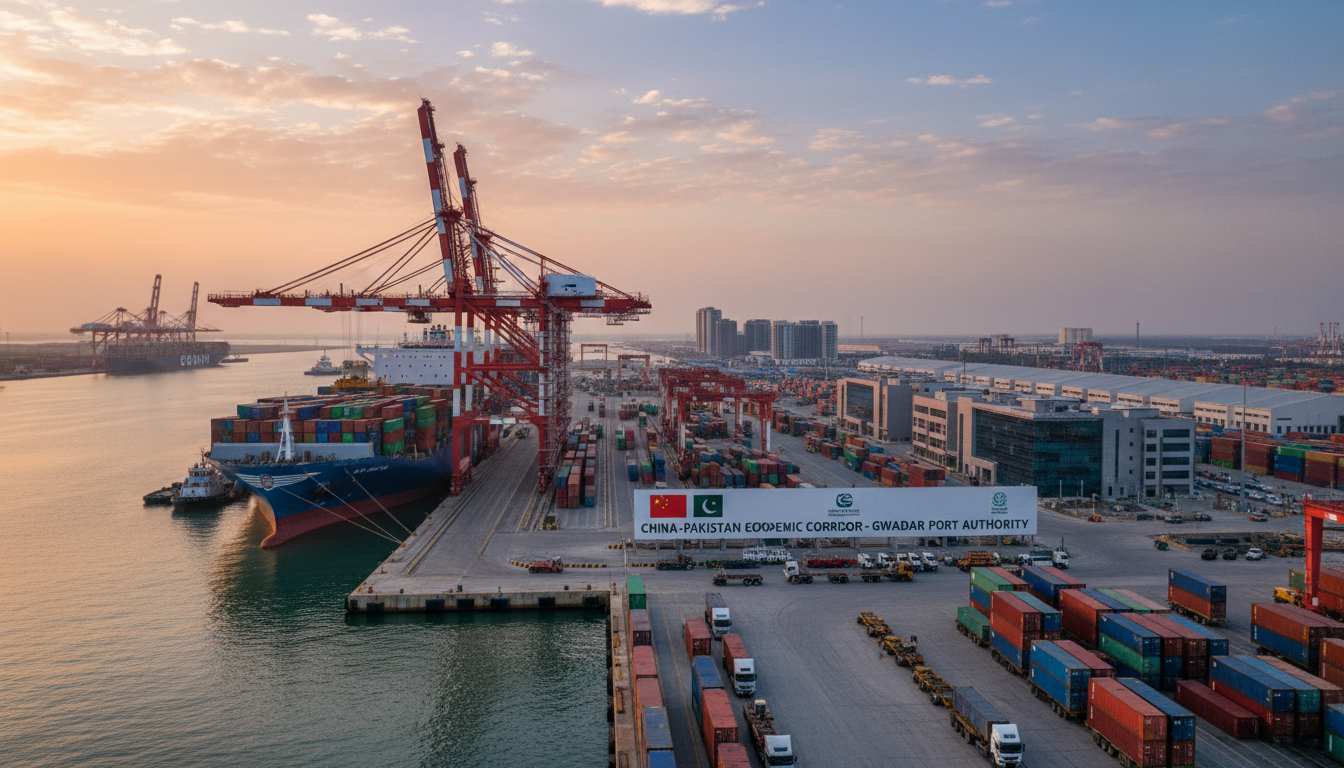
China’s Growing Investment in Pakistan
Islamabad is pushing new financing and project clearances as cross border business ties tighten. Officials say Chinese investment in Pakistan is being routed toward energy reliability, logistics and export focused industry, alongside renewed talks on payment security. Today, ministries are issuing rolling briefings to lenders and contractors to keep disbursements moving while import controls are calibrated. Live market conditions have made foreign currency planning central to every negotiation, and cabinet statements are being treated as an operational Update for investors. The Foreign Office also linked the economic track to regional stability messaging after Xi Jinping called for respect for sovereignty in the Middle East, as carried by Xinhua.
Impact on Pakistan’s Economic Landscape
In the current cycle, the Pakistan economy is being judged by cash flow discipline and the ability to lift export capacity quickly. The State Bank of Pakistan has described a policy focus on narrowing external financing gaps and improving the functioning of payments, and that framing shapes how major projects are sequenced. Today, business groups are watching Live order books in textiles and engineering goods to see whether logistics upgrades translate into shipments, with additional context in China Pakistan trade and Hormuz risks. One Update being tracked by investors is how trade routes respond to security risks around the Gulf, which affects freight and insurance pricing, alongside this market snapshot from South China Morning Post on mainland China gold demand.
Key Projects Under China’s Belt and Road Initiative
BRI projects in Pakistan are now being handled with tighter milestone reporting and a push to show measurable throughput gains. Planning officials have pointed to transport links, grid upgrades and port adjacent industrial zones as the immediate levers for cutting delivery times and stabilizing power for factories, and Chinese investment in Pakistan is also showing up in contractor mobilization schedules and procurement decisions that prioritize spare parts and maintenance capacity, not just new builds. Today, project managers run Live coordination calls with provincial departments to avoid right of way delays, and each site meeting ends with an action list Update for financiers. A comparable look at Chinese capital flows appears in China Channels $6.1B Into Brazil, Global Top Slot.
Challenges and Opportunities for Pakistan
Execution risks are being debated more openly as Pakistan tries to turn infrastructure into export revenue. The Ministry of Planning has emphasized improved contract governance, faster dispute resolution and better alignment between federal and provincial approvals, while business chambers press for predictable taxation. Today, the opportunity is to convert logistics efficiency into China-Pakistan trade volume that can support manufacturing scale, but Live constraints include foreign exchange timing and local supply chain depth. Another Update investors watch is how public sector entities manage payment backlogs to contractors and power producers, since that affects delivery timelines, with 2026 budget discussions in Islamabad cited by business groups as a near term test. Analysts also cite worker safety and community engagement as practical requirements for avoiding stoppages in industrial zones.
Future Prospects of Sino-Pakistani Economic Ties
Near term prospects hinge on whether new project phases are tied to clear export outcomes and transparent financial terms. China-Pakistan trade discussions are now framed around products that can compete regionally, with policymakers signaling that industrial policy will be judged by shipment data, not announcements. Live monitoring of port dwell time, grid stability and clearance processes is likely to stay central as both sides try to protect returns in a volatile rate environment, and Chinese investment in Pakistan is being assessed against those operational metrics. An Update expected from economic managers is the sequencing of incentives for special economic zones and the governance model used to audit performance. Today, if execution holds and policy remains consistent, momentum can shift from construction to sustained industrial output.

