
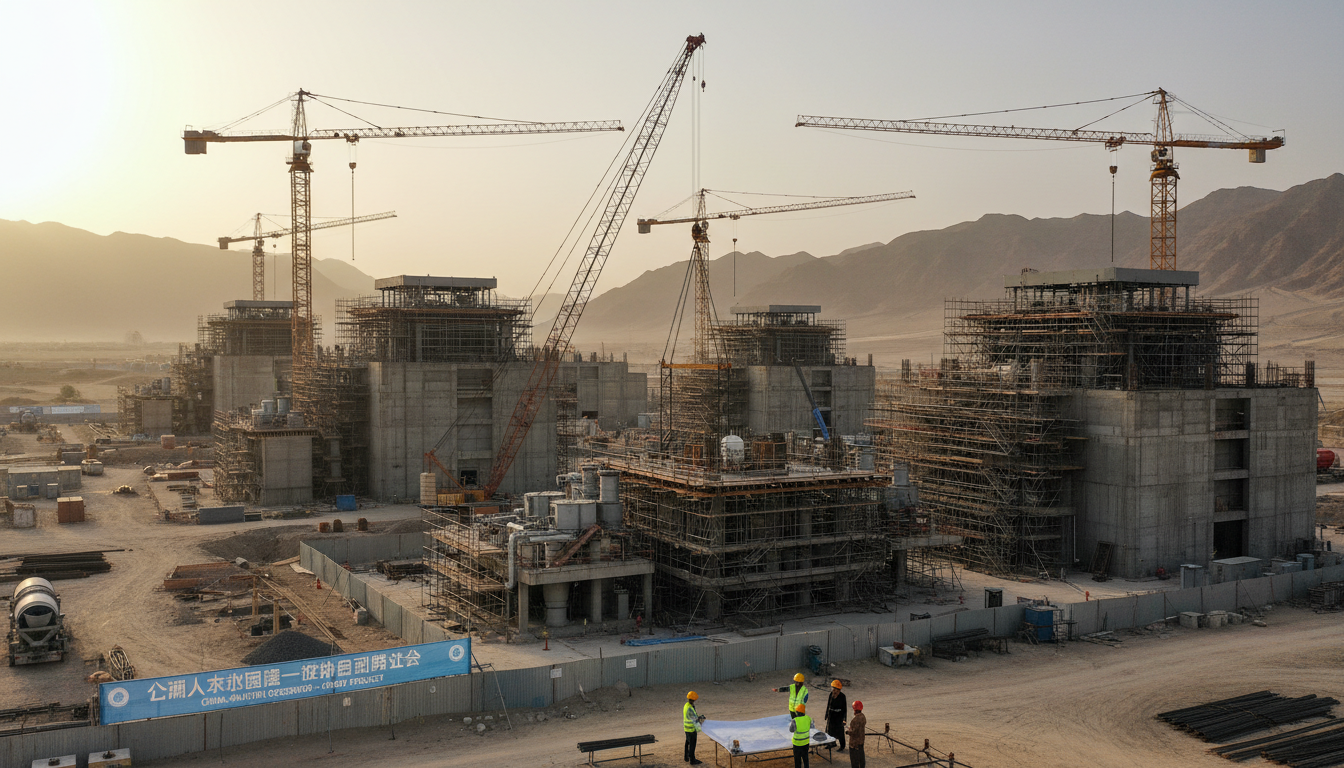
Chinese Investments in Energy Sector
Chinese investment in Pakistan is now most visible in the power pipeline, where financiers, EPC contractors and equipment makers are helping move projects from paperwork to megawatts. Across Pakistan energy projects, the emphasis has shifted to stabilising supply through a mix of generation upgrades, fuel logistics and grid discipline, rather than simply announcing headline capacity. Today, dispatch conditions show why reliability matters, with industrial feeders and urban load centres demanding steadier frequency control. Live operational reporting from sector control rooms increasingly guides decisions on maintenance windows and fuel scheduling. The latest Update from policymakers has focused on improving plant availability and payment clarity so producers can run at optimal capacity, while keeping the reform agenda tied to measurable performance.
Impact on Infrastructure Development
What separates this cycle from earlier investment waves is the knock on effect on infrastructure that keeps electricity moving. Transmission reinforcements, substation modernisation and protection systems are being aligned with CPEC developments, so new supply does not bottleneck before it reaches factories and households. Coordination with port and rail logistics also matters, because fuel delivery and spare parts determine uptime as much as turbines do. In the wider context of China-Pakistan trade, energy hardware imports, transformers, switchgear and monitoring platforms have become a steady commercial channel. A recent regional policy brief on digital currency signalling illustrates how payment systems and cross border settlement shape trade confidence, and it is discussed in Digital Yuan updates on regional signals as an indicator of where financing standards are heading.
Economic Benefits for Pakistan
The economic payoff is clearest in reduced production stoppages and improved planning for energy intensive sectors. When power is predictable, textile mills can commit to delivery dates, fertiliser plants can manage continuous runs, and SMEs can keep shifts without costly generator fallback. These improvements translate into stronger export readiness and steadier tax receipts, which supports fiscal management even as the sector works through legacy circular debt. Today, business desks track electricity availability alongside interest rates because the two variables jointly determine working capital stress. Live market conditions also show that firms value grid stability as a competitiveness tool, not a social service. An Update from industry groups has highlighted that better energy delivery can narrow unit costs and increase utilisation, especially where captive power used to be the default.
Challenges and Criticisms
Criticism persists, and it is most credible when it sticks to execution risks. Payment arrears, tariff politics and governance gaps can undermine the very projects meant to provide relief, while public scrutiny grows around contract transparency and the cost of imported fuel exposure. Grid losses and theft remain structural, so new capacity alone cannot fix a system that leaks revenue before it reaches generators. For context on how Chinese policy messaging frames overseas cooperation, reporting at Global Times coverage of overseas economic cooperation frequently emphasises mutual development, yet domestic stakeholders in Pakistan demand clearer accountability and stronger regulator enforcement. Another pressure point is environmental compliance and local impacts, which requires credible monitoring rather than periodic statements. The sector’s next gains depend on governance improvements that match the scale of the capital deployed.
Future of Sino-Pak Relations
The forward path for Sino-Pak relations in energy will likely be judged on fewer but better projects, stronger grid integration and more disciplined financing. Policy planners are increasingly linking generation decisions to demand forecasting, industrial clustering and transmission readiness, instead of pursuing capacity targets in isolation. Pakistan’s ability to convert CPEC developments into durable growth will depend on contract management, credible dispute resolution and a payment chain that does not collapse under political cycles. On the diplomatic track, Islamabad has highlighted broader engagement alongside economic cooperation, including crisis diplomacy and regional stability, which intersects with investor confidence. Related discussion can be read in coverage of China backing CPEC amid regional tensions, while the finance and trade angle is explored in reporting on finance talks and trade links. If these threads stay aligned, energy cooperation can remain a central pillar without repeating earlier inefficiencies.

