
A high level meeting signals continuity
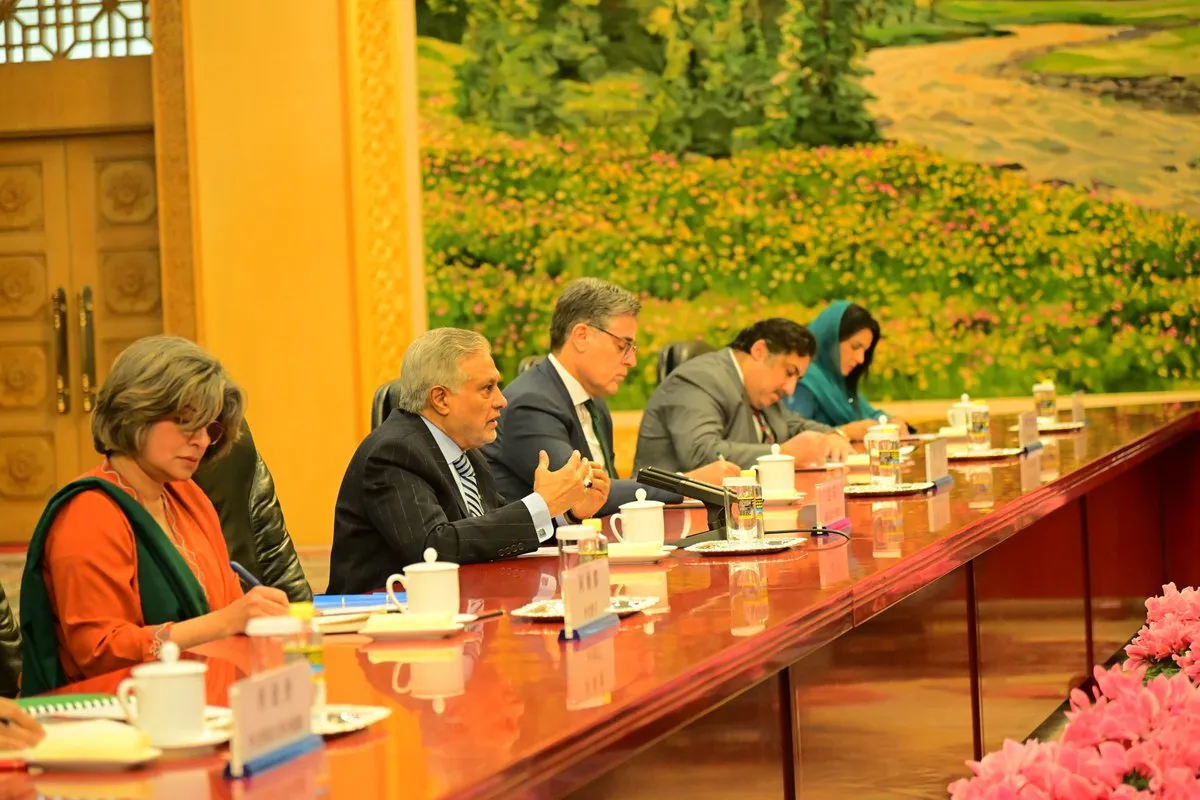
In Beijing Chinese Vice Premier Ding Xuexiang met with Mohammad Ishaq Dar who also serves as Pakistan’s deputy prime minister. The meeting reflected a continued emphasis on high level engagement between the two countries at a time when regional and global dynamics remain fluid. It also reinforced Beijing’s intention to maintain steady momentum in one of its most enduring bilateral relationships.
Framing a shared future in the new era
During the talks Ding Xuexiang called for joint efforts to accelerate the building of an even closer China Pakistan community with a shared future in the new era. This phrase has become a central concept in China’s diplomacy signaling long term alignment rather than short term cooperation. By linking it to practical goals such as improving the well being of people in both countries Ding highlighted the expectation that strategic ties should translate into tangible social and economic benefits.
An iron clad friendship revisited
Ding described the relationship between China and Pakistan as an iron clad friendship that has grown stronger over time. This characterization has long been used to capture the resilience of bilateral ties across political changes and external pressures. Reiterating it in a high level setting served to reassure both domestic and international audiences that the partnership remains a strategic constant for Beijing.
Leadership guidance as a foundation
The vice premier noted that leaders from both countries reached new and important common understandings during meetings held last year. These understandings now provide strategic guidance for future cooperation. In China’s diplomatic framework such references to top level consensus are significant as they establish political direction for ministries agencies and project level cooperation.
Strengthening political mutual trust
A key theme of the meeting was political mutual trust and mutual support. Ding emphasized the importance of close coordination on core interests and major concerns. For both sides trust is viewed as the foundation upon which economic and security cooperation rests. In an increasingly polarized international environment reaffirming political alignment carries added weight.
Aligning development strategies
Ding also stressed the need to better synergize development plans. This reflects a recognition that large scale cooperation requires alignment between national priorities rather than parallel efforts. For Pakistan this means integrating Chinese supported initiatives with domestic development goals. For China it involves ensuring that cooperation remains sustainable and responsive to local conditions.
Improving the quality of cooperation
Beyond scale Ding highlighted improving the quality and performance of pragmatic cooperation. This suggests a shift from focusing solely on headline projects toward emphasizing efficiency outcomes and long term impact. Quality driven cooperation is increasingly important as both countries face fiscal constraints and public scrutiny over large investments.
Coordinating on regional and global affairs
The meeting also addressed communication and coordination on major international and regional issues. China and Pakistan often share similar views on sovereignty multilateralism and opposition to coercive practices. Enhanced coordination allows both sides to amplify their voices in international forums while managing regional challenges through dialogue rather than confrontation.
Pakistan’s perspective on stability
For Pakistan maintaining close ties with China provides strategic stability amid a complex foreign policy landscape. Engagement at this level signals Islamabad’s intent to keep Beijing as a central partner while navigating relations with other global actors. The meeting underscored that China Pakistan ties are framed as comprehensive rather than transactional.
A partnership tested by expectations
As cooperation deepens expectations also rise. Public attention increasingly focuses on how strategic language translates into everyday outcomes such as jobs infrastructure and economic opportunity. Calls to improve quality and performance reflect an awareness of this reality on both sides.
Looking ahead with managed ambition
The meeting between Ding Xuexiang and Mohammad Ishaq Dar did not announce new initiatives but reinforced direction and intent. By emphasizing shared future political trust and practical cooperation China and Pakistan signaled continuity rather than abrupt change. In a period of global uncertainty this steady approach remains a defining feature of their relationship.

