
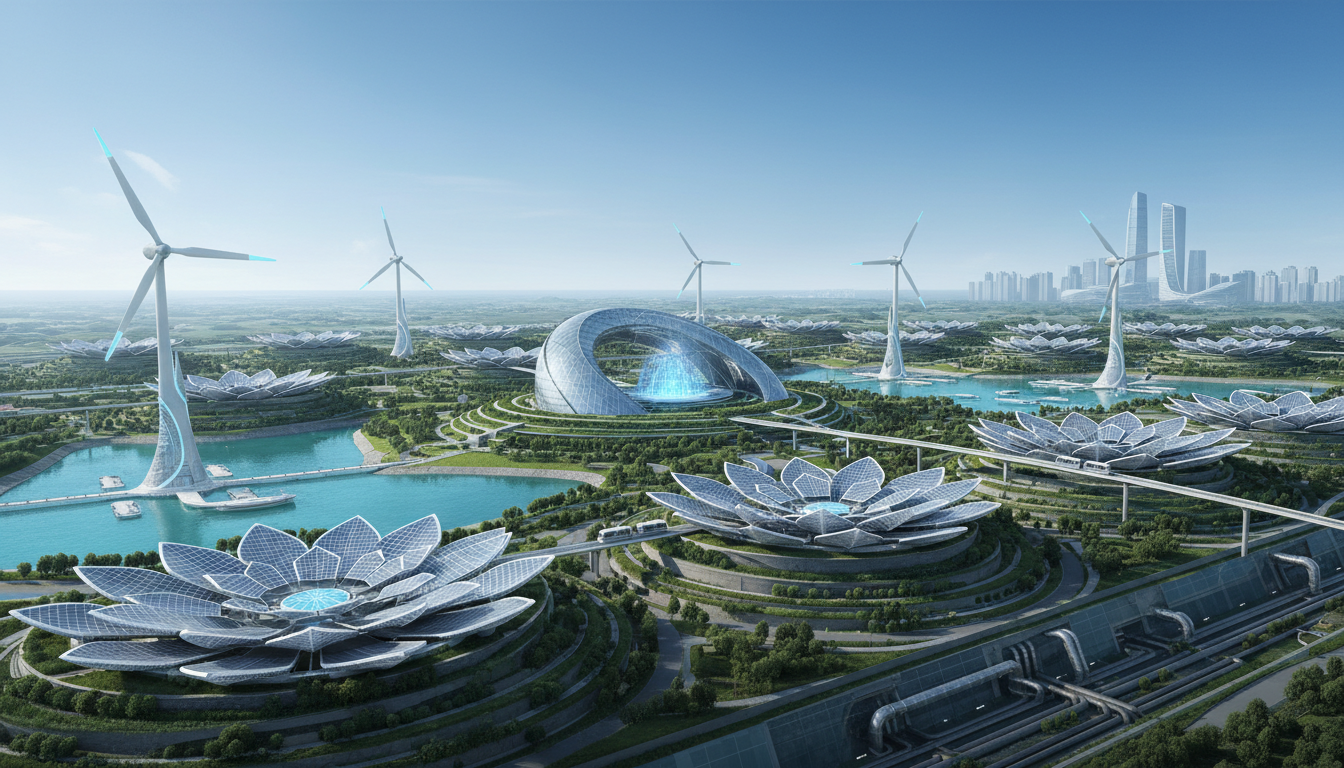
China’s Strategic Shift Towards New Energy
China new energy development is being pushed into a higher gear after Xi Jinping urged faster construction of a “new energy system,” a message that reads less like aspiration and more like an operational order for planners, grid firms and provincial governments. Today the emphasis is on turning installed capacity into reliable supply by tightening coordination between wind, solar, hydro, nuclear and flexible thermal power, while raising the share of non fossil energy without destabilizing industrial demand. Live conditions in the power market have exposed where curtailment, weak interprovincial transmission and uneven storage deployment still block performance. The clearest Update from Xi’s remarks is that pace matters, and that energy security and decarbonisation are being treated as parallel scorecards rather than sequential goals.
Xi Jinping’s Vision for Energy Transformation
Xi Jinping’s direction on the energy system carries a political logic, align investment, technology and regulation around a single timetable, then measure outcomes in dispatchable megawatts, not just headline projects. The message lands as China energy policy tightens expectations for provincial execution, including faster grid expansion, smarter dispatch rules and stronger resilience against extreme weather and peak load shocks. An example of how state signals ripple across sectors can be seen in broader economic coordination debates tracked in coverage of virtual US China trade talks, because energy hardware supply chains and capital flows respond to diplomatic tone as much as domestic targets. Today policy language is calibrated to force delivery, and the Live focus is on accountability systems that translate central guidance into construction schedules and connection dates.
Challenges and Opportunities in Energy Development
Execution risks sit where engineering meets markets. Rapid renewable buildouts can outrun grid integration, and the toughest bottleneck is not turbines or panels but the ability to move electricity across provinces at the moment it is generated. That is why Xi’s push highlights network planning, storage and demand side response as core infrastructure, not add ons. Another stress point is balancing reliability with emissions goals during heatwaves and industrial surges, when coal units still provide inertia and backup. The opportunity is that these constraints create room for new investment models, including hybrid plants, long duration storage and digital forecasting that reduces reserve requirements. A practical Update for investors is that permitting, interconnection and dispatch reforms will decide winners more than raw capacity additions, and Live grid data will increasingly guide policy tweaks.
Comparative Analysis with Global Energy Trends
Globally, governments are learning that energy transitions are judged on stability, not slogans. China is aligning with a trend seen in Europe and parts of Asia, where renewables expansion is paired with accelerated transmission, flexible generation and storage procurement to keep prices and reliability in check. The difference is scale and speed, China can mobilize state owned grid companies and industrial policy faster than most peers, but that also raises scrutiny over curtailment, regional inequality and the carbon footprint of supply chains. For international context on official messaging and sector priorities, reporting and releases at China Daily’s energy coverage provide a window into how China communicates progress and constraints. Today comparisons matter because capital markets benchmark project performance, and Live competition over clean tech exports links domestic policy outcomes to global demand patterns.
Future Outlook for China’s Energy Sector
Looking ahead, the practical meaning of Xi’s call is a shift from headline capacity races to system level performance metrics, including peak shaving capability, frequency control, cross regional transfer capacity and the speed at which new resources can be dispatched. That favors provinces and firms that can deliver integrated portfolios rather than single asset builds, and it puts pressure on market rules to reward flexibility and reliability. It also intersects with regional connectivity and infrastructure priorities, including corridors that matter to partners such as Pakistan, where energy security and industrial planning are linked through CPEC cooperation. The next Update to watch is whether reforms accelerate spot trading, ancillary services pricing and storage remuneration, because those mechanisms determine whether renewables can operate as firm capacity. Today the contest is about building a modern energy system that stays Live under stress.
China’s near term playbook will likely hinge on three operational levers: faster transmission approvals, tighter coordination between provincial targets and national dispatch, and stronger incentives for flexibility from both supply and demand. The sports journalism analogy is apt, results come from execution under pressure, and the grid is the arena where every policy call is tested in real time. A credible measure of progress is how quickly new renewable bases achieve high utilization hours without forcing emergency coal ramp ups, while keeping industrial users supplied at predictable prices. Another marker is whether extreme weather events trigger fewer load shedding incidents and smaller price spikes, showing that resilience investments are working. Live monitoring and transparent reporting will make it harder to hide underperformance, and each Update will increasingly be about reliability statistics rather than ceremonial project launches. Today that shift in scorekeeping is the story behind Xi’s push.

