
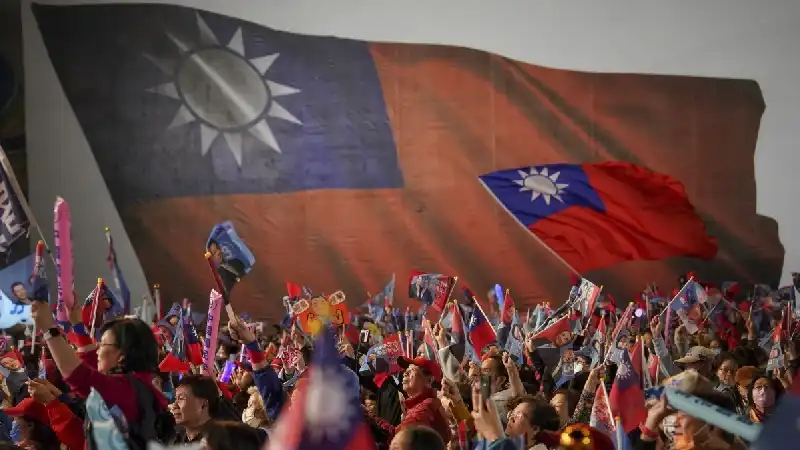
Taiwan’s political landscape is entering a new phase as its two leading opposition forces prepare to cooperate in upcoming local elections, a move widely viewed as a strategic step toward future national contests. The Kuomintang and the Taiwan People’s Party have agreed to coordinate efforts for the elections scheduled later this year, aiming to avoid vote fragmentation and improve their chances against the ruling Democratic Progressive Party. Analysts believe this cooperation could serve as a testing ground for a broader alliance ahead of the 2028 leadership race.
The local elections, often described as a nationwide midterm vote, will determine leadership positions across Taiwan’s administrative structure. Voters will select mayors, county magistrates, councillors and village representatives in multiple categories, making the elections a key indicator of public sentiment. By aligning their candidate nominations, the opposition parties hope to present a unified front in key regions where competition between them previously allowed ruling party candidates to secure victories. This coordination is expected to play a crucial role in closely contested districts.
Political observers say the agreement reflects a growing recognition within the opposition that unity is essential in a highly competitive environment. In past elections, divided opposition votes often weakened their overall performance despite significant support bases. The current strategy focuses on maximizing efficiency by reducing overlap in candidate selection and concentrating resources where they are most effective. This shift signals a more pragmatic approach, with both parties prioritizing long term influence over short term rivalry in Taiwan’s evolving political landscape.
Leaders from both sides have emphasized that the cooperation marks an important step toward stronger alignment. Officials from the Kuomintang described the agreement as a milestone that brings together different political camps with shared objectives. Representatives from the Taiwan People’s Party also highlighted the importance of collaboration, noting that voters increasingly expect coordinated efforts to deliver meaningful political alternatives. While the alliance remains focused on local elections, its broader implications are already drawing attention from analysts and political strategists.
The push for unity comes at a time when Taiwan’s domestic politics are closely watched due to regional tensions and shifting geopolitical dynamics. The ruling Democratic Progressive Party has maintained a strong position in recent years, benefiting from its governance record and its stance on cross-strait relations. However, opposition parties continue to hold significant influence at the local level, making these elections a critical battleground. The outcome could shape not only local governance but also the balance of power leading into future national elections.
Beyond electoral strategy, the cooperation also reflects deeper changes within Taiwan’s political system. Voters have become more focused on governance performance, economic stability and local development issues rather than purely ideological divisions. This has encouraged parties to adopt more flexible approaches and build partnerships where necessary. Analysts suggest that if the current alliance proves successful, it could lead to more structured cooperation frameworks and potentially redefine how opposition politics operates in Taiwan.
As the election campaign gains momentum, attention is expected to intensify on how effectively the two parties implement their agreement on the ground. Candidate selection, campaign messaging and voter outreach will all play key roles in determining whether the strategy delivers results. Early signals suggest cautious optimism among opposition supporters, though challenges remain in balancing cooperation with individual party identities. The coming months will provide clearer insight into whether this alliance can reshape Taiwan’s political dynamics.
The latest developments indicate that both parties are moving forward with preparations for coordinated campaigns across multiple regions. Political analysts are closely monitoring candidate announcements and local alliances as indicators of how the strategy will unfold. While uncertainties remain, the agreement has already introduced a new dynamic into Taiwan’s political environment, setting the stage for a competitive election cycle and offering a glimpse into possible alignments for the 2028 leadership contest.

