
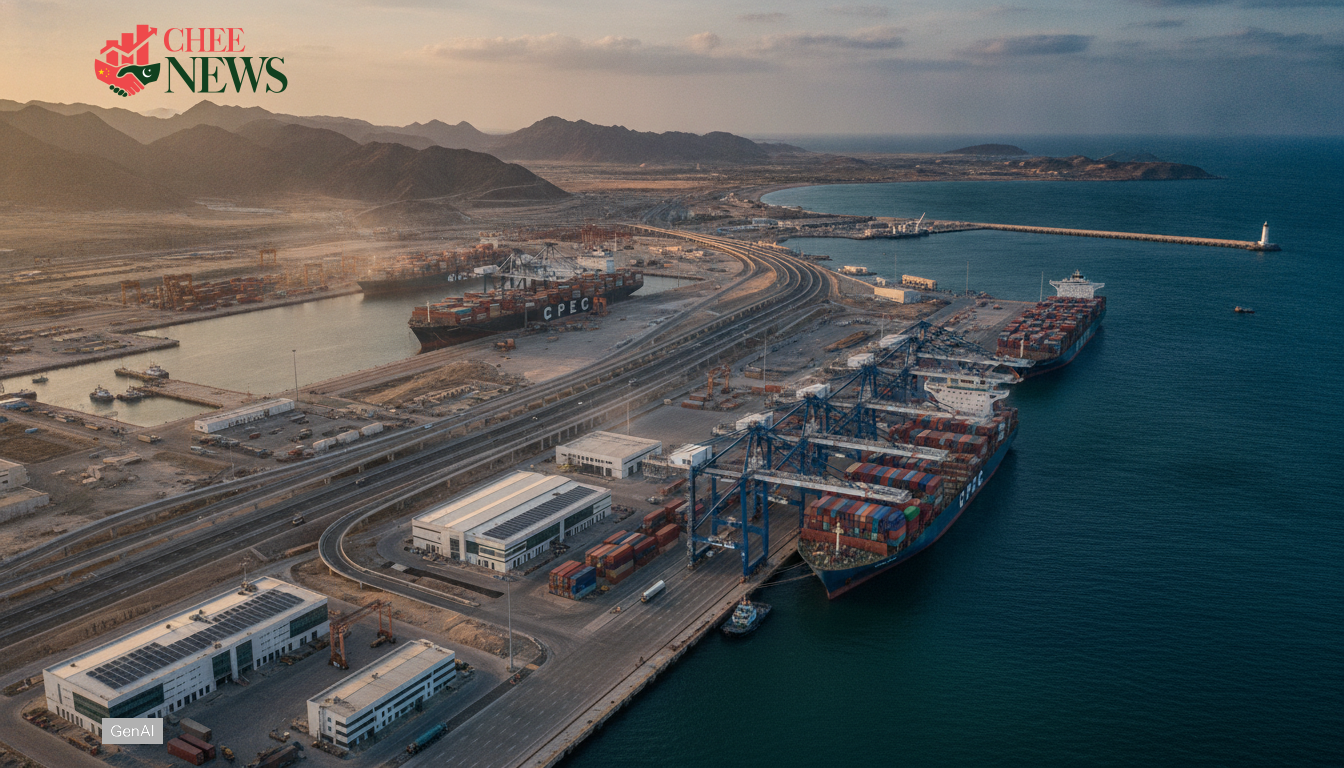
China-Pakistan Economic Corridor: renewed pledge and scope
China and Pakistan have used recent diplomatic engagements to restate that the China-Pakistan Economic Corridor will move forward despite tighter financing and security pressures. The corridor is being described as a long term platform tied to industrial cooperation, logistics and energy reliability, not a single set of mega projects. In remarks carried by Pakistan’s Ministry of Planning, Development and Special Initiatives, officials framed the current phase as delivery focused rather than an expansion of promises. Pakistan’s Ministry of Foreign Affairs also highlighted continuity in bilateral economic cooperation while emphasizing protection arrangements for personnel and sites. Project sequencing is being tightened to keep the pipeline credible.
Project pipeline, financing discipline and 2024 milestones
Officials working through the Joint Cooperation Committee process have signaled that capital allocation is being pushed toward projects that can be commissioned and audited on clear milestones. In 2024, Pakistan’s planning authorities have emphasized verification of completion and operating performance over new announcements, reflecting pressure to show measurable outcomes. A related view of how China is prioritizing strategic technology buildouts appears in Hong Kong AI data center plan backs local buildout, which underscores Beijing’s emphasis on deployable infrastructure with trackable results. In this context, CPEC trends are increasingly judged by delivery timelines, grid integration, and corridor operating reliability, not only by headline investment figures.
Infrastructure priorities: energy reliability and logistics upgrades
Pakistan’s planners have been emphasizing energy reliability and trade logistics as the next proving ground, with a focus on connecting industrial zones to stable power and predictable transport. In the middle of this push, the China-Pakistan Economic Corridor is being framed as a mechanism to cluster suppliers, customs processes, and warehousing around targeted nodes. For background, see Pakistan energy projects under CPEC: grids and tariffs. That approach is intended to translate Chinese investment into export capacity and job creation that can be traced to specific sites and timetables. Provincial coordination remains central because land, permits, and municipal services determine whether industrial estates actually fill.
Trade and regional growth: measuring corridor outcomes
Trade agencies in Pakistan are increasingly discussing corridor value in terms of transit times, port handling efficiency, and the reliability of supply chains for time sensitive exports. External account pressures have made export earnings and lower logistics costs a core policy priority, increasing scrutiny on whether transport upgrades deliver measurable savings. For local spillovers, see China-Pakistan Economic Corridor: economic and local dynamics. Within that evaluation, infrastructure growth matters most where it reduces bottlenecks between industrial clusters and gateways. Pakistan’s Ministry of Commerce has also stressed that standards compliance, border procedures, and shipping schedules can be as important as road length because missed windows can erase freight advantages.
Outlook for CPEC partnerships and risk management
Chinese and Pakistani officials have indicated that the next stage will rely on tighter risk management, clearer revenue models, and coordination with provincial and private sector partners. Pakistan’s Ministry of Finance has repeatedly underscored fiscal discipline in public briefings, reinforcing that new commitments must be structured to avoid unpriced liabilities. In this environment, the China-Pakistan Economic Corridor is expected to lean more on bankable projects, targeted industrial partnerships, and performance based contracting that can withstand political cycles. According to available reports, Islamabad is presenting continuity in engagement as a stabilizer amid regional tensions, while reiterating that security and predictability are prerequisites for sustained capital inflows. The shared message appears to be delivery first, backed by measurable outcomes.

