
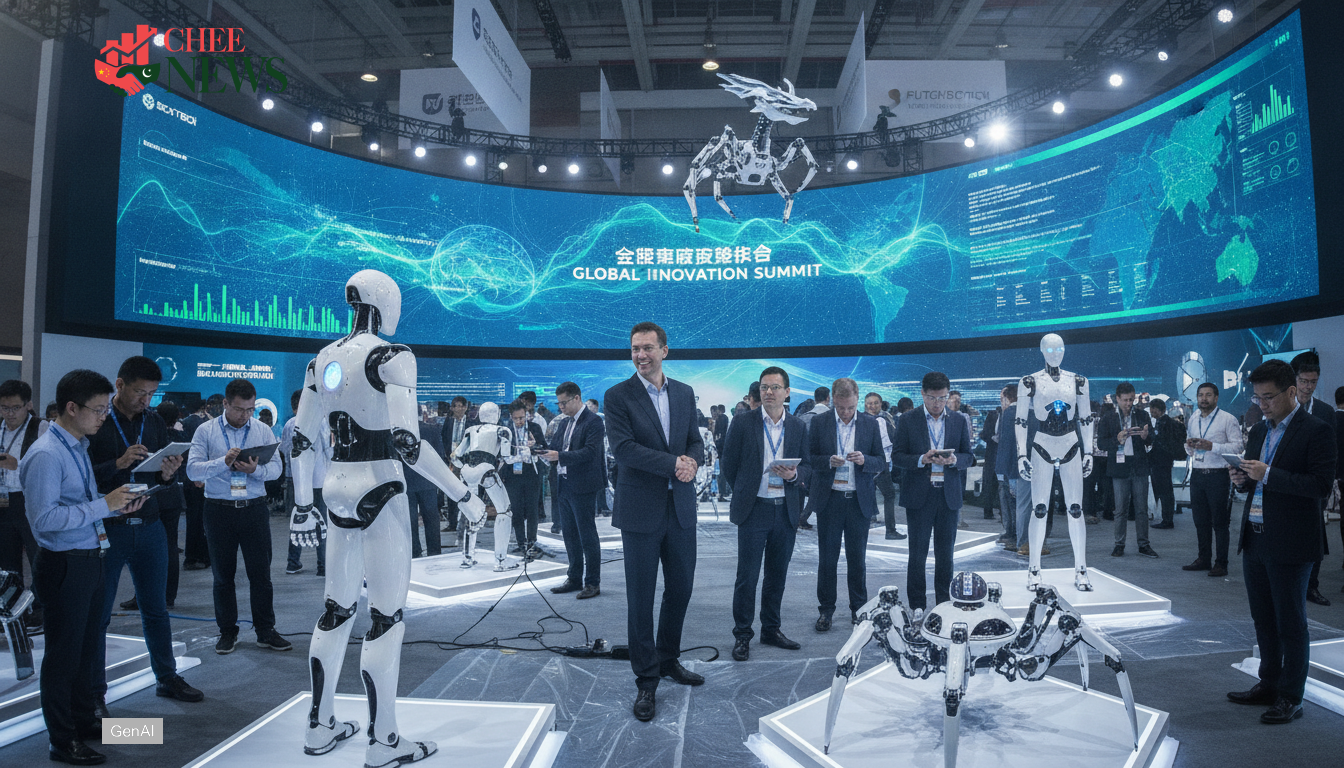
Morgan Stanley outlook for China humanoid robots
Moving from pilot programs to purchase orders faster than expected, China humanoid robots are gaining momentum, according to a Morgan Stanley note reported by the South China Morning Post. The bank reportedly raised its mainland shipment outlook to 50,000 units, according to available reports, a figure the report described as a doubling versus the prior estimate. The change points to quicker commercialization tied to improving prototypes, steadier component availability, and stronger buyer interest from factories seeking to automate repetitive tasks. For manufacturers, these bipedal platforms are shifting into near-term planning rather than long-horizon experimentation, and for vendors the updated target offers a clearer benchmark for scaling production and support capacity through 2025.
Shipment forecast and market signals
The revised estimate is being treated as a planning reference across adjacent segments such as industrial automation software, networking, and factory compute. The South China Morning Post summary is Morgan Stanley raises China humanoid robot shipment forecast to 50,000 units here. Component buyers are also watching policy and currency conditions that can shift landed costs for parts and tooling, especially for imported sensors and specialized actuators. Trade implications are examined in China trade criticism: Beijing rebuts and yuan debate grows, which companies cite when stress testing budgets and procurement timing, with knock-on effects for factory orders tied to 2025 planning.
Commercialization requirements for factory humanoids
Commercialization depends less on demos and more on serviceability, safety compliance, and integration into existing production lines. Buyers are pressing vendors on mean time between failures, spare parts availability, and the ability to interface with plant safety systems without causing throughput disruptions. In many plants, humanoid robots in China must compete for capital with vision systems, edge compute, and model training budgets tied to broader digitization programs. Constraints around advanced chips remain part of the backdrop for some developers, with supply frictions detailed in China Black Market for Banned Nvidia AI Chips Soars. The programs most likely to scale are those that can document payback for specific, repeatable tasks.
Supply chain and compute needs behind deployments
As volumes rise, vendors and integrators must secure stable access to compute, servers, and networking that support perception, simulation, and fleet management. Large infrastructure spend can influence delivery schedules and total cost of ownership, especially when factories want centralized monitoring across multiple sites. China Telecoms recent investment highlights the scale of supporting infrastructure: Huawei partners win big as China Telecom invests US$1.7 billion in 40,000 servers. For China humanoid robots, these upstream capacity decisions can affect the availability of edge compute and the speed at which vendors deploy software updates and safety logging.
What comes next for adoption
The next phase will be defined by whether deployments expand beyond controlled cells into mixed-traffic facilities where people and machines share space. Vendors will need to prove consistent performance under varied lighting, clutter, and floor conditions, while producing auditable safety logs that satisfy insurers and regulators. These systems will also be judged on total cost of ownership because energy use, downtime, and technician training can erase headline productivity gains. Investors are likely to watch for consolidation among suppliers, clearer standards for parts interchangeability, and steadier order books from large manufacturers rather than one-off pilots. If the 50,000-unit outlook holds as reported by the South China Morning Post, China humanoid robots could help set pricing and capability expectations across global industrial markets.

