
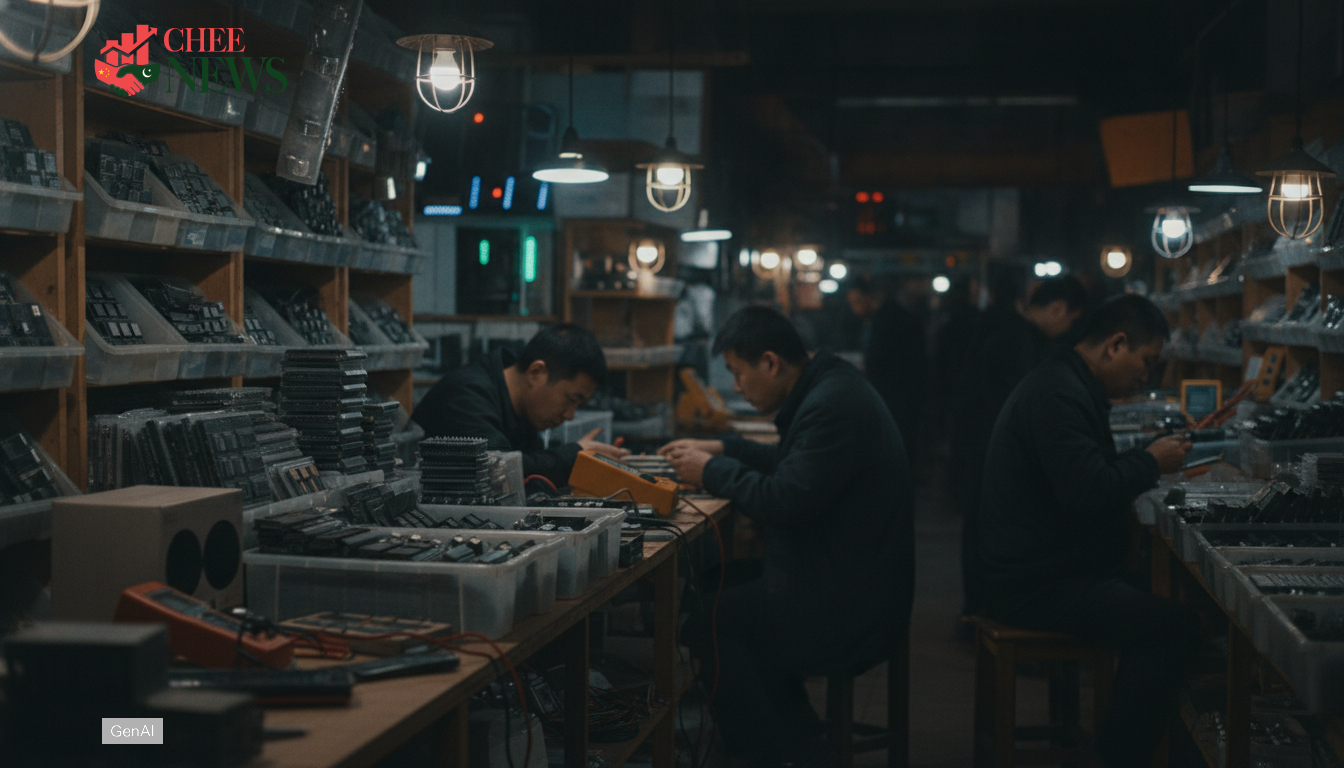
Underground sourcing shifts after Nvidia AI chip bans
New US export controls are tightening access to advanced Nvidia accelerators used for AI training and inference in China. This situation is pushing more procurement into underground channels, according to a May 2024 Financial Times report. That report describes sharper scarcity after the latest restrictions, with resellers using additional intermediaries to keep shipments moving. The China black market response has included longer lead times, higher delivery risk, and wider price dispersion across regions, according to the same Financial Times account. The US Department of Commerce has repeatedly expanded rules governing certain high-end accelerators, and Nvidia has indicated in investor communications that these curbs affect China-related revenue. For buyers, the immediate impact is less predictable sourcing and greater reliance on informal routes.
The Financial Times reported that some banned Nvidia chips have doubled in price in underground channels, but reports suggest that scarcity and higher routing risk contribute to this trend. Traders told the newspaper that markups vary depending on whether units arrive with paperwork or through informal logistics, which can add friction and cost. Policy scrutiny of cross border flows has also intensified, as described in Cross-Border Trading Crackdown in China Elevates Hong Kong. Parallel trade pressures show up in other regulated tech areas as well, including a South China Morning Post report on a Danish court ruling that ordered the state to pay US$12 million for Huawei equipment removal, available at SCMP on Denmark Huawei equipment removal ruling. Demand remains anchored by AI developers trying to maintain compute timelines.
How gray routing reshapes technology trade compliance
The widening spread between official and informal pricing is complicating technology trade for intermediaries serving cloud firms, labs, and enterprise customers. With Nvidia chips harder to source through standard distributors, brokers face higher compliance costs and greater uncertainty around seizure risk, insurance coverage, and payment rails. For regional routing context, China-Pakistan trade grows as CPEC links deepen shows how corridors can reshape logistics when direct paths become constrained. The May 2024 Financial Times account described rerouting through multiple jurisdictions, which can raise transaction costs and due diligence burdens for any firm touching the supply chain. Companies must also manage sudden rule changes and product reclassification under US export controls administered by the Bureau of Industry and Security.
Implications for China’s AI builders and data centers
For China’s developers, restricted access to top tier Nvidia parts shifts engineering decisions toward efficiency, scheduling, and hardware substitution. Teams may prioritize smaller models, improve utilization, and move workloads across mixed fleets, while others pursue domestic accelerators where feasible. The South China Morning Post highlighted the scale of local infrastructure buildout in a report on China Telecom investing US$1.7 billion to buy 40,000 servers, detailed at SCMP on China Telecom server investment. Even so, Nvidia’s software ecosystem keeps the chips central for many workflows. The premium paid in underground markets can act like a tax on experimentation, raising cost per training run and complicating quarterly budgeting.
What happens next for AI chip supply and underground trading
Near-term pricing will likely track enforcement intensity and the ability of intermediaries to keep inventory moving without disruption. The Financial Times description of rapidly rising underground prices suggests the market is reacting to demand and higher friction in procurement and delivery. Nvidia has previously offered China-compliant variants after earlier rounds of controls, but additional tightening could quickly reduce the usefulness of those workarounds and push buyers back to gray channels. Meanwhile, Chinese firms are expected to continue investing in capacity, networks, and tooling to reduce dependence on constrained imports while still pursuing top accelerators when timelines are tight. The China black market will remain a sensitive barometer of broader trade policy, compliance risk, and AI industrial strategy.

