
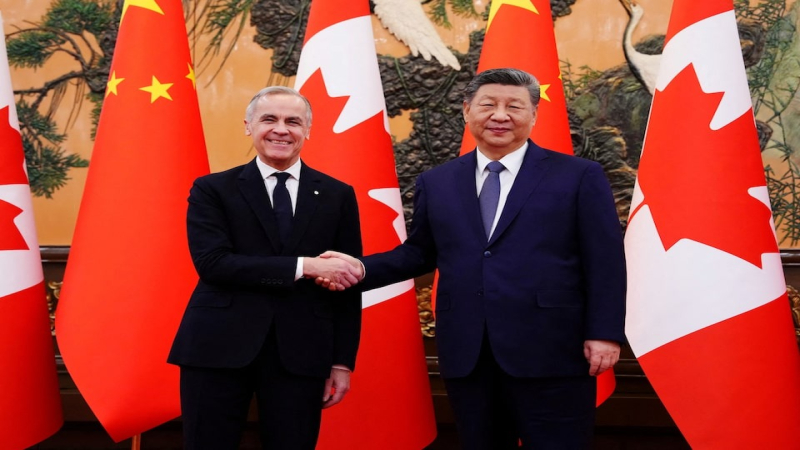
Mark Carney announced a breakthrough in trade relations with China after the two sides agreed to sharply reduce tariffs on electric vehicles and key agricultural products, signalling a broader reset in bilateral ties. Speaking in Beijing, Carney said Canada would allow the import of Chinese electric vehicles under significantly reduced tariff rates, reversing restrictive measures introduced in recent years. The move marks the first visit by a Canadian prime minister to China since 2017 and reflects months of diplomatic engagement aimed at rebuilding relations with one of Canada’s largest trading partners. Carney described the agreement as a return to stable trade conditions, while stressing that it also opens new opportunities for Canadian consumers, manufacturers, and exporters. The talks formed part of a wider effort to remove trade barriers and establish a more predictable framework for economic cooperation.
Under the initial arrangement, Canada will permit a defined number of Chinese electric vehicles to enter its market at substantially lower tariff levels, with scope for gradual expansion in the coming years. Carney said the policy shift is intended to support the development of Canada’s own competitive EV sector by improving access to advanced supply chains and technology. In return, Beijing is expected to lower punitive tariffs imposed on Canadian canola and related agricultural products, which had weighed heavily on exports. The easing of restrictions is projected to unlock billions of dollars in new export orders for Canadian farmers and seafood producers. Chinese authorities confirmed adjustments to trade measures on agricultural and aquatic goods, framing the deal as a reciprocal step following Canada’s tariff changes. Market reaction reflected optimism, with agricultural futures responding positively to the prospect of restored access.
The agreement also carries wider geopolitical significance as Canada navigates strained trade relations with the United States. While some Canadian provincial leaders voiced concern that reduced EV tariffs could undermine domestic manufacturing, Carney defended the approach as necessary in a changing global trade environment. He said discussions with Xi Jinping extended beyond tariffs to include energy cooperation, green technology, and the resumption of high level economic dialogue. Both sides pledged to strengthen collaboration in agriculture, energy, and investment, with Canada highlighting opportunities for Chinese participation in renewable energy and infrastructure projects. Analysts noted that while Ottawa remains closely aligned with Washington, improved ties with Beijing could reshape trade dynamics without fundamentally altering Canada’s strategic orientation. The deal underscores a pragmatic turn in relations driven by economic necessity and global uncertainty.

