
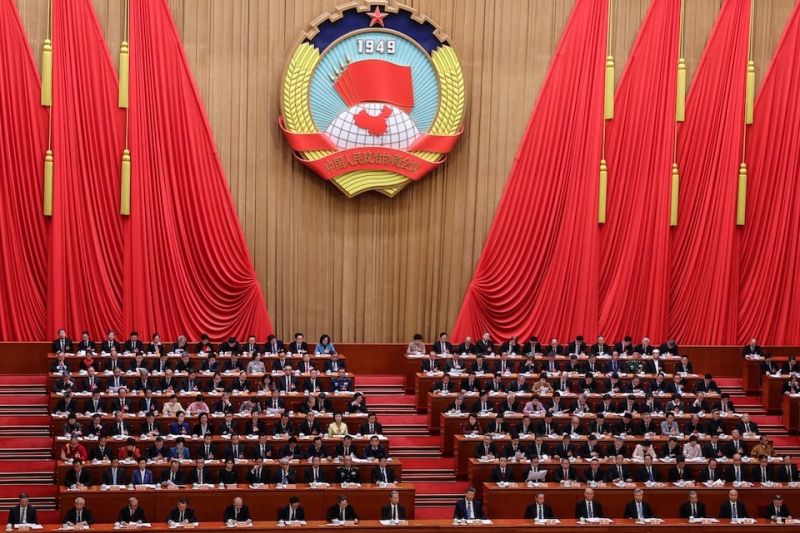
China has unveiled an ambitious roadmap aimed at accelerating technological development and embedding artificial intelligence across its industrial economy as competition with the United States intensifies. The strategy was outlined during China’s annual parliamentary meetings in Beijing where leaders presented a long term vision centered on scientific innovation and high technology manufacturing. Officials believe technological leadership will be crucial for economic resilience and national security in the coming decade. By prioritizing advanced research and AI driven industries China aims to reshape its economic structure while reducing dependence on foreign technologies.
The new development strategy is closely linked to China’s upcoming five year planning framework which focuses on building what policymakers describe as new productive forces. These include emerging technologies such as artificial intelligence robotics advanced computing and next generation manufacturing systems. Authorities believe that expanding these sectors will help China move beyond traditional growth models that relied heavily on property development and large scale infrastructure investment. The government is now placing greater emphasis on high technology industries that can generate long term productivity gains.
Artificial intelligence is expected to play a central role in this transformation. Government planners envision factories where intelligent robots assist in manufacturing processes while advanced algorithms optimize supply chains and production systems. AI technologies are also expected to support innovations in sectors such as healthcare transportation energy and financial services. Analysts note that the country’s development plan mentions artificial intelligence numerous times reflecting the leadership’s strong commitment to integrating digital technologies into the broader industrial ecosystem.
China’s push for technological advancement is also driven by intensifying strategic competition with the United States. In recent years Washington has introduced restrictions aimed at limiting China’s access to advanced semiconductor technologies and high performance computing systems. These measures have encouraged Beijing to accelerate domestic research efforts and invest more heavily in building an independent technology supply chain. Strengthening self reliance in key technologies is now considered a core national priority as global competition over digital infrastructure and advanced manufacturing continues to grow.
Despite the strong focus on technology policymakers acknowledge that China’s economy faces several structural challenges. Weak domestic consumption rising local government debt and continued adjustments in the property sector remain key concerns for economic planners. To maintain stability authorities have set a growth target of between four and a half and five percent for the coming year. Economists say this lower target provides room for gradual industrial restructuring while allowing policymakers to address excess capacity in certain manufacturing sectors.
The broader economic strategy reflects a shift toward building a more innovation driven economy capable of sustaining growth even as demographic changes and global competition reshape the economic landscape. Officials also expect advanced technologies such as biotechnology quantum computing and next generation materials to become important components of future development. By expanding investment in research and high technology industries China hopes to strengthen its industrial base while positioning itself as a leading force in the technologies that will define the next era of global economic competition.

