
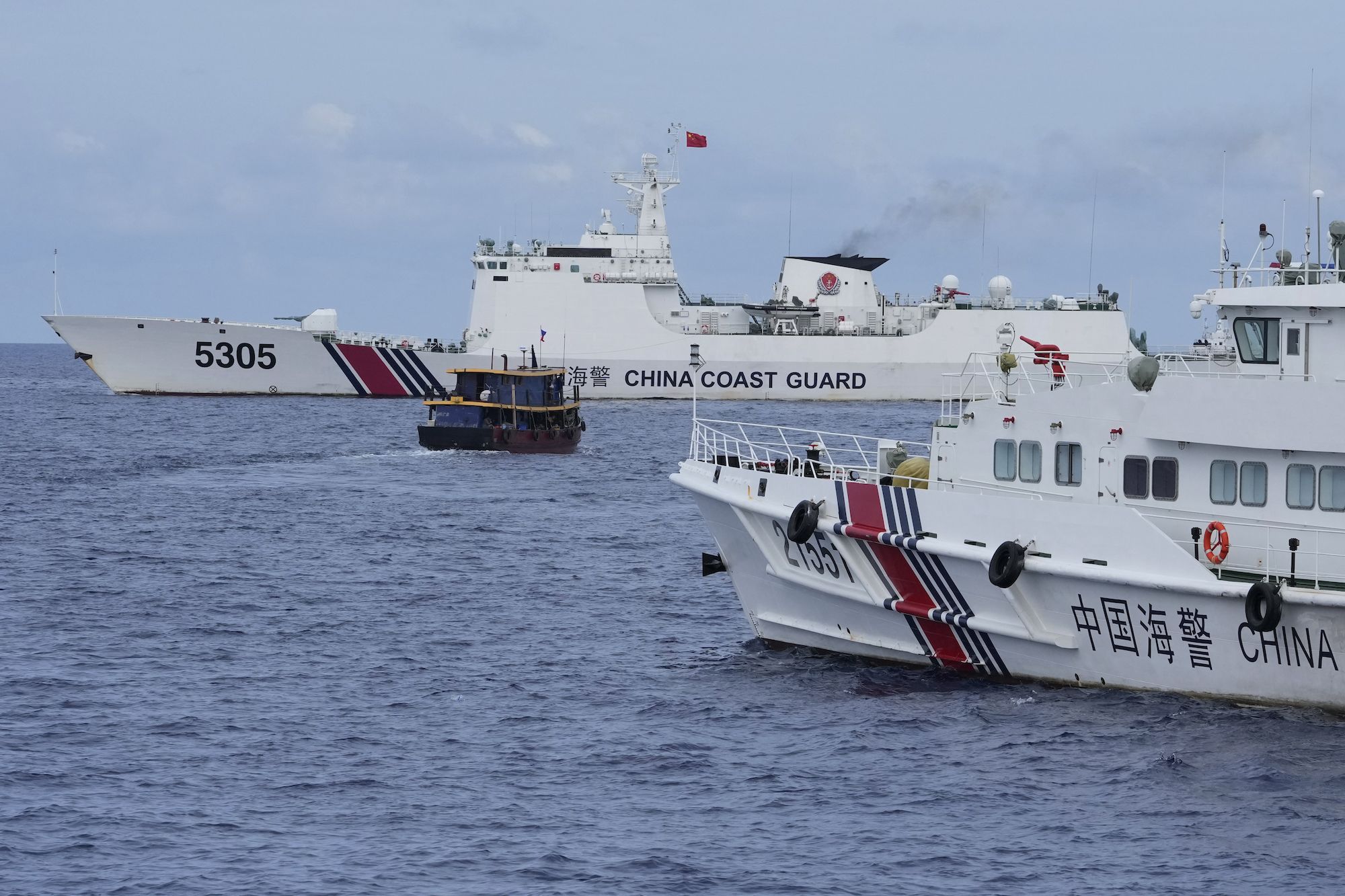
China and the Philippines have launched a fresh exchange of accusations over confrontations in the disputed South China Sea, underscoring how fragile relations between the two sides remain despite repeated calls for restraint. Both governments accused the other of coercion and deception, reflecting a hardening of rhetoric as incidents at sea continue to test regional stability.
Beijing said Philippine vessels had deliberately provoked Chinese forces by entering what it described as waters under China’s jurisdiction, accusing Manila of staging incidents to draw international attention and external support. Chinese officials argued that their coast guard and maritime forces had acted professionally and lawfully, insisting that responsibility for rising tensions lay squarely with the Philippines.
Manila rejected those claims, saying Chinese ships had engaged in dangerous maneuvers and intimidation tactics against Philippine vessels operating within the country’s exclusive economic zone. Philippine officials accused China of using coercion to assert sweeping maritime claims that are not recognized under international law, and said such actions threatened the safety of crews and undermined regional peace.
The latest war of words follows a series of close encounters involving coast guard ships, supply missions, and fishing vessels in contested waters. These incidents have increasingly been accompanied by competing narratives, videos, and statements released by both sides, each aimed at shaping domestic opinion and influencing international audiences.
At the heart of the dispute are overlapping claims in the South China Sea, a strategically vital waterway through which trillions of dollars in trade pass each year. China claims historic rights over much of the sea, while the Philippines, Vietnam, Malaysia, Brunei, and Taiwan also assert claims based on international maritime law. A 2016 arbitral ruling under the United Nations Convention on the Law of the Sea rejected the legal basis of China’s expansive claims, a decision Beijing continues to dismiss.
Relations between China and the Philippines have become more strained in recent years as Manila has deepened security cooperation with the United States and other partners. Beijing has repeatedly warned against what it sees as outside interference, arguing that involvement by non-claimant powers only complicates the situation and emboldens confrontation.
The Philippines, for its part, says it has little choice but to seek international support in the face of repeated pressure at sea. Officials in Manila argue that transparency, including the release of footage from encounters with Chinese vessels, is necessary to counter what they describe as misinformation and to uphold their maritime rights.
Regional analysts warn that the escalating exchange of accusations increases the risk of miscalculation. While both sides insist they want to avoid conflict, the frequency of encounters and the sharpness of official statements suggest that tensions are becoming more difficult to manage. Even minor incidents could spiral if not handled carefully, particularly as nationalist sentiment grows in both countries.
ASEAN has long sought to promote dialogue and a code of conduct for the South China Sea, but progress has been slow. Observers say the latest flare-up highlights the limits of existing mechanisms to defuse disputes, especially when strategic competition between major powers is intensifying.
Despite the heated rhetoric, diplomats from China and the Philippines continue to emphasize the importance of communication channels. Whether those channels can prevent further escalation remains uncertain, as both sides show little sign of softening their positions.
As the South China Sea remains a focal point of regional rivalry, the renewed clash of narratives between Beijing and Manila illustrates how disputes are now being fought not only on the water, but also through words, images, and competing claims of legitimacy.

