
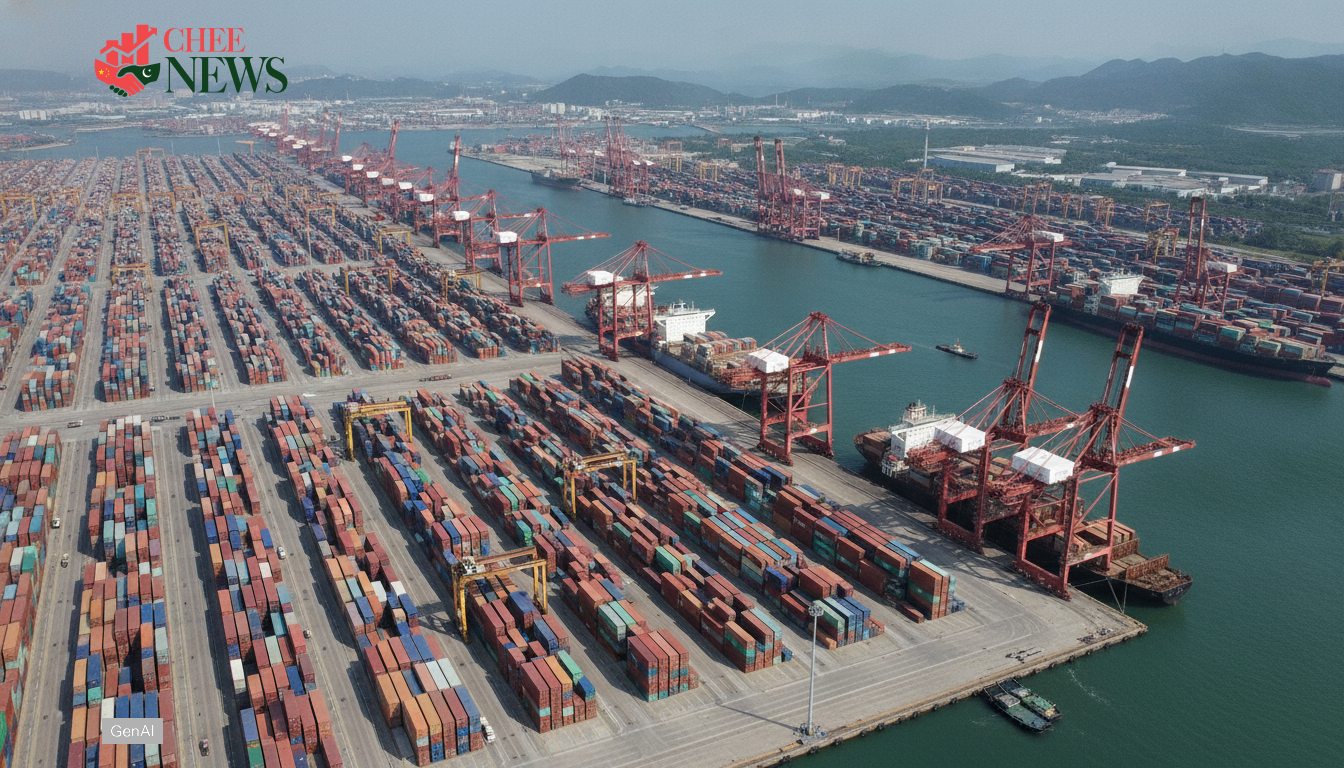
China Trade Surplus and Recent Export Performance
China’s customs data releases in 2026 have been interpreted by market participants as pointing to firmer outbound shipments across several product groups, though the strength can vary by category and month. Investors have tracked the China trade surplus as a barometer of how quickly exporters are converting overseas demand into actual deliveries and receipts. Some analysts and companies have described the surplus as remaining elevated alongside improved order books in electronics, machinery, and vehicle-related supply chains, based on routine corporate updates and market commentary rather than a single official summary. Market pricing and corporate guidance have leaned on indicators such as port throughput, freight rates, and purchasing manager surveys to judge whether demand is stabilizing. Commentary from officials and policy-linked researchers has at times emphasized that moves in the renminbi and access to supply-chain financing can affect exporters’ ability to quote competitively without sacrificing cash flow, although specific examples differ by sector.
Why a Wider China Trade Surplus Matters for Policy
A wider external surplus can change policy trade-offs by raising the risk of trade frictions while supporting domestic factory utilization, according to common framing in mainstream economic coverage. In policy debates, China’s external balance is often discussed in terms of whether surplus economies should rely less on external demand and more on household consumption to balance growth. Regional innovation capacity is frequently cited as a driver of competitiveness, and the South China Morning Post report on the Greater Bay Area’s innovation standing adds context for why higher-value exports are described as resilient, with the related coverage at Shenzhen Hong Kong Guangzhou innovation hub ranking. Read the related coverage at the link while tracking how the China trade surplus can shape political pressure around industrial policy and market access. Policymakers elsewhere may weigh countervailing measures, procurement shifts, or tighter screening of subsidized supply, depending on domestic political and legal constraints.
What Is Driving Export Growth in 2026
Export growth in 2026 has been described in business-desk commentary as being supported by product upgrading, faster delivery cycles, and targeted support for industrial clusters, though the relative contribution of each factor is debated. Manufacturers in several sectors have pursued scale in batteries, electronics, and machinery while using bonded zones and streamlined logistics to reduce lead times, according to widely reported trade and logistics practices. Analysts also point to an economic strategy focused on moving up the value chain, with higher-specification components capturing a larger share of invoiced value even when unit volumes are flat, a view commonly discussed in research notes and media analysis rather than as a single measurable official metric. For a related look at tech-oriented shipments, see China export growth outlook 2026: high-tech and AI, and policy attention has extended beyond trade, as seen in China cybersecurity focus after claimed Starlink hack, reflecting how compliance risks can shape cross-border commerce. In 2026, these dynamics have been watched closely in manufacturing hubs such as Shenzhen and Guangzhou where exporters often cite delivery reliability in customer updates.
How Trading Partners Are Responding to the Surplus
Trading partners have reacted unevenly, with some economies emphasizing cheaper inputs while others focus on domestic industry impacts, as reflected in public statements and media reporting in those markets. The China trade surplus is frequently cited in political debates about market access, industrial subsidies, and the pace of diversification away from single-country sourcing. Firms in Southeast Asia and Mexico have marketed themselves as alternative assembly platforms, yet many still depend on Chinese intermediates, as described in supply-chain reporting and corporate disclosures, which can complicate the effort to rewire supply chains quickly. In Europe and North America, regulatory tools such as anti-dumping investigations and procurement rules have been used more actively in recent years, according to public notices from trade authorities and court dockets that track disputes. These responses can shape near-term contracting and long-run investment decisions, though according to available reports, the impact appears to vary by product and jurisdiction.
Outlook: Will the China Trade Surplus Stay High
Looking ahead, the trajectory will depend on whether external demand holds up and whether firms keep gaining share in segments where reliability and scale matter most. The China trade surplus could remain elevated through 2026 if import growth stays constrained by cautious domestic spending, even if export volumes grow more modestly, a scenario often discussed in market commentary rather than presented as a single forecast baseline. Shipping costs, insurance conditions, and geopolitics will also influence delivered prices, while tighter technology rules in some markets may redirect certain product lines toward emerging economies, depending on enforcement and compliance choices. For context on export mix, see China car exports hold firm as home sales cool, while economists at the International Monetary Fund have, in Article IV consultation discussions, commonly highlighted that rebalancing toward consumption could moderate external imbalances over time, though outcomes depend on policy choices and transmission to household demand. In 2026, investors have also monitored freight lanes out of Shanghai and Ningbo as a practical check on whether export schedules are holding.

