
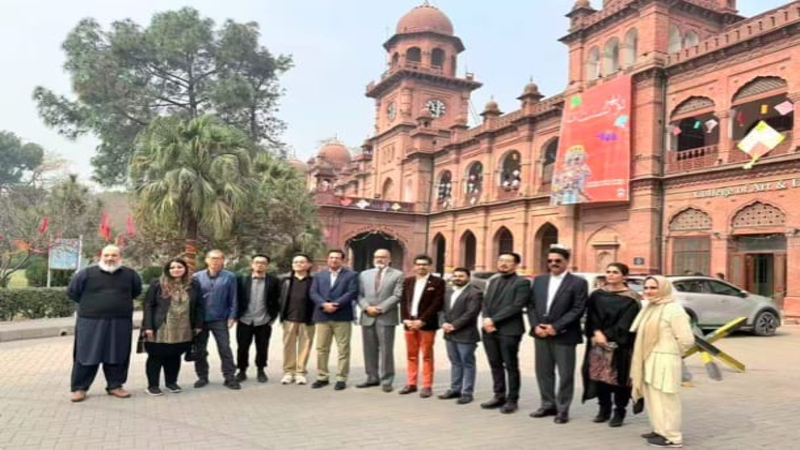
A new chapter in academic cooperation between China and Pakistan is taking shape as leading universities from both countries move toward closer collaboration in architecture and urban design. A delegation from the Institute of Architectural Design and Research at Shenzhen University recently visited the School of Art and Design at the University of the Punjab to explore opportunities for long term academic research and institutional partnerships focused on the built environment and creative disciplines.
The visit brought together faculty members administrators and academic leaders for detailed discussions on shared priorities in architectural education urban planning and design innovation. Both sides expressed interest in developing joint initiatives that would allow students and faculty to work across borders while responding to contemporary urban challenges. Proposed areas of cooperation included faculty exchange programmes student mobility collaborative design studios and joint research projects aimed at addressing sustainability heritage preservation and modern urban needs.
The delegation from Shenzhen University was welcomed by the faculty and administration of the School of Art and Design who highlighted the importance of international engagement in strengthening academic standards and global exposure for students. The discussions reflected a forward looking approach that emphasized knowledge sharing innovation and practical learning models rather than purely theoretical exchanges. Participants noted that architecture and urban design are fields that benefit greatly from diverse perspectives cultural understanding and exposure to different urban contexts.
Speaking during the visit Dr Mahboob Hussain Dean of the Faculty of Arts and Humanities at the University of the Punjab underscored the value of integrating design led innovation with sustainable urban development. He emphasized that modern architectural education must balance technological advancement with cultural continuity especially in rapidly growing cities. According to him the engagement with Shenzhen University reflects a broader trend of deepening academic and cultural ties between Pakistan and China which aligns with ongoing people to people connectivity efforts between the two countries.
A key outcome of the visit was the formation of a tripartite consortium involving Habib Rafiq Private Limited the University of the Punjab School of Art and Design and Shenzhen University’s Institute of Architectural Design and Research. The consortium is designed to bridge academia and industry by creating pathways for applied learning and real world project experience. Khalid Taimur Akram who played a facilitating role in bringing the institutions together described the arrangement as a practical model for industry linked education.
Under the framework of the consortium faculty members from Shenzhen University are expected to visit Punjab University to contribute to teaching and academic mentoring in architecture and design. At the same time the HRL Group will support students by offering opportunities to translate conceptual designs into implementable projects. This approach is intended to expose students to professional standards construction processes and industry expectations while still within an academic setting.
Participants described the initiative as a meaningful step toward strengthening international collaboration in architectural education. By combining academic expertise industry involvement and cross border exchange the partnership aims to prepare future architects and urban designers with the skills required to respond to complex urban realities in both regional and global contexts.

