
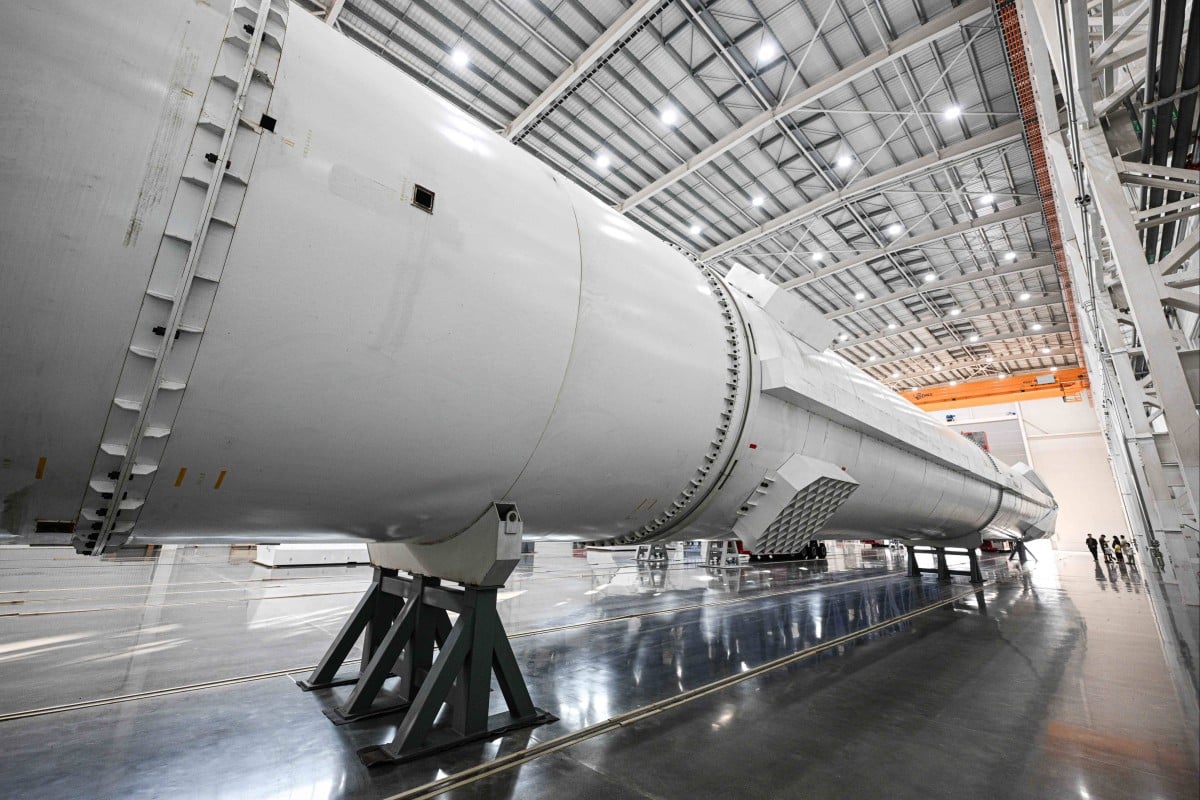
Shares of Chinese companies linked to commercial rocket and space launch services fell sharply after several firms cautioned that a recent surge in their stock prices had become detached from business fundamentals. The pullback follows weeks of strong gains driven by retail enthusiasm for China’s fast-growing space sector and heightened interest in strategic technologies.
Companies connected to commercial launch vehicles and satellite deployment issued warnings noting that recent share price increases were not fully supported by revenue, profits, or near-term order visibility. Trading in several names turned volatile as investors reassessed expectations, triggering a broad sell-off across the niche sector.
China’s commercial space industry has attracted growing attention as Beijing encourages private participation in areas once dominated by state-owned players. Policy support, combined with national ambitions in space exploration and satellite networks, has fueled optimism about long-term growth. That enthusiasm recently spilled into equity markets, with some rocket-related stocks posting rapid gains over a short period.
Market analysts say the rally was largely sentiment-driven. Retail investors piled into space-themed shares on hopes that China’s push for technological self-reliance would quickly translate into commercial success. However, industry insiders point out that rocket manufacturing and launch services are capital-intensive businesses with long development cycles, high technical risk, and uncertain profitability timelines.
The warnings from listed companies were intended to cool expectations. Executives emphasized that while demand for satellite launches and space services is expected to rise over the long term, current revenues remain limited and competition is intensifying. Several firms noted that project pipelines take years to convert into stable cash flow, and that margins can be squeezed by rising research and development costs.
The correction highlights the tension between strategic narratives and financial reality in China’s stock market. Sectors aligned with national priorities, such as semiconductors, artificial intelligence, and aerospace, often attract speculative interest. When valuations run ahead of earnings, regulators and companies frequently step in with reminders about risk, a pattern seen repeatedly in recent years.
Investors also appear to be taking a more cautious approach amid broader market uncertainty. With China’s economic recovery uneven and global conditions volatile, appetite for highly speculative themes has softened. Some fund managers say the sell-off reflects a rotation toward companies with clearer earnings visibility rather than a loss of confidence in the space sector itself.
Despite the short-term slump, analysts remain positive on China’s long-term commercial space ambitions. Private launch firms are expected to play a growing role in satellite internet constellations, earth observation, and commercial payload launches. China’s demand for low-earth orbit satellites, driven by communications, navigation, and data services, is seen as a structural tailwind for the industry.
However, experts caution that consolidation is likely. Not all current players will survive, and only companies with strong technical capabilities, reliable launch records, and sustainable funding are expected to emerge as winners. For equity investors, that means stock selection and patience will be critical.
The recent decline may also serve as a reminder of the risks of momentum-driven trading. While space remains a powerful theme, the path from ambition to profitability is complex. For now, the market appears to be recalibrating, shifting focus from hype to fundamentals as China’s commercial rocket sector moves into a more mature and demanding phase.

