
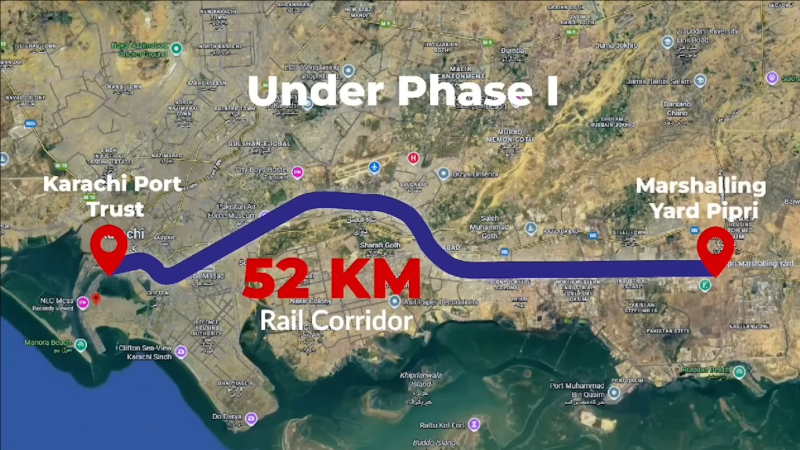
Pakistan has taken a significant step toward strengthening its logistics and trade infrastructure with the launch of the Pipri Dedicated Freight Corridor, a key project aligned with the China-Pakistan Economic Corridor. The initiative is designed to improve the movement of goods from Karachi’s major ports to inland destinations while supporting regional trade routes linked to CPEC. Longstanding congestion at Karachi Port and Port Qasim has posed challenges for exporters and importers, and the new corridor aims to address these issues through modern rail-based freight solutions. By shifting a large portion of cargo movement away from roads, the project is expected to enhance efficiency, reduce delays, and support Pakistan’s ambition to become a regional trade and transit hub connecting South Asia with China and Central Asia.
The project involves the rehabilitation and upgrading of a fifty-two-kilometre rail corridor connecting Karachi Port to the Pipri Marshalling Yard, along with the development of a multimodal logistics park. The logistics park will include modern warehousing, cargo handling, and distribution facilities to support growing trade volumes. Collaboration between national institutions and international partners reflects confidence in Pakistan’s infrastructure potential under CPEC. Officials involved in the initiative have indicated that the first phase is scheduled for completion within a short timeframe, highlighting the priority given to improving supply chain efficiency. Enhanced rail connectivity is expected to reduce pressure on urban road networks while providing reliable freight services for businesses operating in and around Karachi.
Once operational, the Pipri Freight Corridor is expected to play a critical role in integrating Pakistan’s ports with domestic markets and regional trade corridors. The shift from road to rail transport is anticipated to lower logistics costs, improve cargo turnaround times, and contribute to environmental sustainability through reduced fuel consumption and emissions. The corridor will also support CPEC routes that link Pakistan with western China and onward markets, reinforcing the strategic value of Karachi as a gateway for international trade. As Pakistan continues to expand CPEC-related infrastructure, projects such as the Pipri Freight Corridor highlight the country’s focus on practical, trade-enabling investments that support economic growth, job creation, and long-term regional connectivity.

