
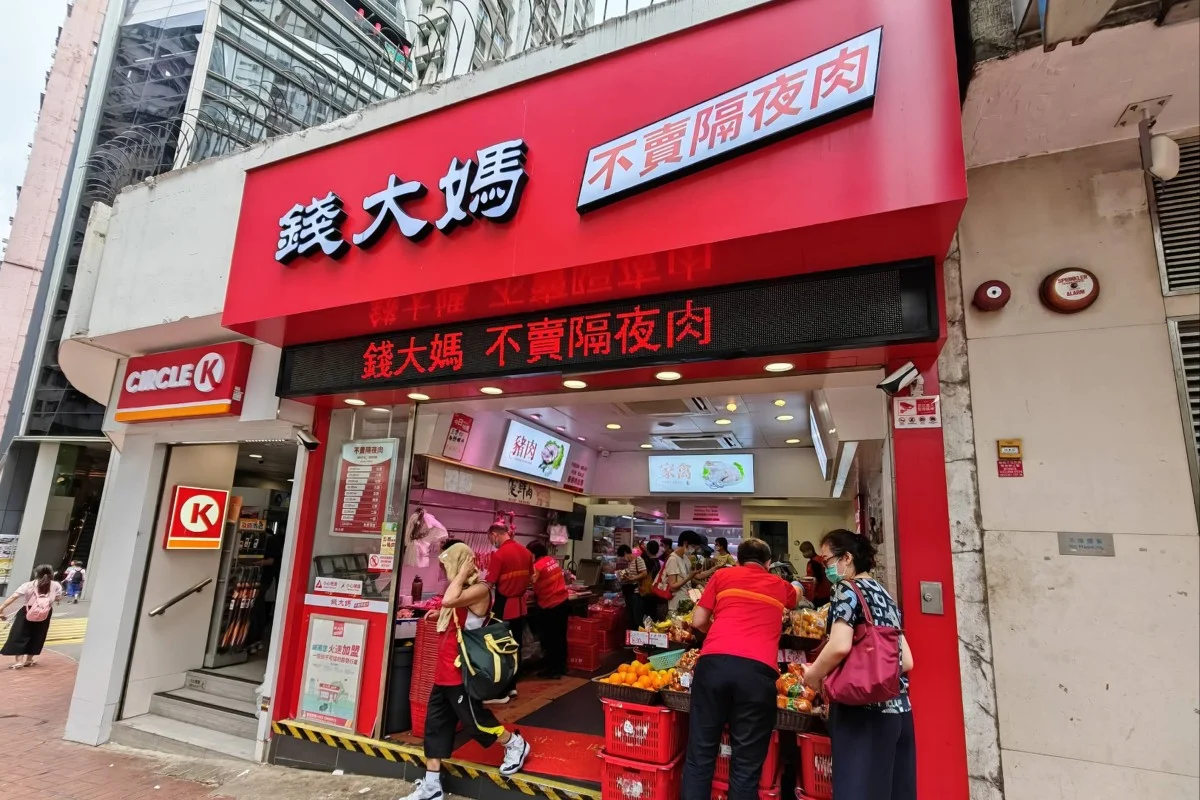
Qdama International, the company behind mainland China’s fast-growing meat and fresh produce chain Qdama, is preparing to go public in Hong Kong, aiming to tap international capital markets as it scales up its distinctive retail model. Known for steep evening discounts that increase hour by hour until shelves are cleared, the brand has built a strong following among cost-conscious urban consumers.
Founded in 2014, Qdama International has expanded rapidly across Chinese cities by focusing on fresh meat and produce sold through neighborhood stores. Its business model centers on daily replenishment and aggressive markdowns late in the day, a strategy designed to minimize waste while driving foot traffic during off-peak hours. Shoppers familiar with the chain often time their visits to take advantage of the deepest discounts, which can reach significant levels just before closing.
According to its prospectus filed with the Hong Kong Stock Exchange, Qdama recorded sales of 14.8 billion yuan, or about US$2.1 billion, in 2024. The filing cites data from China Insights Consultancy, which describes Qdama as the largest meat and fresh produce retailer of its kind on the mainland by sales. The company’s scale reflects both rising demand for fresh food and the success of its tightly managed supply chain.
The planned listing comes at a time when Hong Kong is seeking to revive its IPO market after a subdued period marked by global uncertainty and cautious investor sentiment. Consumer-focused mainland companies with clear growth stories are seen as potential bright spots, particularly those catering to everyday demand rather than discretionary spending. Qdama’s focus on essential food products may help it stand out in a crowded retail landscape.
Qdama operates thousands of outlets, primarily concentrated in major and mid-sized Chinese cities. Its stores are typically compact and located in residential neighborhoods, allowing it to serve daily shopping needs rather than weekly bulk purchases. The company sources directly from farms and slaughterhouses, reducing intermediaries and helping control costs, an approach that underpins its ability to offer competitive prices.
The evening discount strategy has also given Qdama a distinctive brand identity. Rather than viewing unsold inventory as a loss, the company treats markdowns as a marketing tool that encourages repeat visits and reduces food waste. This model aligns with broader policy goals in China around efficiency and sustainability, even as competition in fresh food retail remains intense.
However, challenges remain as Qdama moves toward public markets. Profit margins in fresh food retail are typically thin, and expansion brings higher logistics and labor costs. Investors will closely examine how the company balances growth with profitability, especially as it enters new regions and faces rivals ranging from traditional wet markets to online grocery platforms.
A Hong Kong listing would give Qdama access to offshore capital and raise its profile beyond the mainland. It could also provide funds to upgrade technology, strengthen cold-chain logistics, and pursue further expansion. As fresh food retail continues to evolve in China, Qdama’s IPO plans signal confidence that its discount-driven, high-turnover model can appeal not just to shoppers, but to investors as well.

