
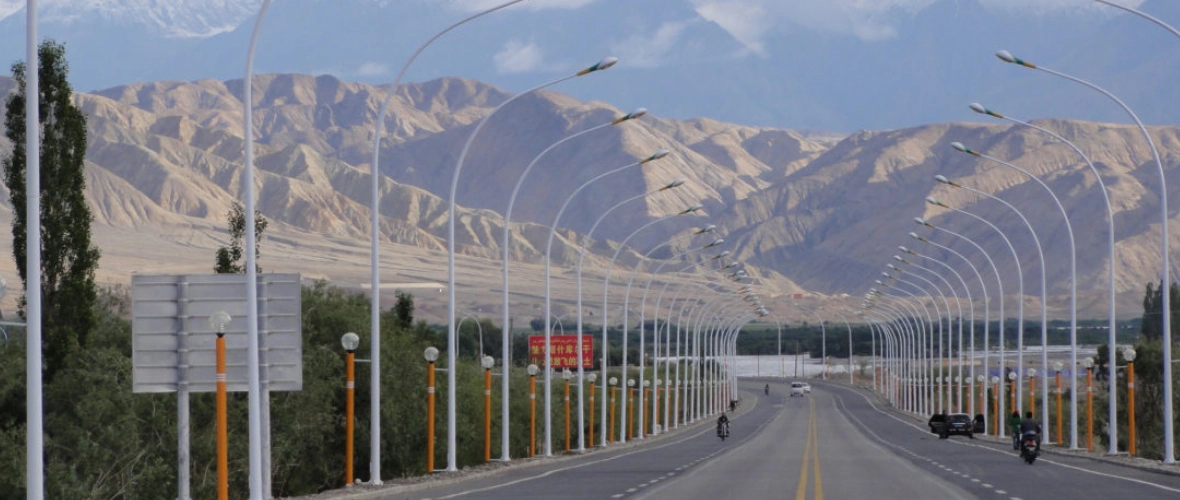
Overview of CPEC Projects in Sindh
CPEC projects Sindh are being pushed into a faster lane as provincial leadership signals tighter execution discipline and clearer delivery priorities. The focus is on removing administrative drag around corridors that matter most to Sindh’s economy, including port-adjacent logistics, urban connectivity, and industrial clustering that can plug into national supply chains. In practical terms, acceleration means compressing approval cycles, aligning provincial departments around shared milestones, and prioritizing projects that can show measurable progress within a budget year. The move also fits the broader shift toward Phase II outcomes, where industrial cooperation and operational efficiency matter as much as new groundbreakings. That wider context is tracked in CPEC Phase II: Acceleration, Impact, and Next Steps and CPEC 2.0 signals new cooperation tracks ahead.
Meetings and Agreements
The push gained momentum after the Governor and the Chinese Consul General reviewed implementation bottlenecks and committed to a practical pathway for CPEC project acceleration. The tone of the engagement was operational rather than ceremonial: improving inter-department coordination, clarifying responsibilities between provincial bodies and federal counterparts, and keeping investor-facing communication consistent. That approach matters because China-Sindh cooperation increasingly depends on predictable governance, not just political warmth. The discussion emphasized faster facilitation for projects tied to trade movement and industrial activity, where delays translate into real cost. For readers tracking the original reporting, the core developments were highlighted by this syndicated news update and follow-up coverage at cpecinfo.com.
Strategic Importance for Pakistan
Sindh’s infrastructure development Sindh agenda under CPEC carries national weight because the province anchors Pakistan’s maritime gateway and a large share of industrial output. Faster delivery improves trade velocity, reduces logistics friction, and supports export competitiveness, especially when linked to port operations, warehousing, and industrial zones that can scale. Strategically, acceleration in Sindh also signals to partners that Pakistan can convert plans into performance, which is vital as CPEC evolves toward productivity-led cooperation rather than headline-driven announcements. The economic logic is straightforward: when road, rail, and port-side services function as a system, transport time and cost fall, and private investment becomes easier to justify. This connects directly to the national narrative of Phase II reforms and coordination, outlined in Advancing CPEC Phase II in Pakistan-China Economy and CPEC Phase-II Developments: Pakistan-China Recommit.
Challenges and Opportunities
Fast-tracking only works if the hardest constraints are treated as engineering and governance problems, not slogans. Land acquisition, utility relocation, and fragmented oversight can stall timelines even when funding exists, while procurement delays and inconsistent documentation weaken contractor confidence. Sindh’s opportunity is that many solutions are managerial: standardizing approvals, publishing clear right-of-way schedules, and enforcing payment discipline can quickly improve on-ground pace. At the same time, security planning and community engagement must be handled with professionalism to keep worksites stable and predictable. Done correctly, the payoff is credibility: each project completed on time strengthens Pakistan’s negotiating position for the next tranche of cooperation. The most valuable gains come when provincial agencies adopt shared dashboards and dispute-resolution channels so problems are resolved inside the system rather than pushed upward in crisis mode.
Future Developments and Prospects
The next phase will be judged by whether Sindh can translate high-level alignment into trackable progress that investors and the public can verify. Expect more emphasis on operational readiness, including logistics services, industrial plugging, and the institutional capacity to run assets after construction. This is where CPEC project acceleration becomes a test of competence: commissioning, maintenance planning, and revenue models must be prepared early so infrastructure does not sit underutilized. A mature China-Sindh cooperation framework also means deeper coordination on workforce skills and supplier development, allowing local firms to participate beyond subcontracting. If implementation stays disciplined, Sindh can position itself as the corridor’s most reliable node, attracting further industrial interest aligned with CPEC’s productivity goals. The success metric will not be announcements but throughput, uptime, and investment crowding-in over successive quarters.

