
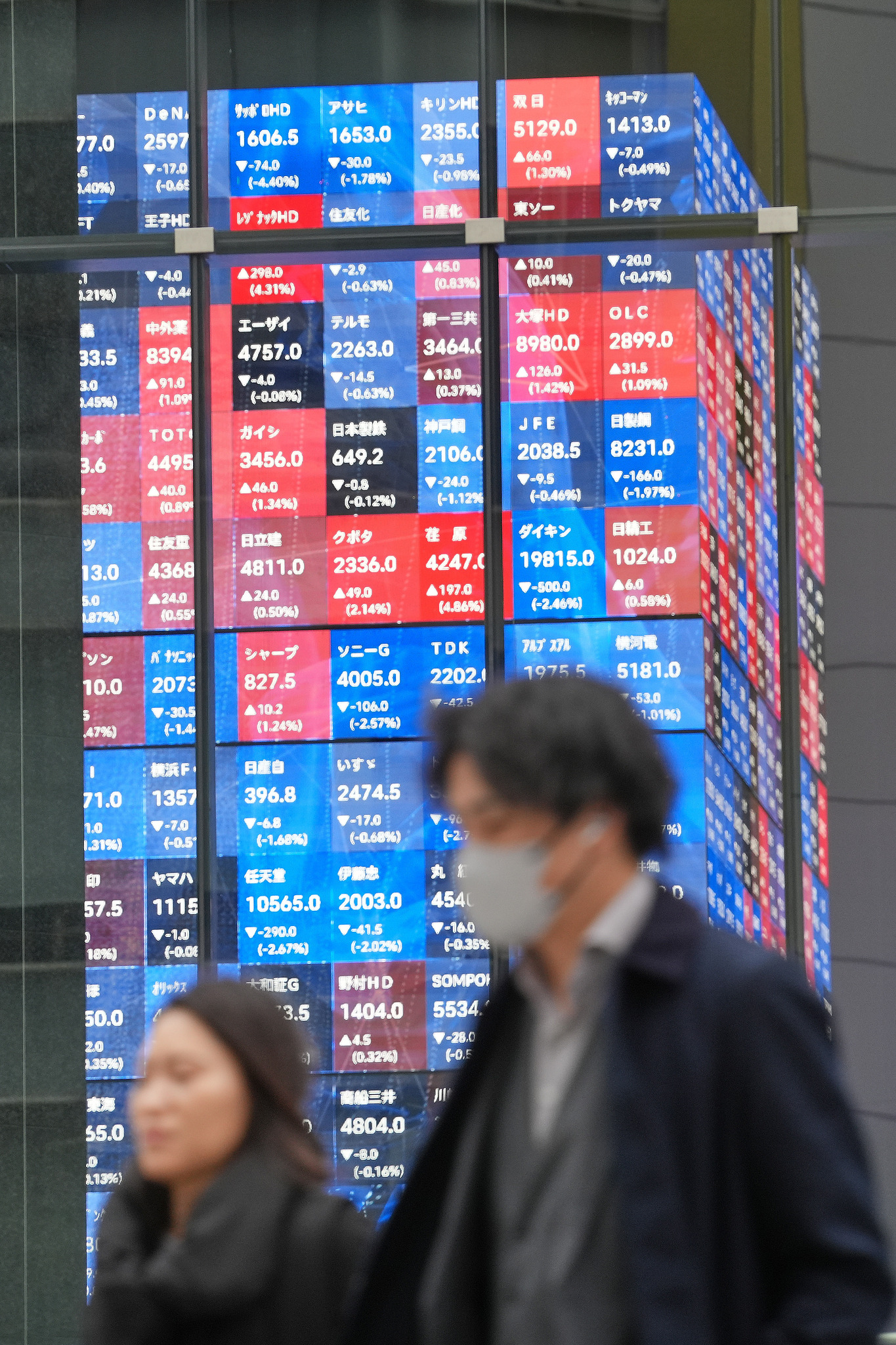
Japanese equities fell sharply on Wednesday as markets reacted to renewed tension between China and Japan, triggered by Beijing’s decision to tighten export controls on rare earth related items. Investors grew increasingly cautious as concerns mounted over the potential economic and industrial impact of worsening bilateral ties.
The benchmark Nikkei 225 closed down 1.06 percent at 51,961.98, shedding 556.1 points from the previous session. The decline marked one of the index’s steepest single day losses in recent weeks, with exporters and manufacturing related stocks bearing the brunt of selling pressure.
Market participants described the downturn as a reflection of growing geopolitical risk. Rare earth materials are critical inputs for a wide range of industries, including electric vehicles, advanced electronics, and defense related manufacturing. Any disruption to supply chains linked to these materials is closely watched by investors, particularly in Japan, which relies heavily on imports for key resources.
On Tuesday, China’s Ministry of Commerce of China announced strengthened export controls on dual use items destined for Japan. According to the statement, exports of such items to military users in Japan or for purposes that could enhance Japan’s military capabilities will be prohibited. The measures apply to a broad category of goods that can be used for both civilian and military applications.
The announcement came amid rising diplomatic friction following remarks by Japanese Prime Minister Sanae Takaichi that Beijing described as erroneous and touching on China’s internal affairs. Chinese officials have repeatedly emphasized that issues related to sovereignty and domestic governance are non negotiable, and warned against external interference.
Investors quickly interpreted the move as a signal that trade and security issues between the two countries could become more closely intertwined. Shares of companies linked to high technology manufacturing, automotive production, and precision equipment saw notable declines, as analysts warned that prolonged restrictions could raise costs and complicate supply planning.
Japanese government officials sought to reassure markets, saying they were assessing the scope of the new controls and their potential impact on domestic industries. However, analysts noted that uncertainty itself can weigh heavily on investor sentiment, particularly when policy measures are tied to diplomatic disputes rather than purely economic considerations.
The sell off also reflected broader concerns about how geopolitical tensions are reshaping global trade patterns. As countries place greater emphasis on national security and strategic resources, export controls are increasingly being used as policy tools. For Japan, which has been working to diversify supply chains and reduce vulnerability to external shocks, the latest developments highlight the challenges of balancing economic interdependence with political realities.
Looking ahead, market watchers say much will depend on how both sides manage the dispute in the coming weeks. Any signs of dialogue or clarification could help stabilize investor confidence, while further escalation may continue to pressure Japanese equities. For now, the episode has underscored how sensitive markets remain to shifts in regional geopolitics and resource policy.

