
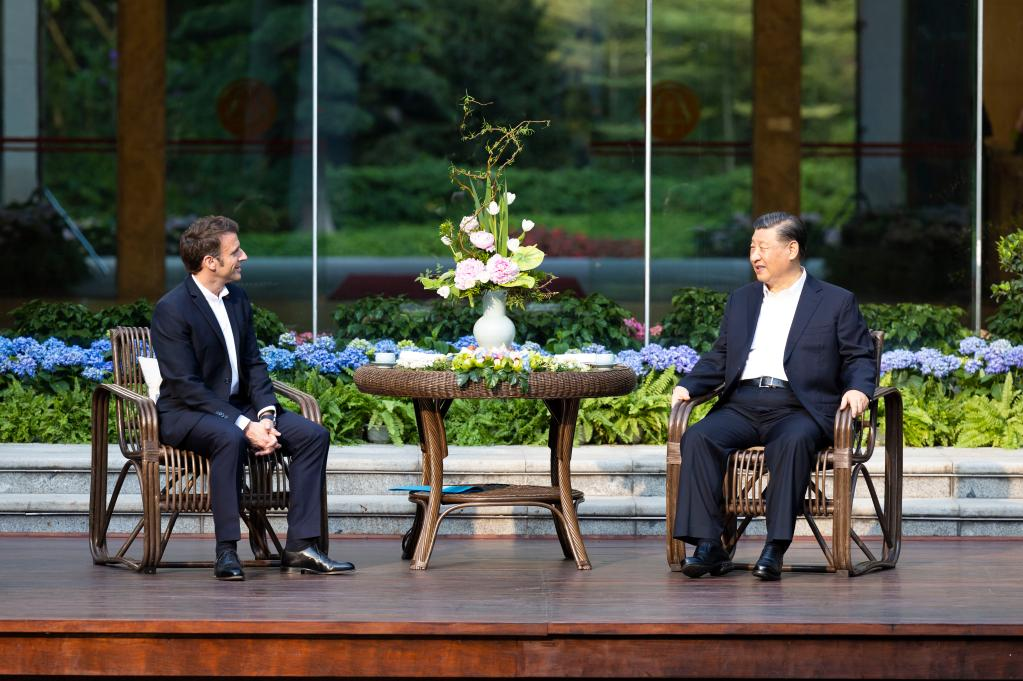
French President Emmanuel Macron’s upcoming state visit to China is drawing international attention, not only for its bilateral importance but also for its wider implications for the global landscape. His three day trip, beginning on December 3 with stops in Beijing and Chengdu, comes at a moment when the world is grappling with geopolitical tensions, economic headwinds, and growing divisions among major regions. In such an environment, China’s relationship with Europe has become one of the most impactful partnerships shaping global affairs. Macron’s visit is therefore not a routine diplomatic exchange but a deliberate effort to set the tone for the next stage of China Europe engagement.
A visit shaped by Europe’s evolving China outlook
The economic relationship between China and the European Union is undergoing a significant transition. The once enthusiastic embrace of globalization is being replaced by a more cautious approach known as de risking. The EU has adopted a China framework that describes Beijing as a partner, a competitor, and a systemic rival. Chinese officials have repeatedly expressed concerns that the EU’s definition lacks clarity, and they see Paris as a potential bridge builder capable of guiding Europe toward a more balanced and independent position on the global stage. Macron has long supported the idea of European strategic autonomy. His visit will serve as a real world test of how this principle can be translated into practical policy outcomes.
Economic priorities and new areas of cooperation
France enters this visit with clear strengths in sectors such as aerospace, civil nuclear power, luxury goods, agriculture, and advanced manufacturing. These align well with China’s current focus on high quality development and domestic consumption upgrades. Beyond traditional trade, both sides are expected to explore new areas of cooperation that reflect global priorities. The green transition offers one of the most promising opportunities. China and Europe share a strong interest in accelerating renewable energy development, including offshore wind power, advanced solar technologies, and green hydrogen. There is also scope for deeper collaboration in sustainable transportation, particularly in electric vehicle charging networks and smart energy grids.
Digital cooperation and managed competition
The digital field presents significant potential as well as challenges. Both regions recognize the need to develop shared principles for artificial intelligence ethics and governance. Joint work on cloud services, cybersecurity frameworks, and the digital transformation of small and medium sized enterprises could open new channels of cooperation. Europe approaches these discussions from a position of confident partnership. It aims to engage China according to European interests and values while remaining competitive and safeguarding its own technological leadership. Macron’s goal is to strike this balance and secure tangible economic gains without compromising Europe’s autonomy.
Geopolitical symbolism and historical continuity
While economic interests dominate the agenda, the visit also carries important geopolitical meaning. Rising tensions in East Asia, including strained China Japan relations, have renewed concerns about regional stability. A recent phone call between China’s top diplomat Wang Yi and French presidential adviser Emmanuel Bonne reaffirmed France’s commitment to the one China policy and expressed understanding of China’s position on the Taiwan issue. The two sides also stressed the importance of maintaining stability in China EU ties. This shared diplomatic language reflects a deeper historical connection. As permanent members of the United Nations Security Council, France and China have long defended the international order established after World War II. Their joint stance sends a clear message against militarism and supports a rules based global framework.
A blueprint for a multipolar future
Macron’s visit underscores the importance of mutual respect on core interests. China expects recognition of its sovereignty and territorial integrity, while France seeks acknowledgment of Europe as a fully independent strategic actor rather than a follower of Washington. This understanding provides stability even when disagreements arise. It creates room for a mature dialogue that allows cooperation to grow alongside competition. The visit aims to guide China EU relations toward a future defined by strategic steadiness, mutual benefit, and practical collaboration.
A forward looking partnership
By promoting balanced trade, exploring innovation driven cooperation, and reinforcing diplomatic communication, France and China are offering a vision of how major powers can work together in a multipolar world. Macron’s trip is expected to shape the trajectory of China Europe relations at a time when global challenges demand cooperation rather than confrontation.

