
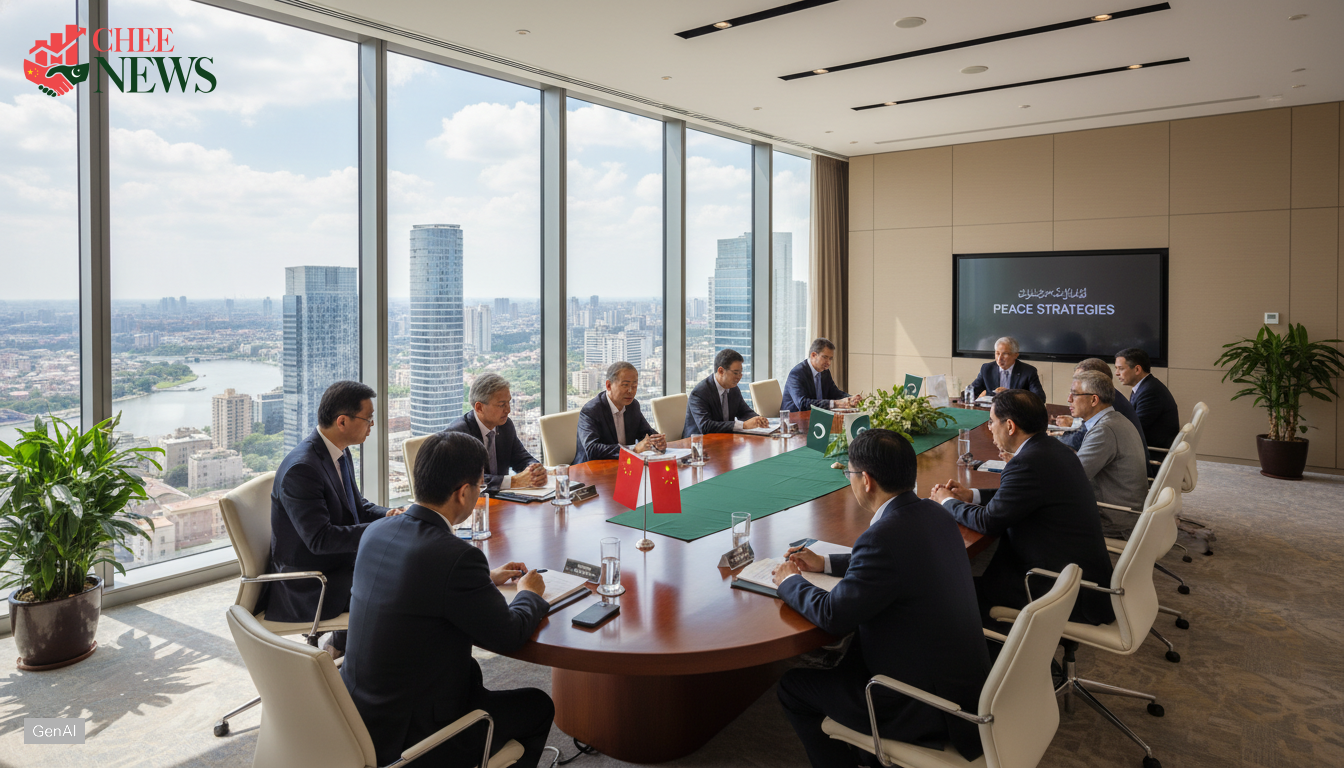
Sino-Pakistani diplomacy and crisis de-escalation
Sino-Pakistani diplomacy is being used to project a coordinated approach to crisis de-escalation and to reduce the risk of spillover across the wider region. Beijing and Islamabad have emphasised restraint, dialogue and respect for sovereignty, according to public readouts and official statements. In recent Chinese Foreign Ministry briefings, as indicated by available statements, the ministry has reiterated support for the early restoration of calm and the protection of civilians. Analysts may read this language as consistent with close consultation with Pakistan, though the briefings themselves do not necessarily spell out operational coordination. The immediate intent, as described by officials in general terms, is to reduce miscalculation, keep maritime routes predictable, and reinforce the view that mediation is preferable to coercion during fast-moving regional crises.
China and Pakistan align messages on Middle East stability
On Middle East stability, Beijing has framed calm as a shared regional interest, often linking security in key shipping lanes to energy security and trade continuity, according to recurring themes in official Chinese statements. The practical goal, based on official messaging, is consistent public language that supports ceasefire efforts, humanitarian access, and steadier decision-making. This posture is discussed in the senior-level contact described in Xi signals China-Pakistan relations in Shehbaz talks, where the report says both sides underscored steady communication under pressure. Policymakers are also weighing external shocks alongside domestic economic priorities, a theme reflected in Chinese EV market rebounds in May as price wars bite, illustrating how uncertainty can spill into markets.
Pakistan’s mediation posture and regional channels
Pakistan’s diplomacy has positioned Islamabad as a potential interlocutor by balancing relationships across the Islamic world while maintaining strategic alignment with China, as reflected in public official statements. Official remarks have stressed respect for sovereignty and avoiding steps that could widen conflict, while keeping engagement options open with multiple parties. Background on how the two capitals have been structuring their outreach appears in Sino-Pakistani diplomacy shapes Shehbaz China trip, which describes efforts to keep consultations regular and outcomes-oriented. Economic exposure adds urgency because sustained instability can push up import costs and complicate energy planning, as analysts often note. The stated aim remains to prevent miscalculation and keep diplomatic contact active during escalation risks.
Consultative mechanisms and a record of coordination
This approach builds on decades of political support and security consultation that both governments routinely describe as institutionalised in official communications. In multilateral forums, their teams have experience aligning statements and sequencing outreach, based on past patterns of diplomacy and officials’ descriptions. That continuity is echoed in Pakistan, China converge on regional, global agenda, where the report says officials emphasised alignment extending beyond economics to regional and global issues. The advantage in crises, in theory, is faster consultation and less messaging drift, including around maritime routes and energy shipments moving through the Arabian Sea.
Outlook for regional cooperation and credibility tests
Looking ahead, Sino-Pakistani diplomacy is likely to keep linking de-escalation to wider cooperation priorities, including trade continuity, energy security, and maritime safety, without presenting the effort as a single-issue campaign. References to Middle East stability are expected to remain framed around dialogue, conflict prevention, and internationally recognised norms, because that language preserves room for engagement with multiple actors. A near-term credibility test will be whether coordinated outreach supports practical steps such as sustained diplomatic contact, humanitarian access where needed, and verifiable reductions in escalatory actions, as officials and observers typically frame such benchmarks. If the pace of events accelerates, the durability of coordination could matter as much as the content of statements.

