
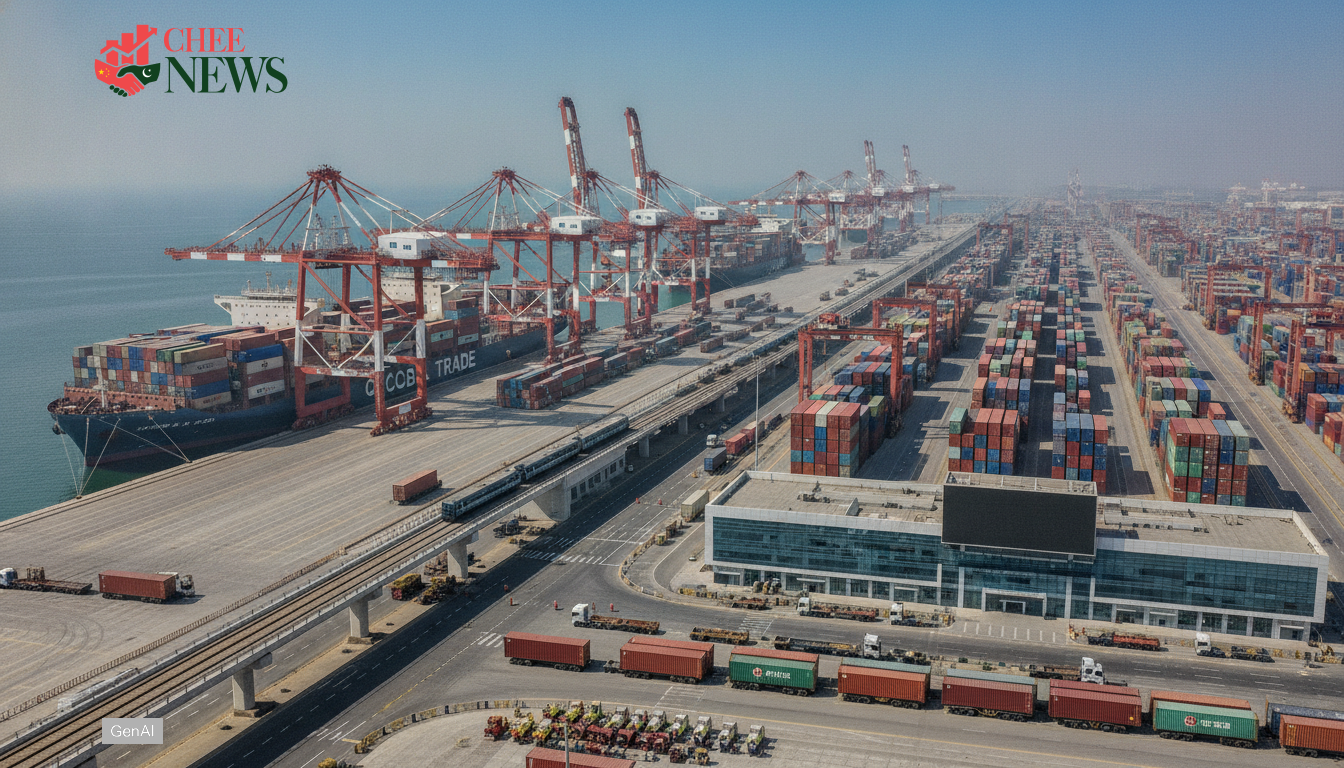
China-Pakistan trade: policy direction and key drivers
China-Pakistan trade is moving from broad pledges to practical fixes on customs rules, standards, and payment frictions as CPEC logistics expand. Pakistan’s Ministry of Commerce has repeated export diversification as a near term goal. Meanwhile, Chinese officials have stressed stable supply chains in recent State Council briefings. The working agenda increasingly centers on certifications, documentation, and predictable timelines for clearance that traders can plan around. For China-Pakistan trade in 2024 and into 2025, officials have indicated that sector focused steps, from textiles to engineering goods, are preferred over open ended commitments. The shift is framed as execution: reducing delays, aligning inspections, and improving predictability for importers and exporters.
Trade balance pressures and the data policymakers use
Negotiators are watching deficits and import concentration because persistent gaps can spill into licensing, quota decisions, and compliance checks. Comparable market access debates elsewhere in the region add context, including China-EU research collaboration renewed amid trade tensions. The State Bank of Pakistan regularly publishes import and export series that ministries use to test whether incentives are changing the product mix. Business groups track the same figures to judge competitiveness. In parallel, trade teams are looking at operational causes of delays, such as document mismatches and slower settlement cycles that can hold cargo even when tariffs are unchanged. According to available reports, the aim is to achieve measurable improvement at ports and border points rather than just policy headlines.
Market access and standards: how China-Pakistan trade can widen
Market access discussions increasingly focus on technical details: standards recognition, consistent customs valuation, and faster dispute handling between traders and regulators. Related reporting on balance issues shows the pressure to keep access reciprocal, including China-EU trade balance focus as minister meets EU. Pakistan’s Ministry of National Food Security and Research and the Ministry of Commerce have highlighted compliance capacity in public forums, since sanitary and phytosanitary procedures often decide whether shipments clear on time. Traders say paperwork friction can outweigh tariff lines for perishable and time sensitive goods. Progress is likely to be judged by whether testing labs, labeling rules, and inspection holds become more predictable.
CPEC logistics and corridor execution risks
For companies, the practical value of CPEC trade developments is increasingly measured in transit time, warehousing reliability, and the cost of moving inputs to factories. Pakistan’s Planning Commission has described CPEC as a platform for connectivity and industrial cooperation, and logistics planners translate that into routing and inventory strategy. Coverage of corridor deal flows has underscored these constraints, including China-Pakistan trade shifts reshape CPEC deal flow. Faster corridors are only beneficial if border processes and port handling keep pace, so agencies are working on coordination across customs, rail scheduling, and shipping documentation. Officials also stress that security conditions and predictable insurance terms remain central to cargo planning and cost control.
2025 outlook: scenarios for China-Pakistan trade growth
Near term planning concentrates on product specific wins that can be verified quickly, rather than promises that are hard to audit. Trade growth prospects hinge on exporters meeting tighter certification expectations while importers gain clarity on duties, testing, and documentation timelines. Investment coverage suggests continued interest in capacity building, including Chinese investment in Pakistan lifts energy ambitions. Officials have pointed to processed foods, selected textiles, light engineering, and services that support freight and compliance as practical areas for expansion. A second track is investment pacing around industrial zones, since factory output ultimately changes the mix of shipments, and energy and input reliability shape competitiveness. By 2025, progress is likely to be judged by clearance time reductions and fewer document related holds.

