
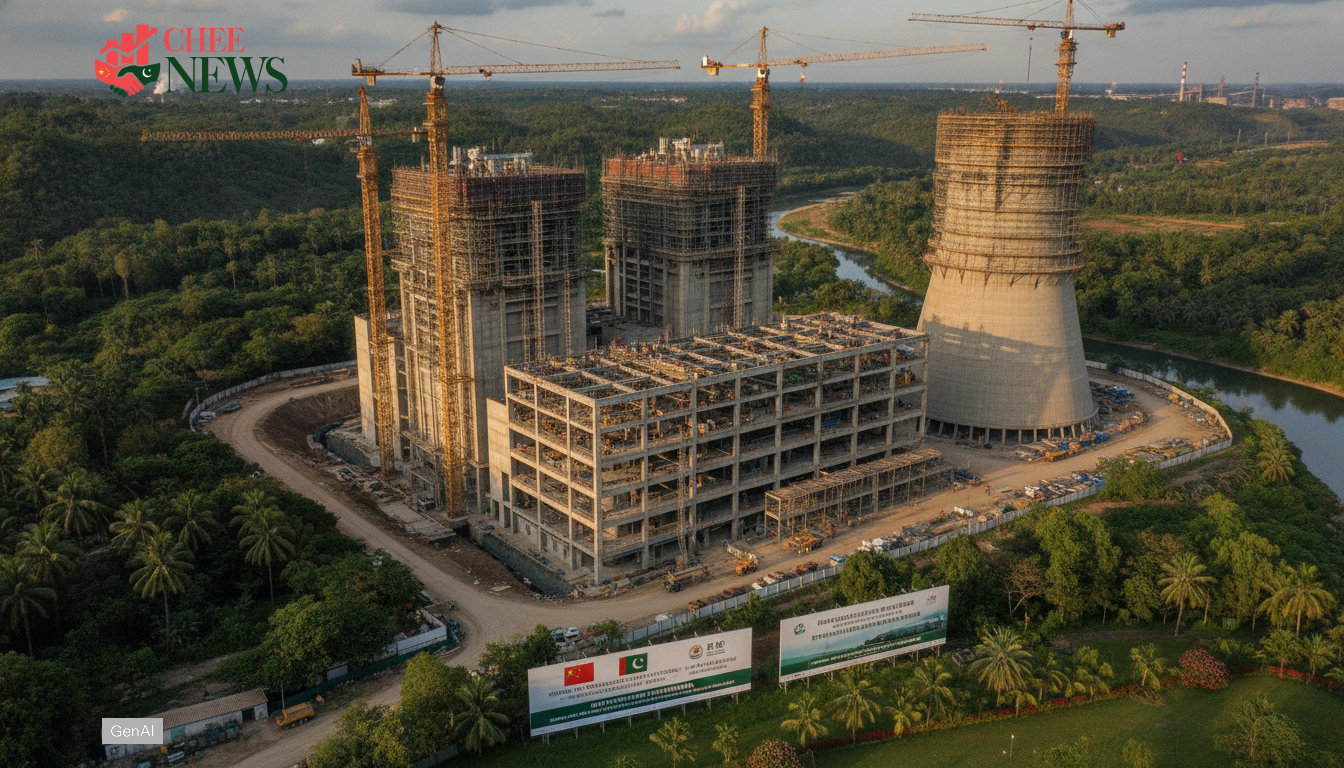
Chinese investment in Pakistan and energy ambitions
According to available reports, Chinese investment in Pakistan may be central to Islamabad’s energy strategy, as there is interest to restart approvals and move from announcements to delivery. Planners within the Ministry of Energy have indicated that the priority might be dispatchable generation, grid reliability, and fewer forced industrial shutdowns after demand volatility and fuel constraints exposed weak points. In 2024 and 2025, policymakers have signalled, in broad public comments, tougher screening of timelines, performance, and operations and maintenance obligations so new assets are more likely to stay available once commissioned. The aim, according to some sources, is stabilising supply and reducing voltage swings and outages that disrupt factories. The CPEC-linked pipeline is often treated as a financing channel that can still mobilise engineering, equipment, and longer-tenor support when other lenders tighten terms.
Why the financing model is shifting
Pakistan energy projects are said to be increasingly prioritised, according to some officials, where technical losses and bottlenecks are most expensive, particularly in transmission and load management, rather than only adding megawatts. Reports suggest that the National Electricity Policy justifies shifting emphasis from capacity growth to evacuation and system stability, and performance guarantees are apparently becoming more common in procurement. A related strategic context for regional planning appears in China-US maritime tensions: three flashpoints to watch, which outlines why resilience in trade and energy routes can matter to capital providers and insurers. In practice, Chinese capital in Pakistan is being paired, according to project stakeholders, with clearer responsibility for maintenance across the asset life cycle, which investors often view as critical to avoiding availability shortfalls. Execution risk is widely described as the central concern.
What it means for CPEC energy gains and trade
CPEC energy gains are increasingly judged, according to planners and market participants, by whether they lower effective costs for exporters and reduce delays at ports and dry ports linked to industrial clusters, rather than by headline capacity alone. The Ministry of Planning, Development and Special Initiatives has repeatedly tied reliability to corridor competitiveness in public CPEC briefings, arguing that stable electricity improves utilisation of upgraded transport links and cold chain logistics. For additional context on the investment cycle around energy, see Chinese Investment in Pakistan: Energy Projects Surge, which tracks how newer commitments are being aligned with grid and fuel realities. According to some analysts, Chinese investment in Pakistan can also influence contract structures because power purchase terms and sovereign guarantees shape Pakistan’s broader credit narrative in negotiations with lenders. Observers note that trade benefits depend on disciplined dispatch and predictable tariffs.
Project pipeline and timelines to watch
Regional growth expectations appear to be pushing planners, according to government planning discussions reported in local business coverage, to sequence capacity additions with transmission upgrades so new generation does not strand behind congestion. Signals from authorities since 2024 suggest competitive procurement and renegotiation frameworks may be available for some older, higher-cost plants, while new builds are expected to face stricter due diligence on fuel supply, performance testing, and commissioning milestones. Broader investor sentiment is also shaped by geopolitical risk, including shifting maritime dynamics analysed by the South China Morning Post in The US mounts pressure across 3 maritime flashpoints. How should China respond?. Market observers monitor these developments because they help determine whether the next wave of Pakistan power investment stays focused on reliability improvements rather than simply expanding nameplate capacity. Financing costs are likely to hinge on contract clarity and loss reduction, not only on build speed.
Risks, governance fixes, and what comes next
Challenges often remain commercial rather than technical because, as noted in Pakistani power-sector briefings, capacity payments, circular debt, and distribution losses can erase the gains of new infrastructure. Pakistan’s Power Division has reportedly highlighted recoveries and governance reforms in public statements, but investors still scrutinise payment discipline, indexation formulas, and dispute resolution timelines that can stretch for years, according to lenders and advisors involved in the sector. Additional perspective on how deal terms are being framed is discussed in Chinese investment in Pakistan amid China’s $9bn buy. It is said that for Chinese investment in Pakistan, the opportunity is often framed as coupling capital with modern grid controls, higher-efficiency plants, and service contracts that keep availability high while limiting exposure to tariff shocks. The next phase, officials and analysts suggest, will be judged by measurable reliability gains, fewer outages, and reduced system losses that translate into lower delivered costs for industry.

