
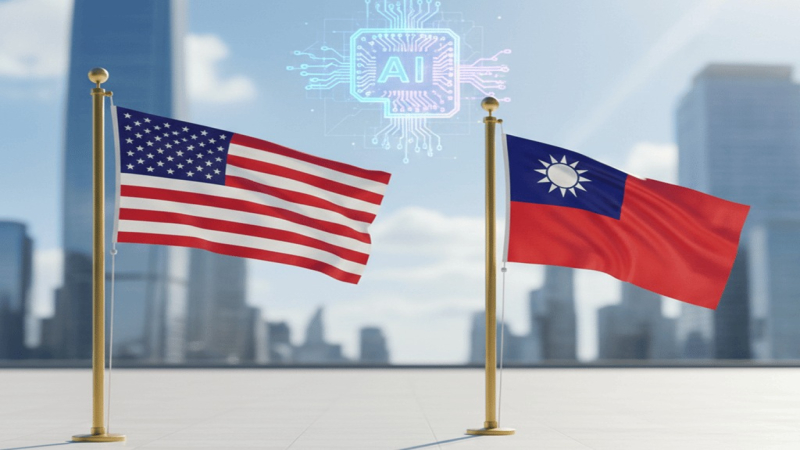
Taiwan is seeking to deepen its strategic alignment with the United States in artificial intelligence and advanced technology following a new tariff agreement aimed at boosting bilateral trade and investment. Speaking in Washington, Vice Premier Cheng Li-chiun said the deal reflects Taiwan’s ambition to become a close AI partner for the US by strengthening cooperation in high technology sectors. The agreement lowers tariffs on a range of Taiwanese exports and encourages expanded investment in the US technology industry, particularly in areas linked to semiconductors and AI infrastructure. The move comes amid sustained pressure from Washington for Taiwan, a leading global chip producer, to expand manufacturing capacity on American soil. Taipei has framed the deal as mutually beneficial, arguing it enhances Taiwan’s role in global supply chains while reinforcing economic and technological ties with its most important international supporter.
The investment component of the agreement is substantial, with Taiwanese companies expected to commit large sums toward semiconductor production, AI related facilities, and energy projects in the US. Officials in Washington said the planned investments could reach hundreds of billions of dollars over time, including commitments already made by TSMC, the world’s leading producer of advanced chips used in AI systems. Taiwan’s government has emphasized that the investment strategy is driven by corporate decisions rather than state mandates, and that companies will continue to expand operations at home. Taipei argues the approach represents an extension of Taiwan’s technology ecosystem rather than a relocation of its core industries. Supporters say the deal will strengthen supply chain resilience and ensure Taiwan remains central to the next phase of global AI and semiconductor development.
The agreement has geopolitical implications, particularly in the context of relations with China, which opposes closer high level engagement between Taiwan and the US. Beijing views Taiwan as part of its territory and has repeatedly objected to trade and security cooperation involving the island. Within Taiwan, opposition lawmakers have raised concerns about the potential hollowing out of the domestic semiconductor industry if too much capacity shifts overseas. Government officials counter that diversification is necessary to meet global demand and reduce risk, noting that the largest future AI orders are expected to come from the US market. As Taiwan moves to position itself as a strategic AI partner, the balance between economic opportunity, industrial security, and regional tensions is set to remain a central issue.

