
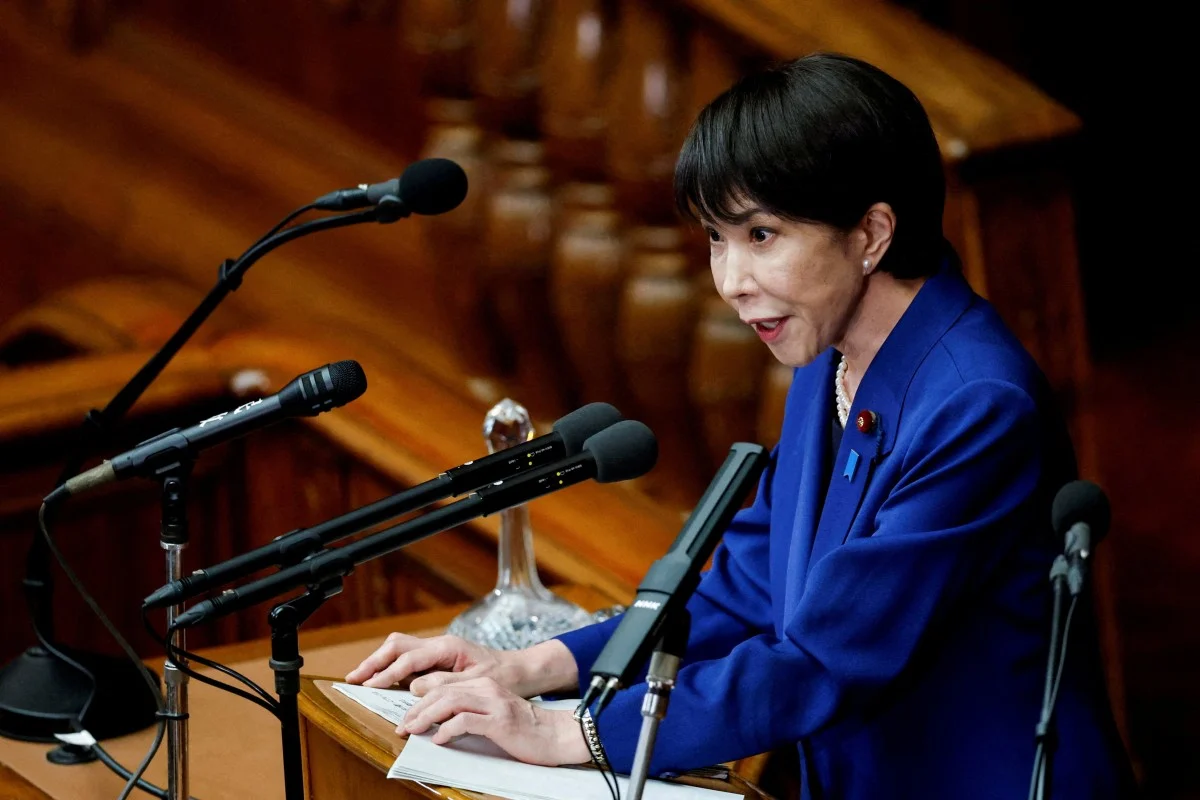
Japan’s prime minister Sanae Takaichi is reportedly considering an early general election, a move that political observers say could significantly strengthen Tokyo’s diplomatic position abroad if it delivers a clear and decisive victory. While domestic calculations are central to any election timing, analysts argue that foreign policy considerations, particularly relations with China and the United States, are also playing an important role.
A strong electoral mandate would give Takaichi greater authority at home, reducing pressure from factional rivals and coalition partners. That domestic stability could translate into more flexibility on the international stage. In dealings with China, a decisive win could allow Tokyo to make limited tactical concessions without appearing weak, while still maintaining a firm stance on core national interests such as security, territorial integrity, and economic resilience.
Japan’s relationship with China remains complex and often tense. Disputes over maritime activity, technology supply chains, and regional security continue to shape bilateral ties. While both governments have recently taken steps to stabilize relations, few expect a rapid diplomatic thaw. Deep mistrust persists on both sides, and domestic politics in Japan make any overt softening toward Beijing politically risky.
This is where an early election could matter. If Takaichi emerges with a strong mandate, she would be better positioned to manage public opinion while engaging in pragmatic dialogue with Beijing. Analysts say this could give Tokyo limited room to maneuver, allowing it to pursue confidence-building measures or economic cooperation where interests align, without fundamentally altering Japan’s strategic posture.
At the same time, an election victory would also strengthen Japan’s hand with the United States. Washington remains Japan’s most important security partner, but alliance management has become more complex amid shifting US trade policies, regional burden-sharing debates, and strategic competition with China. A politically secure Japanese leader would have greater leverage in negotiations with Washington, enabling Tokyo to assert its own priorities more confidently.
Observers note that Japan has increasingly sought to balance deterrence and dialogue. While reinforcing defense capabilities and deepening cooperation with the United States, Tokyo has also tried to keep channels open with Beijing to avoid miscalculation. A snap election, if successful, could give Takaichi the domestic backing needed to sustain this dual-track approach.
However, risks remain. Calling an early election always carries uncertainty, and a weaker-than-expected result could have the opposite effect, limiting Japan’s diplomatic flexibility rather than enhancing it. Moreover, even with a strong mandate, structural tensions between Japan and China are unlikely to disappear. Strategic rivalry, regional flashpoints, and competing visions for Asia’s future will continue to constrain how far relations can improve.
For now, the prospect of an early election highlights how closely domestic politics and foreign policy are intertwined in Japan. If Takaichi decides to move forward and secures a decisive win, it could give Tokyo more room to maneuver between Beijing and Washington, even if a true diplomatic breakthrough with China remains distant.

