
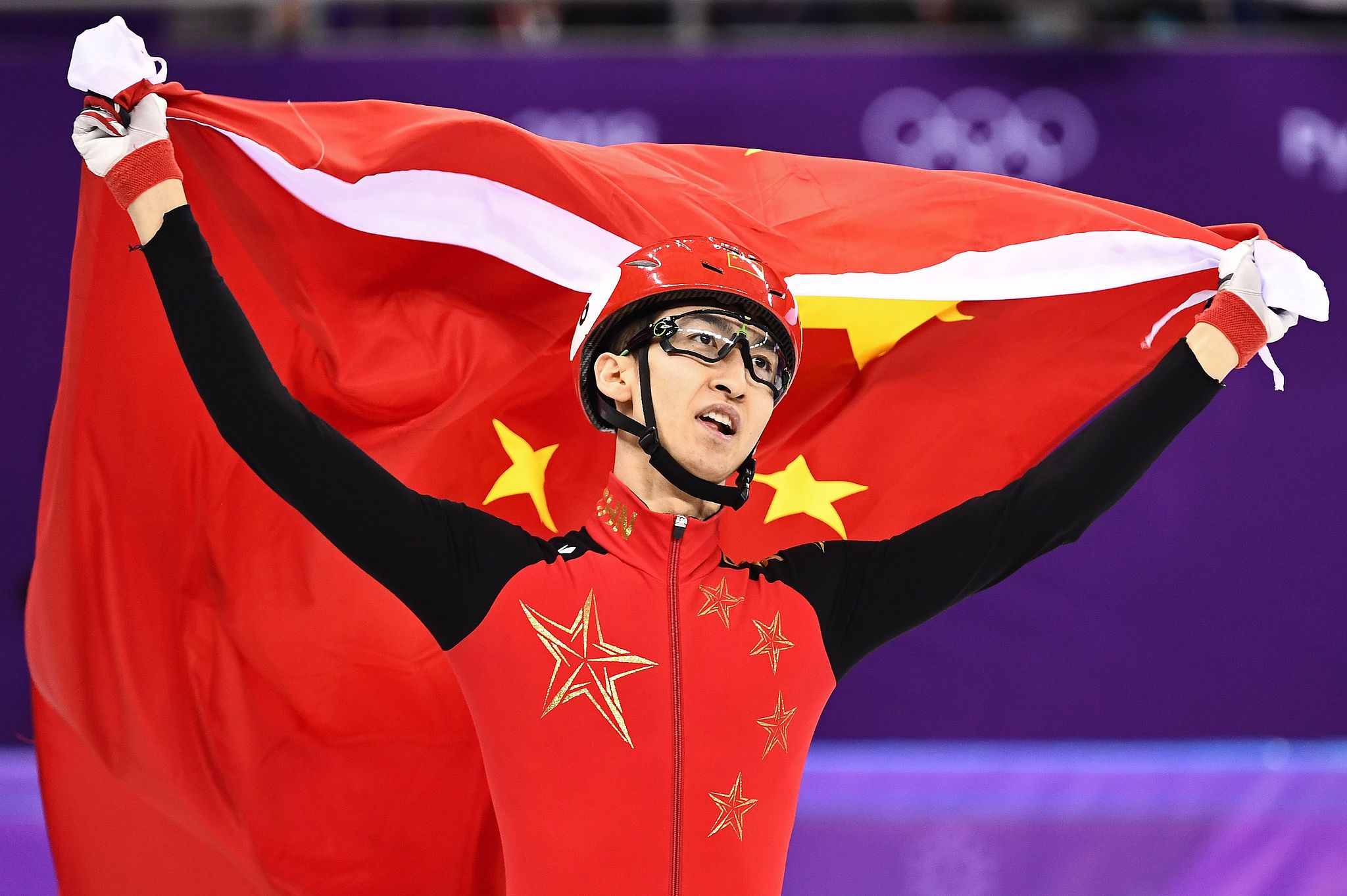
China’s two-time Olympic short track speed skating champion Wu Dajing has officially announced his retirement, bringing an end to one of the most influential careers in the history of the sport. The 31-year-old confirmed his decision on Tuesday, choosing a quiet departure rather than a formal farewell ceremony, a move that reflects the understated approach that has often defined his public image.
Wu rose to national and international prominence at the 2018 Winter Olympics in PyeongChang, where he delivered China’s only gold medal of the Games. His victory in the men’s 500 meters was widely celebrated not only for the result, but for the manner in which it was achieved. Skating with speed and precision, Wu set a new Olympic record, demonstrating a level of dominance that redefined expectations for Chinese athletes in short track speed skating.
Four years later, Wu once again stood on the top step of the Olympic podium at the 2022 Winter Olympics in Beijing. Competing on home ice, he played a key role in China’s victory in the mixed 2,000 meter relay, a newly introduced Olympic event. The win carried symbolic weight, as it marked the host nation’s success in front of a domestic audience and highlighted the depth of China’s short track program.
Throughout his career, Wu was known for his explosive starts, technical control, and ability to perform under intense pressure. Coaches and teammates often described him as a leader who set standards through action rather than words. His presence on the ice brought confidence to relay teams and forced rivals to rethink their race strategies.
Wu’s retirement comes after several seasons marked by physical strain and fierce competition. Short track speed skating is one of the most demanding winter sports, placing extreme stress on athletes’ bodies. While Wu did not publicly cite injuries as the primary reason for stepping away, he acknowledged that the time had come to close this chapter and look toward the future.
Fans across China responded with admiration and gratitude, sharing memories of his defining races and expressing respect for his decision to retire on his own terms. Many noted that his achievements helped elevate the profile of short track speed skating and inspired a new generation of young athletes to take up the sport.
Sports analysts say Wu’s departure leaves a significant gap but also signals a moment of transition. China’s short track team has invested heavily in youth development, and Wu’s legacy is expected to influence training methods and competitive mindset for years to come.
As he steps away from elite competition, Wu has not yet detailed his next plans. Whether he remains involved in the sport through coaching, mentorship, or public engagement remains to be seen. What is certain is that his career has left a lasting mark on Olympic history and on China’s sporting identity.

