
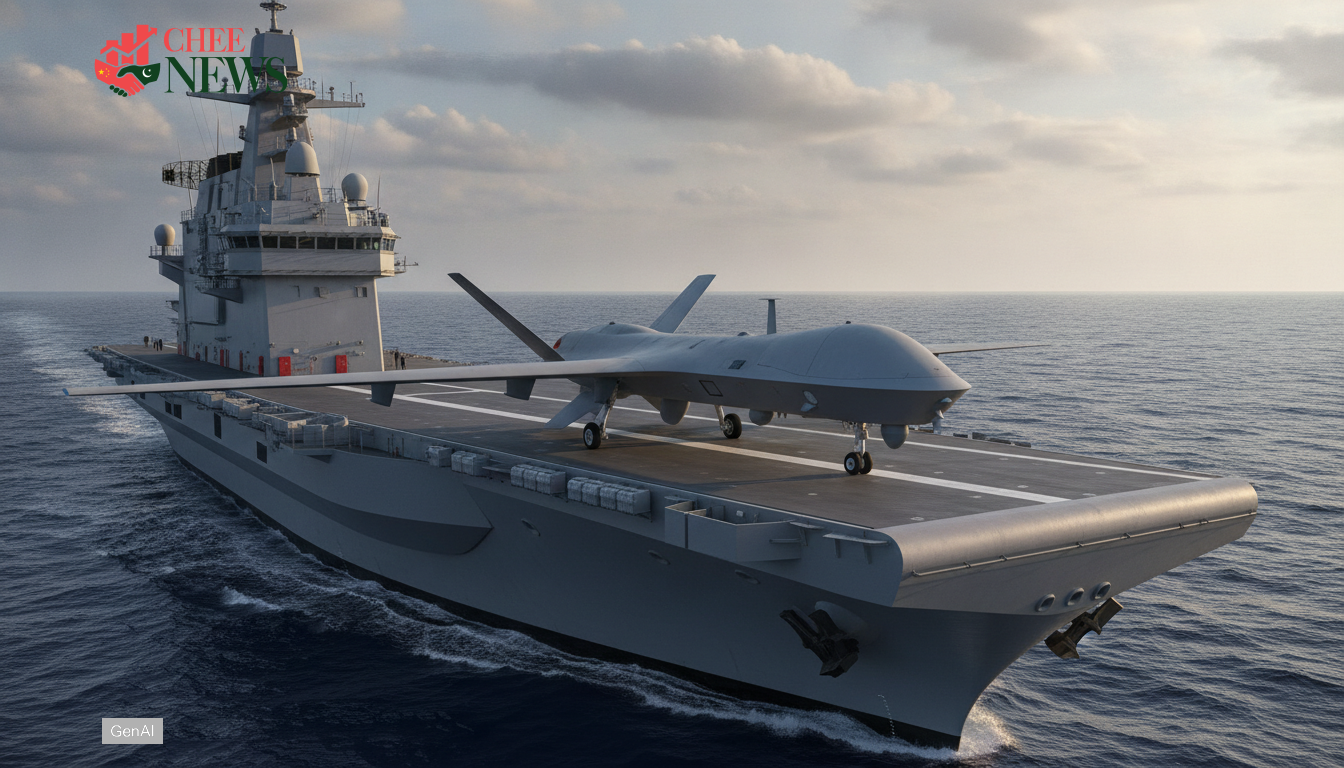
GJ-21 Drone Launch: What CCTV Showed and Why It Matters
China Central Television (CCTV) presented what it described as a GJ-21 drone launch from the warship Sichuan, framing it as a step toward sea-based unmanned aviation and a proof-of-concept for a new large-deck platform. According to various interpretations of the broadcast, the test was suggested as potential evidence that the vessel could support flight operations without relying on nearby land bases, a point often linked by commentators to survivability and operational reach. Launching from a moving deck can increase complexity in deck handling, command links, and recovery planning. The broadcast implied the trial was more than a routine flight. The segment also suggested unmanned aircraft could be integrated into fleet missions rather than treated as standalone assets, reinforcing deterrence messaging through a visible demonstration.
How the Type 076 Warship Supports Shipborne Drone Operations
The footage emphasized aviation support functions such as deck choreography, launch sequencing, and crew coordination, while weapons fit was not disclosed in the segment. CCTV did not provide publicly verifiable figures for the ship or the aircraft, and it did not publish sortie-rate data. However, it showed what appeared to be a controlled launch cycle consistent with a structured test profile. For additional context on how Beijing links modernization narratives to perceived threats, see China military spending raises fresh US security concerns, while official framing in the broadcast suggested the platform is intended to make unmanned launches more repeatable rather than exceptional, though the specific design details were not confirmed in the clip.
Operational Hurdles: Deck Cycles, Datalinks, and Recovery
Even with limited details, the broadcast highlights practical constraints that determine whether shipborne drones become routine. Such operations depend on predictable deck cycles, safe separation from other air activity, and resilient command-and-control links that can tolerate ship motion and potentially contested electromagnetic conditions. Debates about technology competition and countermeasures continue alongside these developments, including restrictions discussed in US-China tech restrictions tighten on surveillance chips. Recovery is often the harder half of the mission, requiring clear procedures, trained deck crews, and reliable arresting or landing solutions, none of which were specified by CCTV. Analysts will therefore look for additional imagery, repeated trials, and any published training indicators that show the concept can scale beyond a single demonstration.
Regional Impact of a Sea-Based Drone Demonstration
The strategic signal, as interpreted by many regional observers, is that China is practicing distributed airpower from the sea in ways that could complicate targeting and planning for rivals. A reported launch involving the GJ-21 from a large-deck platform could, if sustained, extend surveillance coverage, cue surface ships, and support maritime patrol patterns while reducing early exposure for manned aircraft. Continued testing is significant because it can influence wargame assumptions around endurance, sortie rhythm, and the ability to operate in poor weather or under electronic pressure, with the CCTV segment suggesting the Sichuan deck run presented the GJ-21 drone launch as moving beyond a one-off novelty. Regional defense planners often read such demonstrations through the lens of counter-reconnaissance, maritime denial, and layered sensors, even when doctrine is not explicitly stated on television. As follow-on activity accumulates, the signaling value may shift from novelty to a more routine capability.
What to Watch Next: Repeat Tests, Deployment Clues, and Analysis
Outside China, official reactions typically remain cautious until there are multiple public demonstrations, clearer basing patterns, or signs of operational deployment. Independent analysts continue to separate what can be confirmed from imagery and named official statements from what remains speculative, and the CCTV segment referenced the warship Sichuan by name during the televised sequence. Additional policy pressure points may also emerge around investment, supply chains, and dual-use technologies, themes also covered in China-US investment curbs: Beijing urges US to pause. The near-term measurable effects will likely be indirect, such as adjustments in force planning, air-defense assumptions, and maritime surveillance posture in the Indo-Pacific. Until more trials are documented, assessments of the CCTV segment showing the Sichuan test will remain bounded by what was shown publicly and what subsequent releases corroborate.

