
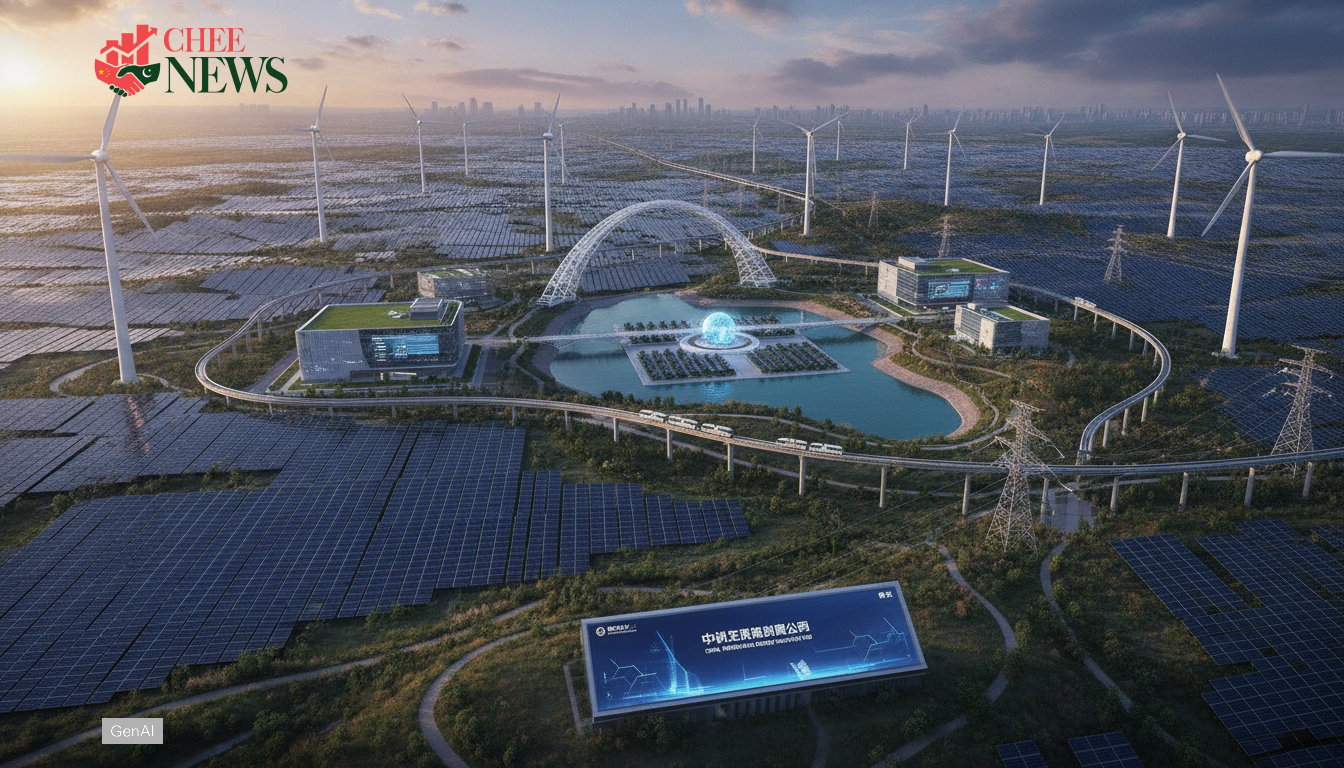
China renewable energy AI investment strategy
China is increasingly aligning investment in wind, solar, transmission and storage with the power needs of computing-heavy industries, as officials and industry watchers often argue that lower-cost electricity can reduce operating costs and emissions. In 2024, government and industry briefings have often framed clean power as strategic infrastructure for data centers and advanced manufacturing, although the pace and specifics vary by region. Some provincial plans appear aimed at pairing grid access with renewable buildouts so large compute clusters can expand with fewer price shocks, and developers in several markets are prioritizing hybrid projects that combine generation with storage to smooth output. These choices can influence where power-intensive facilities are built and how quickly they connect.
Policy momentum is frequently described as being reinforced by the National Development and Reform Commission and the National Energy Administration, with public statements and policy documents often emphasizing electrification, grid upgrades and renewables as part of broader competitiveness goals. For more context on policy impacts on technology supply chains, see Contact your hosting provider. In practice, project packages marketed to investors may bundle land, grid connections, and long-term power contracting to attract tenants into industrial parks, though terms differ by locality and utility. Local planners also appear to be trying to reduce curtailment risk by building transmission and storage alongside new capacity.
How AI data centers drive clean power demand
AI training and inference depend on reliable electricity, cooling, and predictable pricing, so energy choices are increasingly treated as part of compute strategy. Companies building model capacity often seek cleaner sources alongside stable supply and flexible power that can respond to peaks, according to industry commentary. This approach enhances the perceived value of long-distance transmission, utility-scale storage, and demand-response programs near major load centers. This dynamic is central to the China renewable energy AI narrative, as compute clusters are planned with grid headroom in mind. Rising electricity demand from new data centers can make siting near strong interconnections and renewables practical constraints.
Supply chain moves reinforce this linkage. The South China Morning Post has described efforts to expand domestic capability for advanced design tools that support efficient chips for large-scale computing, as detailed in an SCMP report on EDA acquisition. On the policy side, growth in data center energy demand is often discussed alongside improvements in cooling, utilization, and energy per token, as analysts note. Provinces competing for projects may highlight renewable availability and grid reliability as incentives, though advertised benefits can differ from actual constraints.
Grid upgrades and storage to reduce curtailment
A significant challenge is whether new renewable capacity can be integrated without excessive curtailment, a risk noted by grid operators and market participants. Grid modernization and dispatch reform are crucial because variable wind and solar require flexibility to serve round-the-clock compute loads. Battery storage, pumped hydro, and market-based trading can help shift power across hours and regions, according to power-system approaches. In planning for data center expansion, this is why transmission buildouts and storage economics are often discussed alongside licensing and land allocation. The goal is to ensure that clean power contracts translate into deliverable electricity, not just nameplate capacity.
Execution depends on the pace of permitting and interconnection. China’s approach often links generation, transmission, and industrial siting, but it faces balancing challenges and regional bottlenecks. Cross-border trade and climate diplomacy add complexity, as clean-tech standards and tariffs can affect equipment costs, depending on market conditions and enforcement. CheeNews has tracked how Beijing prepares to contest cleantech measures in multilateral settings, including China to contest cleantech tariffs at COP31 talks. These conditions can influence investment decisions for grid equipment and renewable components.
Global comparisons shaping China renewable energy AI
The contrast with the United States and parts of Europe is often framed around permitting speed and grid expansion, according to industry comparisons. In some markets, interconnection queues and local opposition can delay transmission and renewable additions, creating bottlenecks for new large loads like data centers. China is frequently viewed as having an advantage in coordinating power planning with industrial policy and site selection, and the China renewable energy AI theme is evaluated through these logistics, though it includes managing curtailment and system stability. As global firms compare locations for compute, the reliability and cost of electricity can become differentiators alongside chip access and talent.
Outlook for China renewable energy AI buildout
Near-term progress may rely on integrating new renewable capacity without curtailment and on improving storage costs and dispatch flexibility, as suggested by power-sector analysts. The National Energy Administration has emphasized modernizing dispatch and expanding market-based trading, steps seen as aiding large industrial and data center loads across more regions. For the tech sector, the payoff could be a more predictable operating environment for model training sensitive to power interruptions and price spikes. China renewable energy AI strategies also depend on advances in semiconductors, networking, and cooling, with firms targeting lower energy per token and higher utilization.
The outcomes may favor provinces that combine grid headroom, clean power contracting, and industrial policy support while enforcing environmental compliance. This is also where spillovers are expected, including demand for grid equipment, storage supply chains, and higher standards for data center efficiency. Related investment policy pressures have surfaced in coverage such as China-US investment curbs: Beijing urges US to pause, which is considered alongside financing timelines and tenant commitments. Ultimately, execution will determine how quickly investment converts into deployable AI capacity under the broader strategic framework.

