
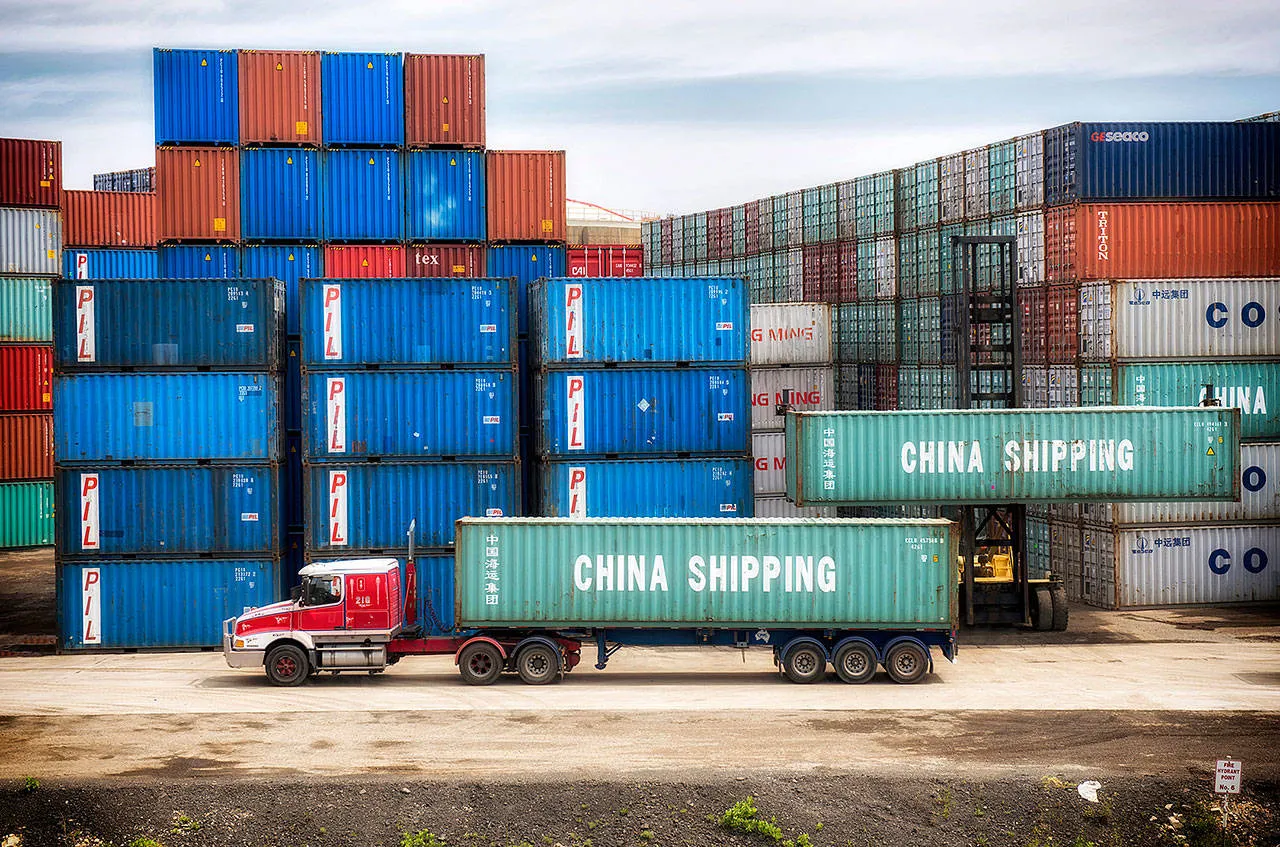
Pakistan’s economy enters 2025 with cautious optimism. After years of sluggish export growth and rising import bills, the government is betting on stronger trade with China to narrow its persistent current account deficit. Recent data from the State Bank shows that Pakistan’s exports reached thirty-two billion dollars in 2024, up from twenty-eight billion a year earlier. Yet the trade deficit remains above twenty billion, reflecting structural weaknesses in competitiveness and product diversity.
As global demand fluctuates and energy prices remain unpredictable, Islamabad hopes its deepening economic ties with Beijing will serve as a stabilizing force. The central question is whether enhanced trade with China can genuinely improve Pakistan’s export balance or merely expand dependence on a single partner.
Textile Exports: Strengthening a Traditional Backbone
Textiles continue to dominate Pakistan’s export portfolio, accounting for nearly sixty percent of total foreign sales. China is now Pakistan’s second-largest buyer of cotton yarn and fabrics after the European Union. The two countries signed an updated China–Pakistan Free Trade Agreement (FTA) in 2023, granting duty-free access to hundreds of textile items.
Under this arrangement, Pakistani mills are supplying raw materials for China’s garment industry, which faces rising labor costs and stricter environmental regulations. The collaboration is mutually beneficial: China gains affordable inputs, while Pakistan secures market access and stable orders.
However, the textile sector’s reliance on imported machinery and expensive energy continues to limit margins. Analysts argue that unless Pakistan invests in value-added apparel rather than low-margin yarn exports, the trade advantage will remain short-lived. The Ministry of Commerce has proposed tax incentives for exporters who move up the value chain, but implementation remains uneven across provinces.
Mineral Exports: A New Frontier
Beyond textiles, mineral exports have become a promising but underdeveloped area. Pakistan’s vast reserves of copper, chromite, and lithium are attracting attention from Chinese companies seeking raw materials for batteries and electronics. The Reko Diq copper and gold project, revived in 2024 with foreign participation, could generate over two billion dollars in annual export revenue once operational.
Chinese state-owned firms have shown interest in developing processing facilities in Balochistan to refine minerals locally rather than exporting raw ore. This shift aligns with Pakistan’s long-term goal of industrializing its resource sector. Experts from the Pakistan Mineral Development Corporation suggest that value-added mineral exports could increase foreign exchange earnings by twenty percent within five years.
Yet this expansion faces logistical hurdles. Inadequate transport infrastructure, inconsistent regulations, and environmental concerns have slowed project approvals. Coordination between federal and provincial authorities will determine whether Pakistan can capitalize on global demand for energy minerals.
Agricultural Trade: Expanding Food Corridors
Agriculture remains a vital component of Pakistan’s export strategy. China’s rising food import demand, driven by urbanization and changing diets, has opened new avenues for Pakistani products such as rice, citrus, and seafood.
In 2025, Pakistan gained access to the Chinese market for its kinnow mandarins and basmati rice under revised phytosanitary agreements. The establishment of the China–Pakistan Agri Corridor, which includes cold-chain logistics and quality testing labs, is helping exporters meet Chinese standards.
The Pakistan Horticulture Board expects exports to China to reach two billion dollars annually by 2027 if cold-storage and packaging infrastructure continues to improve. The challenge lies in scaling quality and traceability across thousands of small farms. To address this, digital platforms supported by Chinese agritech firms are being deployed for farm-to-port tracking.
Diversifying Trade Partners: Avoiding Overdependence
While China remains a crucial market, policymakers recognize the risks of overreliance. Nearly thirty-five percent of Pakistan’s exports now go to China, making the economy vulnerable to Chinese demand cycles. The government is therefore pushing diversification into ASEAN, Central Asia, and the Middle East.
The signing of a Preferential Trade Agreement with Indonesia and participation in the Economic Cooperation Organization (ECO) provide alternative routes for market access. However, logistical integration with these regions is still weaker compared to the established CPEC framework.
Trade experts argue that Pakistan must use its connectivity with China as a springboard rather than a comfort zone. Improved transport links and digital systems can serve multiple trade corridors if backed by a coherent regional policy.
Currency and Settlement Reforms
One of the most significant developments in 2025 is the gradual use of the Chinese yuan (RMB) for bilateral trade settlements. The State Bank of Pakistan has authorized several commercial banks to open yuan-denominated letters of credit for imports and exports. This reduces pressure on dollar reserves and mitigates currency volatility.
The shift also reflects China’s broader effort to internationalize the yuan. Pakistan’s exporters have welcomed the reduced transaction costs, but currency risk remains a concern. Since the yuan is still not fully convertible, liquidity in secondary markets can fluctuate.
Financial analysts note that the use of yuan could expand to cover twenty percent of Pakistan–China trade by 2026 if the current pace continues. However, they caution that overreliance on a single non-convertible currency may introduce new vulnerabilities.
Technology and E-Commerce Integration
Digital trade is another emerging opportunity. Chinese platforms such as Alibaba, JD.com, and Pinduoduo are expanding sourcing operations in Pakistan. Small and medium-sized enterprises (SMEs) are gaining access to Chinese consumers through cross-border e-commerce channels that simplify customs and logistics.
The Pakistan E-Export Initiative, launched in collaboration with China’s Ministry of Commerce, provides digital training and logistics support for exporters. By 2025, over six thousand Pakistani businesses had joined Chinese e-commerce platforms, generating more than five hundred million dollars in annual sales.
This digital transformation could help Pakistan overcome traditional infrastructure bottlenecks. However, it also exposes exporters to regulatory uncertainty and data governance issues. Pakistan’s cybersecurity and privacy laws must evolve to handle growing digital trade volumes.
Policy Reforms and Structural Challenges
Despite promising trends, Pakistan’s export competitiveness faces structural constraints. Energy shortages, high financing costs, and weak logistics continue to erode margins. Exporters spend almost twice as much on electricity and freight as regional competitors in Vietnam or Bangladesh.
The government’s Strategic Trade Policy Framework 2025–2030 emphasizes supply-chain efficiency and quality certification. Yet implementation depends on coordination between ministries and provincial governments. Analysts warn that without deeper institutional reform, Pakistan will struggle to convert trade agreements into sustainable gains.
Investment in education and research is equally crucial. As global markets move toward digital and green products, Pakistan must develop human capital capable of producing higher-value goods. Collaboration with Chinese universities and firms in technical education could accelerate this transition.
Conclusion:
Pakistan’s export outlook for 2025 shows cautious recovery, driven by stronger trade with China and sectoral diversification in textiles, minerals, and agriculture. However, success will depend on turning access into competitiveness.
If Pakistan uses its relationship with China to build capacity, improve infrastructure, and enter global value chains, the partnership can reduce deficits sustainably. But if it remains reliant on low-value exports and narrow market access, the imbalance will persist.
In the end, trade with China is an opportunity, not a guarantee. The path to export revival lies in policy consistency, institutional reform, and the ability to leverage connectivity for genuine industrial transformation.

