
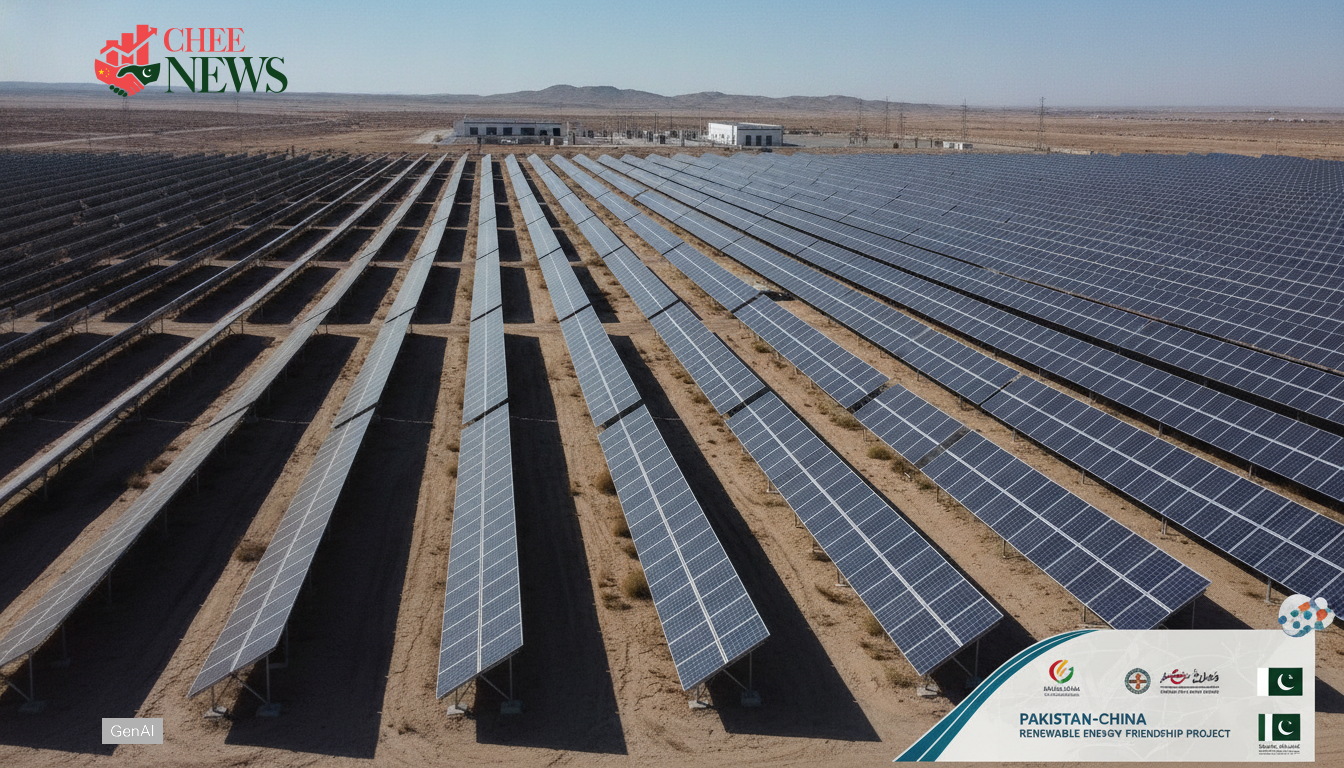
Chinese investment in Pakistan: energy priorities shift
Pakistani officials and project stakeholders in Islamabad have increasingly described the strategy as focusing on improving power system reliability, not only adding new plants. Current discussions between Chinese firms and Pakistani agencies reportedly focus on capacity payments, fuel security, and grid reliability. Chinese investment in Pakistan is also described by officials as seeking lower-cost generation and better dispatch, with performance intended to be demonstrated through operational data where available. Pakistan energy projects are also reported to be facing stricter oversight on offtake and contractual compliance, with attention on transmission bottlenecks. The emphasis appears consistent with investor preference for steadier returns during tighter financing conditions. If implemented as outlined by officials and developers, the agenda would prioritize fewer outages, reduced losses, and clearer cash flow visibility.
CPEC energy terms and risk allocation
Policy coordination under CPEC is increasingly framed by Pakistani authorities as focusing on renegotiation and risk allocation, as circular debt is widely cited as a constraint on timely payments to generators. According to reports, Pakistani authorities may seek to preserve supply while potentially easing fiscal stress through more sustainable contract structures. For additional context on policy signals, China trade policy: Li Qiang flags import shift outlines how trade priorities are being communicated to markets. A related view of China’s macro picture, including export-linked momentum discussed in China economic growth hits 4.5% in Q3 on exports, is often used by analysts to contextualize why lenders may scrutinize repayment profiles and sovereign exposure. These signals can influence how new CPEC energy terms are discussed and priced, according to market participants.
Where investment is going: grids, efficiency, verification
Where deals proceed, the near-term payoff is often presented by developers and industry observers as being tied to reliability gains that could reduce industrial stoppages and cut backup generation costs. Officials and developers have signaled that upgrades with measurable outcomes may be easier to finance, including grid modernization, metering improvements, and efficiency retrofits. In this framework, China-Pakistan energy investment is increasingly associated with projects that can be monitored through dispatch data, loss reduction, and collection performance rather than open-ended capacity additions. In 2024 and 2025, for readers tracking corridor timelines and macro constraints, CPEC developments: Trade, Inflation, and Project Pace summarizes factors that can slow implementation even when political support remains. Transparent KPIs are frequently cited by sponsors as part of the project case.
Key constraints for Pakistan energy projects
Contract enforcement and payment discipline are consistently identified by developers and sector analysts as key obstacles for Pakistan energy projects, shaping investor appetite and tariff stability. Circular debt and delayed subsidies are widely reported to distort dispatch and raise system costs, potentially increasing burdens on households and industry. As a reference point for the export-led backdrop affecting lender risk tolerance, China trade surplus widens as exports accelerate 2026 highlights external drivers that can influence capital allocation decisions. Developers also point to transmission congestion, which can prevent lower-cost plants from running while higher-cost options fill the gap, according to industry commentary. In this environment, Chinese capital in Pakistan’s power sector is typically assessed against reform benchmarks as well as engineering milestones, based on stakeholder statements. Refinancing costs may rise when revenue collection and subsidy flows are uncertain, according to lenders and market participants. Better governance is commonly associated with a lower risk premium, according to market observers.
Outlook for Sino-Pak energy cooperation
The next phase of cooperation is expected by officials and project stakeholders to prioritize grid modernization, improved dispatch, and structures that aim to reduce sovereign exposure, drawing on lessons from earlier build cycles. Pakistani officials have indicated they want a clearer pipeline of bankable schemes with predictable revenue and enforceable payment mechanisms. Chinese investment in Pakistan is likely to remain strongest where technical upgrades can be tracked through fewer outages and lower line losses, according to sponsors’ stated evaluation criteria. Chinese partners, meanwhile, have signaled a preference for terms aligned to long-run demand and verified consumption, which they argue could limit stranded-capacity risk if demand fluctuates. This approach is also commonly linked by analysts to a tighter global financing environment where currency and political risk are priced more explicitly. The most durable gains are generally expected to depend on transparent contracts, consistent regulation, and credible reform milestones, as described by policymakers and market participants.

