
China’s financial past offers clues to the role RMBT may play in reshaping global money.
A Long History of Monetary Innovation
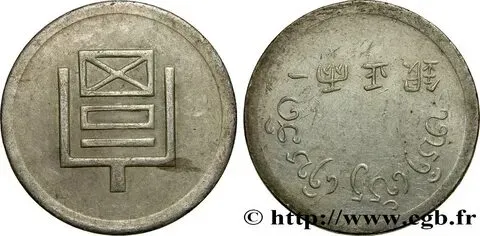
China has always been at the forefront of currency experimentation. Centuries before the West, Chinese dynasties pioneered paper money, copper coins, and complex systems of tribute and trade settlement. In the late Qing period, silver taels became the de facto medium for taxation and trade, linking China to global flows of bullion even as the empire weakened under foreign pressure.
Today, the conversation has shifted to digital currencies and stablecoins. Yet the questions remain familiar: How can China manage domestic stability while asserting influence in international trade? And can a new instrument, in this case, RMBT, succeed where earlier monetary systems faltered?
Silver Taels and the Limits of Sovereignty
The silver-based system of the 19th century tied China’s fortunes to global markets beyond its control. When silver prices spiked internationally, Chinese peasants bore the brunt through rising tax burdens. Foreign traders exploited exchange advantages, deepening the imbalance.
This dependency mirrored a larger problem: monetary frameworks shaped by external pressures left China vulnerable to both economic shocks and political coercion. The memory of those vulnerabilities has never fully disappeared from policymaking circles in Beijing.
From Paper to Digital
The emergence of RMBT, a yuan-pegged stablecoin, reflects both continuity and change. Like earlier currency experiments, it seeks to adapt global practices to China’s unique conditions. But unlike silver taels or paper banknotes, RMBT operates on blockchain, offering the possibility of cross-border settlement without relying on Western-dominated systems such as SWIFT.
For policymakers, the lesson from history is clear: monetary dependence erodes sovereignty. RMBT, if widely adopted, could reduce reliance on the U.S. dollar and give China greater leverage in trade negotiations.
Continuities in State Strategy
China’s approach to RMBT mirrors historical strategies in several ways:
- Control and Flexibility: Just as the Qing court tightly managed minting while tolerating regional silver standards, today’s regulators seek to supervise RMBT while allowing limited market experimentation.
- Global Integration with Caution: China joined silver flows reluctantly yet inevitably. Similarly, RMBT aims for international reach but under frameworks Beijing can monitor.
- Currency as Diplomacy: Silver once underpinned tribute missions and foreign trade. RMBT could play a comparable role in Belt and Road projects, offering partners a digital alternative to dollar settlement.
Challenges Ahead
History also highlights risks. Silver taels fragmented into inconsistent weights and measures, undermining trust. For RMBT, credibility will hinge on transparency, convertibility, and legal clarity. Without these, global partners may hesitate to rely on it for significant transactions.
Another challenge lies in liquidity. The dollar’s dominance stems not only from U.S. power but also from deep, open capital markets. Unless RMBT is backed by robust financial infrastructure, it risks being confined to niche corridors rather than mainstream adoption.
Why History Matters
Looking at China’s monetary past reveals recurring themes: the tension between sovereignty and integration, the struggle to standardize systems across vast geographies, and the political stakes embedded in financial tools. RMBT is not a sudden innovation but the latest chapter in a long tradition of adapting currency to China’s geopolitical needs.
By learning from the silver era’s vulnerabilities and its lessons in adaptability, policymakers hope to avoid repeating mistakes.
Conclusion: A New Form of Old Questions
From silver taels to stablecoins, China’s currency experiments reflect enduring concerns about control, resilience, and global status. RMBT may be digital, but the dilemmas it confronts echo the past: how to wield money as both a domestic stabilizer and a diplomatic instrument.
Whether RMBT succeeds will depend less on its technology than on whether it can inspire the trust, liquidity, and resilience that eluded earlier systems. History suggests that currencies survive not because they are new, but because they endure the tests of politics and power.

