
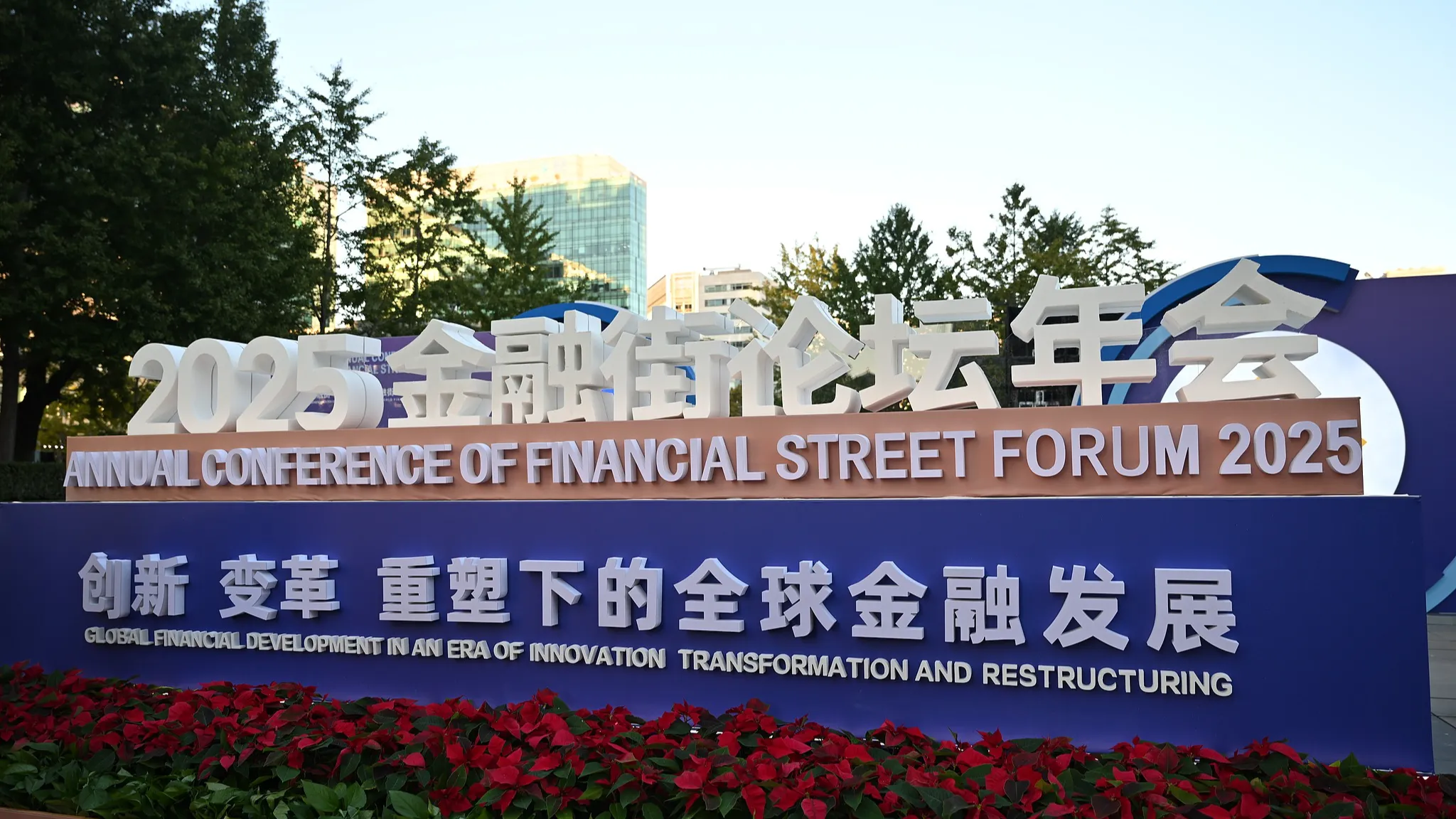
The 2025 Annual Conference of the Financial Street Forum opened on Monday in Beijing, bringing together top financial policymakers and global economic thinkers to discuss China’s evolving role in a turbulent international financial environment.
The first day’s sessions centered around financial reform, digital currency innovation, and risk management strategies with Chinese regulators signaling a confident yet cautious approach toward growth and modernization.
PBOC Emphasizes Stability and Digital Innovation
Pan Gongsheng, Governor of the People’s Bank of China (PBOC), delivered the keynote address, outlining Beijing’s priorities in maintaining financial stability while embracing modernization.
“We will maintain a supportive monetary policy stance, implement appropriately accommodative measures, and use a combination of monetary tools,” Pan said, noting that China’s central bank would continue to ensure liquidity support amid global volatility.
After a temporary suspension earlier this year, Pan announced that the PBOC will resume government bond trading operations, citing an improved balance between supply and demand in the bond market. This move is expected to strengthen policy flexibility and investor confidence.
In a major policy update, Pan also reaffirmed the expansion of the digital yuan (e-CNY). The central bank will optimize its management framework, expand operational access for commercial banks, and promote the digital yuan’s integration at the currency level positioning it as a cornerstone of China’s next-generation financial ecosystem.
A Call for Balance Between Finance and Society
Li Yunze, head of the National Financial Regulatory Administration (NFRA), highlighted the need to build a “harmonious relationship” between financial institutions and society.
“Balancing the economy with finance is essential for sustainable growth,” Li said, unveiling a new financial service model that combines direct and indirect financing. This framework seeks to balance “investment in assets” with “investment in people,” promoting inclusive and equitable financial development.
His remarks underscored China’s shift toward people-centered financial reform, reflecting a broader policy effort to ensure that economic progress translates into social stability and opportunity.
Capital Market Reforms and Foreign Investor Access
Wu Qing, Chairman of the China Securities Regulatory Commission (CSRC), announced a new phase of ChiNext Board reforms, emphasizing support for innovation-driven enterprises.
Listing standards on the ChiNext market, China’s Nasdaq-style board, will be refined to align more closely with emerging sectors such as AI, green energy, and digital industries. Wu also introduced an enhancement plan for foreign investor qualifications, aimed at streamlining access, boosting operational efficiency, and broadening the investment scope for international participants.
“These measures are designed to make China’s capital markets more open, resilient, and globally integrated,” Wu noted.
Charting the Future of Finance
The first day of the forum underscored a common theme: navigating global uncertainty through innovation and reform. As China seeks to consolidate its financial resilience, policymakers are betting on digital finance, institutional modernization, and balanced growth to shape the nation’s next decade of economic transformation.
The conference continues this week, with upcoming panels on green finance, cross-border capital flows, and AI-driven financial governance, reflecting Beijing’s vision of integrating technology and policy to guide sustainable global growth

