
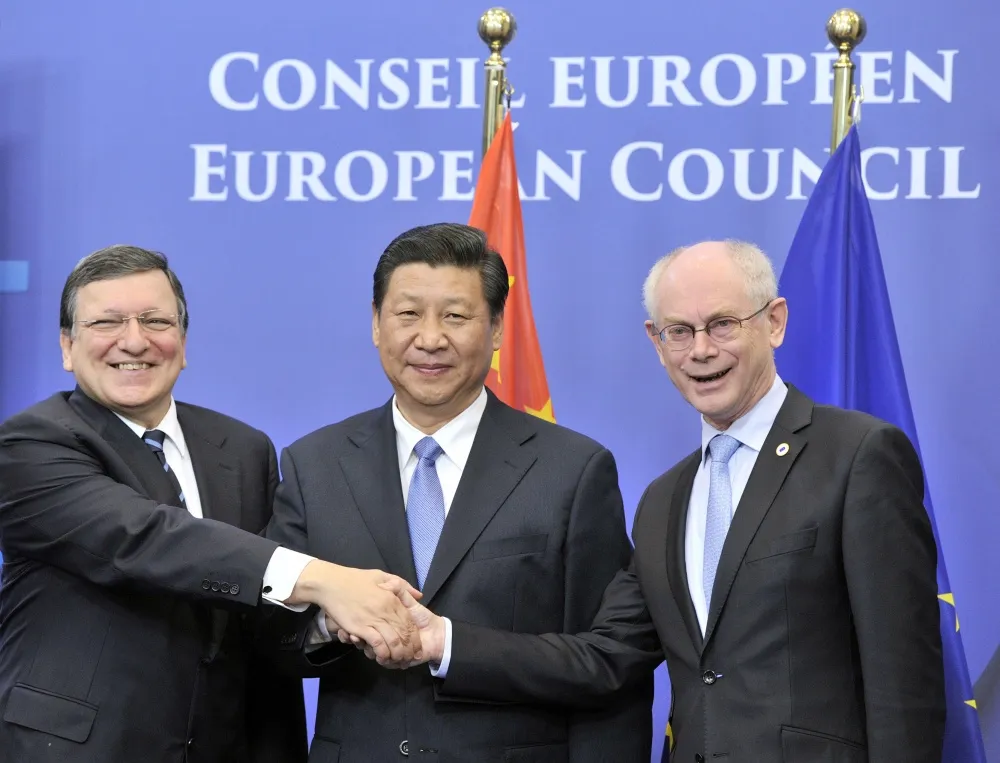
The 2025 China–EU Policy Dialogue has placed digital governance, fintech regulation, and economic interoperability at the forefront of bilateral cooperation. With data sovereignty and financial transparency becoming global priorities, both sides are exploring frameworks that balance innovation with accountability. The dialogue reflects a shared understanding that sustainable growth in the digital era depends not just on economic exchange but on aligning regulatory systems, cybersecurity policies, and standards for emerging technologies.
Strengthening Regulatory Alignment in Digital Finance
China and the European Union have been expanding their cooperation on digital financial oversight to ensure that innovation occurs within a transparent and secure framework. Regulators from the People’s Bank of China (PBoC) and the European Central Bank (ECB) discussed the establishment of data compliance corridors, allowing fintech companies to operate across borders while adhering to strict privacy and anti-fraud requirements.
Both parties emphasized the need for clear digital asset classification and mutual recognition of cybersecurity protocols. This step is particularly relevant as financial institutions adopt tokenized and programmable finance systems to facilitate cross-border investment and trade. The EU’s experience with the Markets in Crypto-Assets Regulation (MiCA) offers a governance model that China is studying for its potential integration with local digital economy frameworks.
Through joint research initiatives, policymakers are also developing guidelines for risk assessment in automated financial systems, including algorithmic trading and AI-based credit scoring. The goal is to promote responsible innovation that enhances financial inclusion without undermining systemic stability.
Building Trust through Data Security and Interoperability
One of the central themes of the dialogue was data trust, ensuring that digital cooperation between China and the EU is grounded in security and mutual accountability. Both regions recognize that effective digital governance requires transparent mechanisms for information sharing, certification, and verification.
The two sides are now working toward establishing a digital governance protocol that would enable the interoperability of cybersecurity standards across financial and industrial networks. This initiative allows European and Chinese firms to integrate software, logistics systems, and financial tools while ensuring that sensitive data remains protected under their respective jurisdictions.
In practice, this means that a European company investing in China’s industrial zones could monitor and verify its transactions, supply chain compliance, and sustainability metrics in real time without compromising data security. This framework also helps reduce duplication of audits and builds confidence in joint digital ventures.
Tech Diplomacy and Strategic Innovation
Beyond finance, the policy dialogue has become a cornerstone of technology diplomacy. As both sides seek to lead in artificial intelligence, green tech, and blockchain-enabled governance, coordinated policy alignment ensures that innovation ecosystems can coexist rather than compete destructively.
China’s focus on industrial digitalization complements Europe’s push for ethical AI and sustainable innovation. The two regions are exploring partnerships in smart manufacturing, renewable energy data systems, and digital carbon accounting. By integrating European sustainability frameworks with China’s digital infrastructure expertise, both sides aim to set new global standards for tech-driven development.
Discussions also covered the potential for co-developing digital certification systems for green finance projects, enabling investors to trace environmental impact through verified blockchain records. Such systems would promote greater transparency in cross-border financing while supporting the global transition toward low-carbon growth.
Policy Synergy for Global Digital Governance
The dialogue marks a step toward global regulatory synergy, where diverse governance models find common ground in transparency and shared standards. China’s regulatory approach, emphasizing data control and infrastructure sovereignty, complements Europe’s emphasis on consumer protection and ethical compliance. Together, these systems can provide a blueprint for balanced digital governance that supports both innovation and accountability.
Both sides also acknowledged the need for ongoing collaboration through joint policy laboratories, exchange programs, and public-private partnerships. These platforms will allow regulators, researchers, and industry leaders to develop policy tools capable of adapting to rapid technological change.
Conclusion
The 2025 China–EU Policy Dialogue demonstrates how digital governance has become a defining component of international diplomacy. By focusing on interoperability, data trust, and policy innovation, China and Europe are building the foundations of a transparent and cooperative digital future. Their partnership illustrates that the next stage of globalization will not be defined solely by trade volumes, but by the governance systems that regulate data, technology, and finance across borders.

