
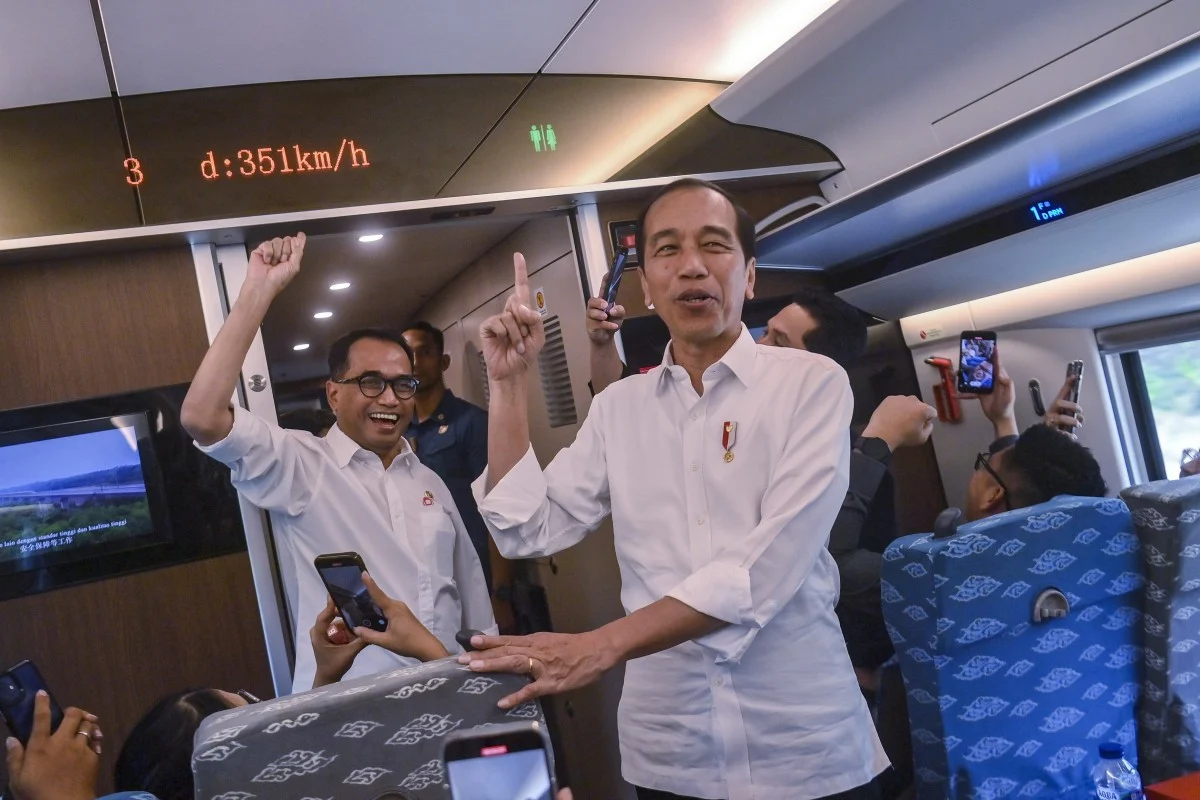
Indonesian authorities have opened a corruption investigation into the country’s China-financed “Whoosh” high-speed railway, following allegations that project costs were inflated to nearly three times those of comparable rail lines built in China. The inquiry has drawn new scrutiny to one of Southeast Asia’s most high-profile infrastructure projects under the Belt and Road Initiative (BRI).
According to Reuters, Indonesia’s Corruption Eradication Commission (KPK) has begun examining procurement records and cost assessments related to the $7.3 billion project, which connects the capital Jakarta with Bandung in West Java. Officials said the investigation focuses on claims that per-kilometre construction expenses far exceeded international benchmarks, raising concerns about mismanagement and irregular payments.
The “Whoosh” railway, short for Waktu Hemat, Operasi Optimal, Sistem Handal (“Time-saving, Optimal Operation, Reliable System”), began commercial operations in late 2023, making Indonesia the first Southeast Asian country to operate a high-speed rail service. The line, financed jointly by the Indonesian and Chinese governments through a consortium led by China Railway International, was hailed as a symbol of deepening economic cooperation between Beijing and Jakarta.
However, Nikkei Asia reported that questions about cost overruns and opaque contract structures have persisted since the project’s inception. Critics allege that weak oversight and rapid implementation under political pressure led to inflated budgets. “The public deserves transparency about where each dollar was spent and whether the project delivered fair value,” said an Indonesian parliamentary official quoted by SCMP.
China’s involvement remains a central point of discussion. While the investigation targets local contractors and government-linked entities, analysts say the controversy could temporarily strain perceptions of Chinese-funded infrastructure across the region. Beijing has so far refrained from commenting directly on the inquiry but reiterated its support for Indonesia’s broader development goals under the Belt and Road framework.
Despite the investigation, the railway continues to operate and has been widely used by commuters and tourists. Indonesian officials insist the probe aims to ensure accountability, not disrupt operations. “We welcome transparency, it strengthens public trust in major infrastructure projects,” said Transportation Minister Budi Karya Sumadi.
Observers say the outcome of the investigation will shape the credibility of future BRI projects in Southeast Asia and test how both Jakarta and Beijing manage governance challenges within their expanding economic partnership.

