
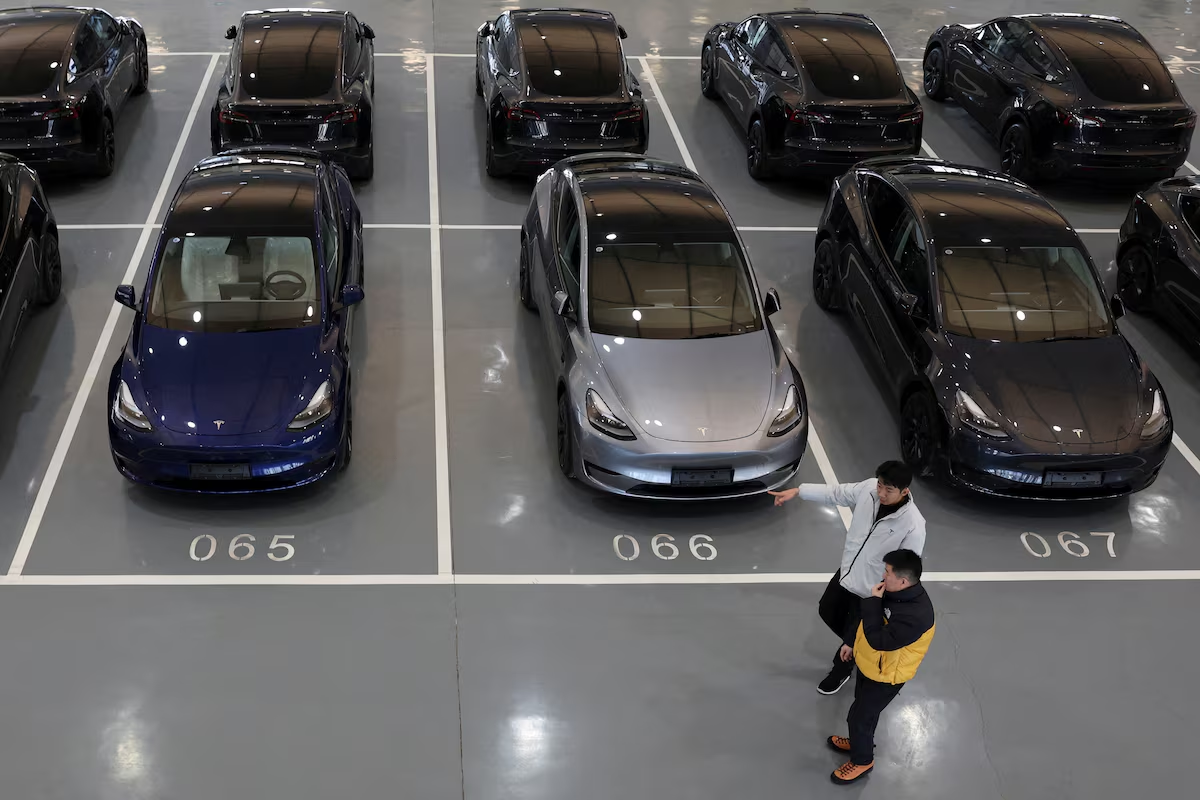
Tesla’s sales in China have fallen to their lowest level in three years, marking a difficult period for the electric vehicle maker as local competition intensifies and consumer appetite softens in the world’s largest auto market.
Industry data shows that Tesla sold significantly fewer vehicles in October compared to the same month last year, highlighting how the company’s once-dominant position in China is being challenged by homegrown manufacturers such as BYD, Nio, and Li Auto. Analysts say the decline signals that Tesla’s earlier momentum in China, once its strongest growth engine outside the United States, is starting to wane.
The weaker performance comes despite Tesla’s aggressive price cuts and promotional campaigns throughout 2025, which were intended to boost demand and defend its market share. While these strategies have led to temporary spikes in orders, they have also eroded profit margins and failed to sustain long-term sales growth. Consumers appear increasingly drawn to newer domestic EV brands offering a wider range of features, advanced driver-assistance systems, and more affordable models.
Local analysts suggest that Tesla’s product lineup in China is beginning to look outdated in comparison to the rapid innovation cycle of its Chinese rivals. Many new EV makers release updated versions or new models every six to nine months, while Tesla’s core lineup, the Model 3 and Model Y, has seen only incremental updates since its introduction. Even the refreshed Model 3, launched earlier this year, has struggled to generate the excitement that previous Tesla releases once did.
China’s broader economy has also cooled, adding pressure on consumer spending. Sluggish property markets, weak retail sentiment, and cautious household budgets have all weighed on the auto industry. Electric vehicles, which were once seen as status symbols and tech-savvy choices, are now competing in a more cautious, price-sensitive market.
Despite the slowdown, Tesla remains a major player in China’s EV landscape. The company continues to operate one of its largest manufacturing facilities, the Gigafactory in Shanghai, which serves as both a domestic production hub and an export base for global markets. However, output levels have reportedly been adjusted in recent months to align with softer domestic demand.
Market experts believe Tesla will need to refine its strategy to stay competitive. That could include deeper localization, more tailored vehicle designs, or partnerships with local technology firms to enhance software and service ecosystems. Some even suggest that Tesla may introduce new models aimed specifically at China’s mid-market segment, where growth remains strongest.
The decline underscores how quickly China’s EV landscape is evolving and how even the pioneers of the electric revolution are now fighting to keep pace in a market that rewards innovation, value, and adaptability above all else.

