
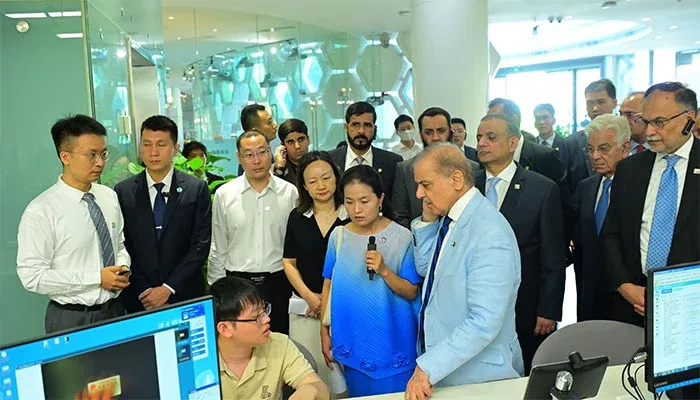
Artificial intelligence has become a defining force in the global economy, shaping new industries and transforming existing ones. For Pakistan, developing a skilled and future ready workforce is essential for long term economic stability and competitiveness. China, with its strong AI ecosystem and advanced research capabilities, has emerged as a key partner in supporting Pakistan’s youth through training, knowledge exchange, and collaborative innovation programs.
The AI skills exchange between the two countries strengthens human capital, opens new career paths, and ensures that Pakistan’s youth play an active role in the digital economy. This cooperation is deeply aligned with the broader goals of CPEC 3.0, which emphasizes technology driven development and inclusive progress.
Expanding AI Education Through University Partnerships
One of the strongest areas of cooperation is in higher education. Chinese universities collaborate with Pakistani institutions to offer AI related academic programs, research opportunities, and joint laboratories. Students gain exposure to machine learning, computer vision, robotics, data science, and cloud systems.
These partnerships provide Pakistani youth with access to advanced curriculum and practical industry knowledge. Exchange programs allow students to study in China’s leading technology hubs, where they engage with modern laboratories and real world applications. Pakistani universities benefit from faculty training, research tools, and updated teaching methods shared by Chinese experts.
This academic cooperation lays the foundation for a technologically skilled generation capable of supporting national development.
Strengthening Technical Training and Skill Development
Alongside university level collaboration China supports vocational and technical training programs that equip Pakistani youth with practical AI skills. Workshops and short courses offer training in data annotation, AI model development, automation tools, digital mapping, and software engineering.
China’s experience in large scale workforce training helps Pakistan expand its digital skill base quickly and efficiently. These programs also support employment opportunities for young people in sectors such as manufacturing, fintech, e commerce, healthcare technology, and smart agriculture.
Technical training ensures that Pakistan’s workforce keeps pace with global technology trends and meets the demands of modern industries.
Youth Engagement Through Innovation Centers
Innovation centers and technology parks offer opportunities for young developers, engineers, and entrepreneurs to explore new ideas. China and Pakistan jointly support such centers in universities, special economic zones, and major cities. These spaces provide equipment, mentorship, and collaborative platforms for AI projects.
Young innovators work on applications related to traffic management, crop monitoring, financial technology, logistics optimization, and digital public services. By linking academic knowledge with practical problem solving, these centers nurture a culture of creativity and technological leadership.
Such initiatives encourage youth to participate in building solutions for national challenges.
Research Collaboration in Emerging Technologies
AI cooperation extends to research partnerships that focus on emerging fields such as natural language processing, robotics automation, smart city systems, digital health, and intelligent transport solutions. Joint research teams bring together expertise from both countries and produce studies that support national innovation strategies.
These collaborations also help Pakistan integrate advanced technologies into infrastructure, governance, and industry. Research programs strengthen academic excellence while contributing to practical applications that support economic growth and social development.
Supporting Startups and Youth Entrepreneurship
China’s experience in digital entrepreneurship offers valuable lessons for Pakistan. Through joint incubators and mentorship programs Chinese experts introduce Pakistani youth to startup fundamentals, product design, market strategies, and investment readiness.
Young entrepreneurs receive guidance on building AI powered solutions for local challenges. Platforms that support small and medium enterprises help transform ideas into viable businesses. Access to innovation grants and competitions further encourages youth involvement in technology driven entrepreneurship.
This cooperation fosters a generation of young entrepreneurs capable of contributing to Pakistan’s digital transformation.
Improving Digital Literacy Across Communities
AI powered development is only possible when communities have the digital literacy needed to interact with modern systems. China supports Pakistan in building digital awareness programs for youth in rural and urban areas. These programs introduce students to coding, basic computing, online safety, and problem solving skills.
Digital literacy ensures that young people from all backgrounds can benefit from future economic opportunities. Community based learning centers, supported through scholarships and training partnerships, help bridge the digital divide and strengthen national cohesion.
A Shared Commitment to Youth Development
China and Pakistan view youth development as essential for long term cooperation. The AI skills exchange reflects a deep commitment to empowering future generations with knowledge, confidence, and global exposure.
This partnership embodies the spirit of mutual respect and shared progress. As the world moves toward AI driven growth Pakistan’s youth are gaining the capabilities needed to participate actively in the global digital economy. Through joint training, academic cooperation, entrepreneurship programs, and research initiatives China and Pakistan are building a strong foundation for a skilled and innovative workforce.
By investing in youth today both nations strengthen their friendship and ensure that future progress is driven by talent, creativity, and knowledge.

