
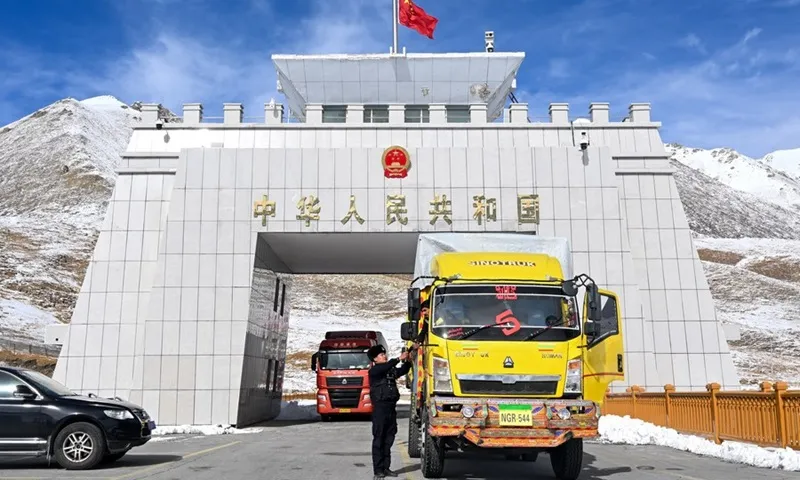
China and Pakistan have recorded a major increase in border trade following the introduction of policy easing measures designed to streamline customs procedures and enhance transport coordination. Officials from both countries confirm that recent reforms have reduced clearance times, improved logistics flows and encouraged traders to expand their activities. The milestone marks a positive shift in economic engagement, reinforcing the importance of border trade as a key pillar of bilateral cooperation. Businesses across Gilgit Baltistan and Xinjiang are reporting higher volumes of goods moving across the Khunjerab Pass.
Faster Customs Processing Strengthens Confidence
Customs authorities have implemented updated inspection systems, simplified documentation requirements and new digital tracking tools that have significantly reduced processing time at the border. Traders previously faced long waits due to manual checks and seasonal closures. Recent reforms now allow faster clearance for priority goods, including perishables and industrial equipment. The improved efficiency has strengthened trader confidence and encouraged more businesses to rely on the China Pakistan land route as a reliable option for commercial exchange.
Expansion of Transport and Cold Chain Facilities
Supply chain infrastructure along the border has seen notable expansion. New refrigerated storage units, rest stops and cargo loading areas have been added to support the movement of agricultural products, pharmaceuticals and other sensitive items. These facilities help reduce losses during transit and ensure higher quality standards for export oriented goods. Logistics firms operating in the region note that the expanded cold chain network is attracting more fruit exporters, livestock traders and food processing companies.
Revival of Khunjerab Trade Route
The Khunjerab Pass, one of the highest paved international borders in the world, plays a central role in China Pakistan trade. The seasonal reopening of the pass combined with policy easing has revitalized commercial activity along the historic route. More cargo trucks are now traveling between Sost and Tashkurgan, carrying textiles, minerals, agricultural goods and manufacturing equipment. Local communities that depend on border trade for income are experiencing improved business conditions, supporting economic stability in remote mountainous regions.
Support for Small and Medium Enterprises
Small and medium enterprises are among the biggest beneficiaries of the new policy measures. Many Pakistani traders dealing in gemstones, dry fruits, handicrafts and agricultural products now find it easier to export goods to Chinese markets. The simplified procedures reduce operational costs and open pathways for businesses that previously struggled with compliance barriers. Chinese traders are also showing growing interest in Pakistani products, creating opportunities for diversified trade flows that benefit local producers on both sides of the border.
Rising Demand for Pakistani Agricultural Products
Chinese buyers have increased their imports of Pakistani cherries, apples, onions and beef products following improvements in border inspection systems. The new inspection protocols ensure safer and faster verification of quality standards, which helps agricultural exporters maintain freshness and reduce spoilage. The demand for Pakistani fruits and vegetables is expected to continue rising as cold chain solutions strengthen. Farmers in northern Pakistan are optimistic that the new export channels will boost local agricultural incomes.
Strengthened Digital Coordination Mechanisms
Border officials have introduced digital platforms that allow traders to track cargo status, verify customs documents and access inspection results in real time. These tools improve transparency and reduce opportunities for procedural delays. The integrated digital system allows coordination between Pakistani and Chinese authorities to ensure smoother processing for large shipments. Traders highlight that the digital upgrades reduce uncertainty and help plan logistics more accurately.
Impact on Regional Economic Integration
The milestone in border trade contributes to broader regional integration efforts under the China Pakistan Economic Corridor. The improved flow of goods supports economic activities in Gilgit Baltistan, Xinjiang and adjoining regions. Stronger border trade also enhances people to people connection, encourages tourism and increases commercial cooperation between private companies. Officials stress that sustained policy cooperation will further strengthen connectivity in the years ahead.
Long Term Potential for Expanded Trade
The positive impact of policy easing demonstrates the potential for future expansion in cross border commerce. Plans are under discussion to increase operational days at the border, upgrade facilities at the Sost dry port and strengthen trade inspection laboratories. Both countries aim to explore additional product categories, encourage processing zones near border regions and build long term commercial ties that support economic resilience. Border trade remains an essential driver of cooperation and shared prosperity between China and Pakistan.

