
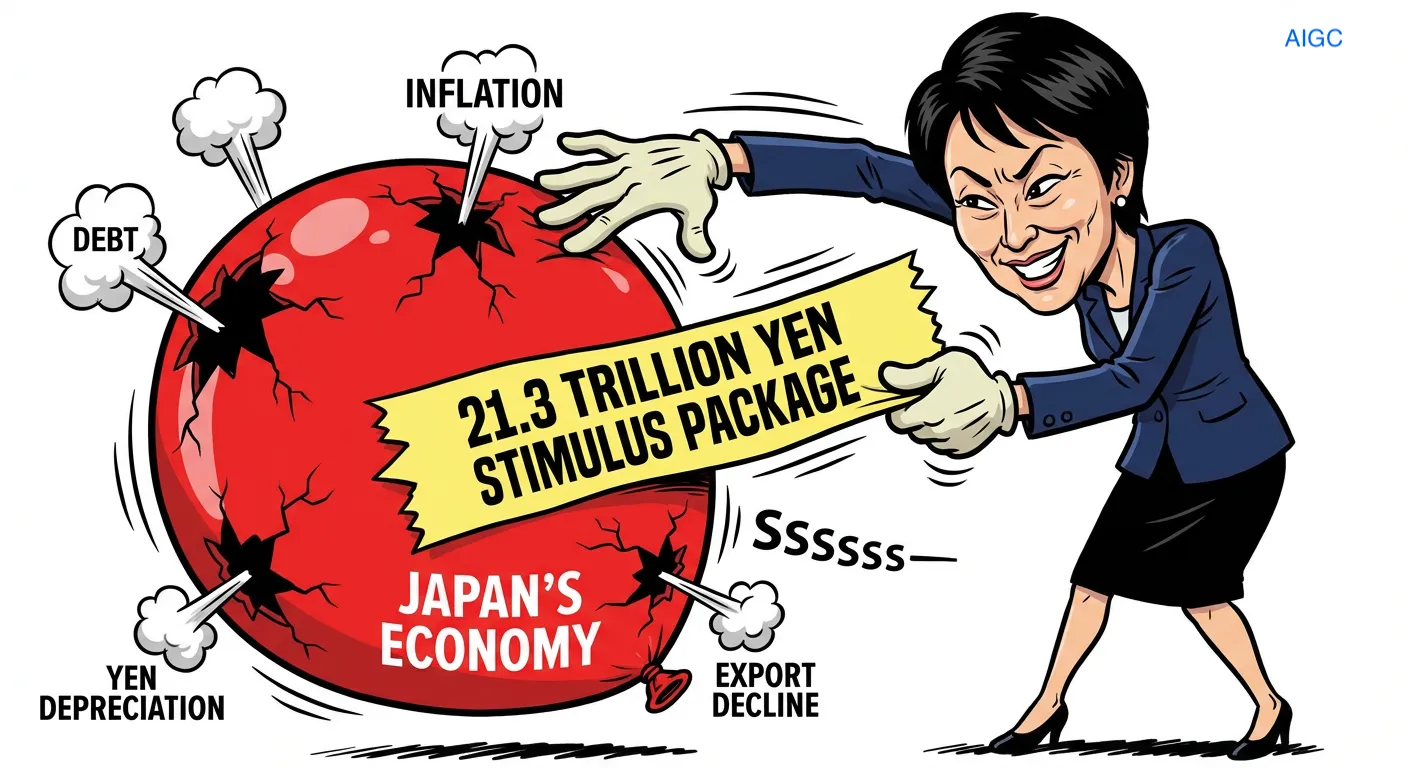
Japan’s Cabinet has approved a sweeping 21.3 trillion yen stimulus package, equal to roughly 136 billion dollars, aimed at easing pressure from rising prices and giving fresh momentum to an economy that has struggled to achieve stable growth. The plan includes a mix of tax cuts, energy subsidies and support for households and businesses, forming one of the largest stimulus efforts advanced under Prime Minister Sanae Takaichi.
The government says the package is necessary to help citizens cope with persistent inflation, which has remained above the Bank of Japan’s two percent target for much of the year. Officials argue that without direct support, many families would face continued strain from elevated food and utility costs. The stimulus also aims to encourage midterm economic expansion by lifting consumer confidence and providing incentives for companies to invest.
However, the rollout has sparked intense debate among economists, lawmakers and international observers. Critics argue the plan risks deepening Japan’s long standing fiscal problems rather than solving its inflation challenge. With a debt to GDP ratio already hovering near two hundred forty percent, the highest among major economies, some analysts warn that aggressive spending and tax cuts could push borrowing to unsustainable levels.
Another concern is the potential impact on the yen. Japan’s currency has already weakened significantly this year as the Bank of Japan maintains ultra low interest rates while other major central banks continue tightening. Additional fiscal expansion could further depress the yen, making imports more expensive and increasing inflationary pressure just as the government tries to contain it.
Economists also question whether the package directly addresses the core drivers of inflation. Rather than being caused by strong demand, much of Japan’s price growth has stemmed from higher import costs and supply chain disruptions. Some analysts argue that temporary subsidies and tax breaks may offer short term relief but do little to counter the structural issues affecting prices.
At the same time, political analysts say the stimulus could strengthen Prime Minister Takaichi’s position. The scale of the package and its emphasis on protecting households may bolster public support during a period of economic uncertainty. Critics, however, claim the spending is more aligned with political strategy than long term economic planning.
Supporters of the plan say that Japan has limited options to spur growth and that targeted fiscal support remains an effective tool during periods of economic stagnation. They argue that without swift action, the risk of recession would rise, especially as global demand softens and domestic consumption shows signs of slowing.
Whether the stimulus will deliver meaningful results remains uncertain. Much will depend on how quickly the funds reach households and businesses and whether inflation begins to ease in the months ahead. For now, Japan faces the difficult task of balancing economic relief with long term fiscal sustainability.

