
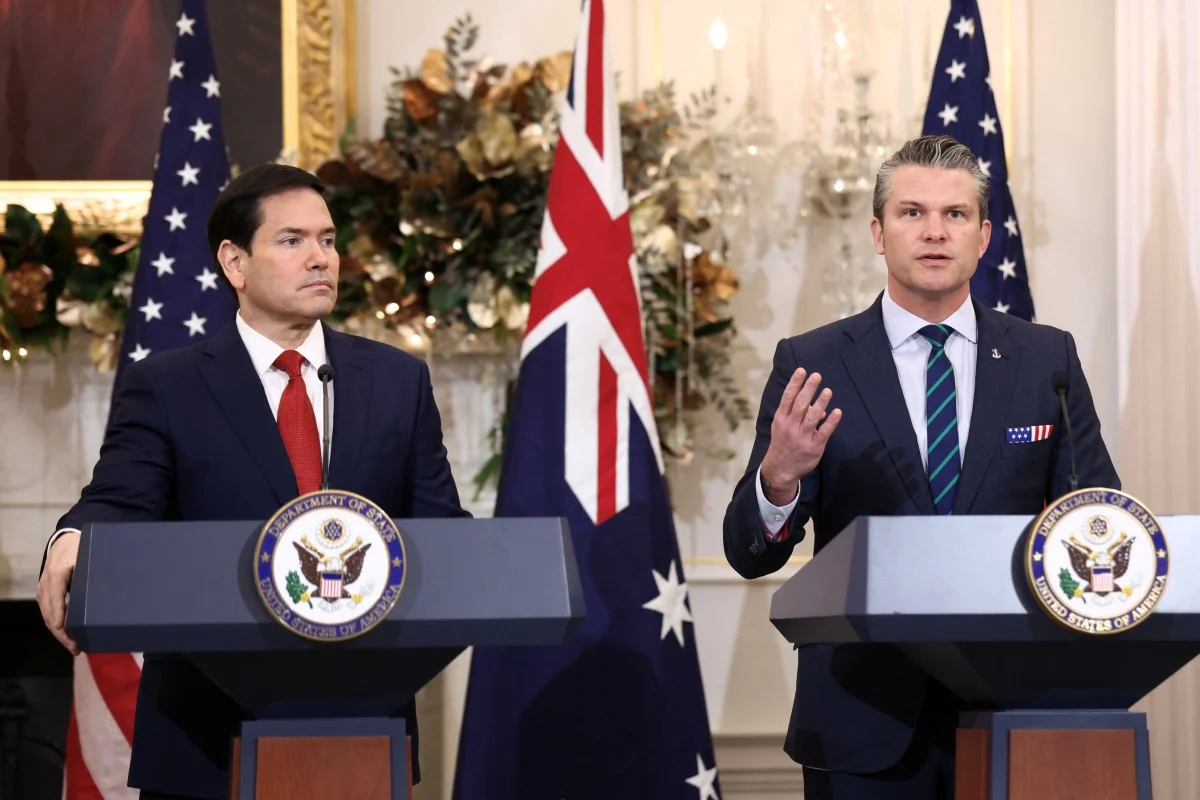
US Secretary of State Marco Rubio and Defence Secretary Pete Hegseth met with their Australian counterparts in Washington on Monday for annual security talks centered on the Indo Pacific region. The discussions highlighted growing concern over mainland China’s assertiveness, particularly in the South China Sea and toward Taiwan. Held at the State Department, the meeting brought together Rubio, Hegseth, Australian Foreign Minister Penny Wong and Defence Minister Richard Marles, underscoring the importance both nations place on cooperation during a period of global instability.
The gathering took place against a backdrop of international challenges, including the continuing Russia Ukraine conflict, a fragile ceasefire in Gaza and ongoing US military operations targeting drug trafficking networks in the Western Hemisphere. These overlapping concerns added urgency to the talks as both sides assessed how best to coordinate security strategies.
Strengthening a long standing alliance
During the meeting Rubio emphasized the depth and resilience of the US Australia partnership, describing it as a strong alliance driven by shared democratic values and mutual strategic interests. He noted that both nations see expanding cooperation as essential at a time when regional power dynamics are shifting and security threats are evolving. Rubio highlighted joint efforts in critical minerals, defence production and coordinated troop deployments as key examples of how the partnership continues to grow.
Australian officials echoed this sentiment, stressing that collaboration with the United States helps reinforce regional stability and ensures both countries remain prepared for emerging challenges. The talks served as a reaffirmation of the close military and diplomatic ties that have long connected Washington and Canberra.
China’s military posture at the center of security discussions
A major focus of the meeting was China’s increasing assertiveness in the Indo Pacific. Both nations have expressed concern over Beijing’s activities in the South China Sea, where territorial disputes and military expansion have heightened tensions with neighboring countries. Taiwan also remains a central point of discussion, as China continues to increase pressure around the island through military exercises and diplomatic isolation efforts.
Rubio and Hegseth stressed the importance of maintaining freedom of navigation and upholding international law in the region. They emphasized that coordinated efforts with allies such as Australia are essential for countering actions that they believe could destabilize regional order. Wong and Marles reaffirmed Australia’s commitment to working closely with the United States to ensure a balanced and secure Indo Pacific.
Global conflicts influencing regional strategy
Although the talks centered on Asia, developments in other parts of the world weighed heavily on the conversation. The ongoing Russia Ukraine war has complicated global security conditions and prompted renewed discussion about how military resources and diplomatic support should be allocated. The uncertain situation in Gaza, where a fragile ceasefire remains at risk of collapse, also shaped the tone of the meeting.
Additionally, questions have emerged in Washington about recent US military strikes on alleged drug traffickers in the Western Hemisphere. Critics and lawmakers have raised concerns about the legal authority guiding such operations. While these issues fall outside the Indo Pacific, they influence the broader strategic outlook of the United States and its partners.
A commitment to deeper cooperation moving forward
Despite the global challenges, officials described the meeting as productive and forward looking. Rubio expressed confidence that the alliance continues to build momentum and that both nations are committed to strengthening military, economic and diplomatic collaboration. The discussions also touched on emerging technologies, defence manufacturing partnerships and shared efforts to secure vital supply chains.
As the Indo Pacific remains a central arena for geopolitical competition, the United States and Australia are working to reinforce their joint approach to maintaining stability. The meeting in Washington underscored not only the concerns both nations share but also the trust and cooperation that underpin their alliance. With regional tensions likely to persist, the partnership between the two countries is expected to play an increasingly important role in shaping security strategies in the years ahead.

