
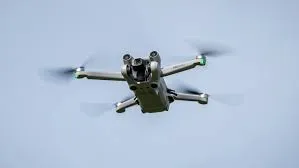
US Blacklist Targets Foreign Drone Companies
The United States has expanded its trade blacklist to include additional foreign drone manufacturers, many of them based in China. The move is part of Washington’s broader effort to limit the use of foreign-made unmanned aerial vehicles over concerns related to national security and data protection. While US officials argue that restricting access to Chinese drones is necessary to safeguard critical infrastructure, analysts say the policy is unlikely to significantly alter the global drone landscape.
Limited Exposure to the US Market
Industry observers point out that most Chinese drone manufacturers have already reduced their reliance on the US market. Years of tightening regulations and political scrutiny have encouraged companies to diversify their customer base. Today, many Chinese firms generate the bulk of their revenue from Asia, the Middle East, Africa, and Latin America. These regions continue to see rising demand for drones in agriculture, construction, logistics, and public safety, making up for lost opportunities in the US.
Strong Domestic Market Provides Stability
China’s large domestic market plays a crucial role in shielding drone makers from external pressure. Drones are widely adopted across multiple industries, including crop monitoring, power grid inspection, emergency response, and urban planning. Government-backed initiatives promoting automation and smart manufacturing have further boosted demand. This steady internal consumption allows manufacturers to maintain production volumes and invest in research and development regardless of foreign restrictions.
Growing Focus on Technological Self-Reliance
The blacklist expansion comes after years of similar actions against Chinese technology firms, prompting a strategic shift toward self-reliance. Drone manufacturers have accelerated efforts to develop domestic alternatives for critical components such as flight control systems, imaging sensors, and software platforms. Analysts note that while complete independence from foreign technology is still a work in progress, the industry has made significant strides in reducing vulnerability to US sanctions.
Chinese Firms Maintain Global Competitiveness
Despite restrictions, Chinese drone makers continue to dominate many segments of the global market. Their ability to deliver advanced features at competitive prices has helped them retain strong international demand. Manufacturing efficiency, supply chain integration, and rapid product development cycles give these companies an edge over many competitors. Some experts warn that excluding Chinese firms from the US market could ultimately reduce competition and slow innovation within the domestic drone industry.
Policy Sends a Political Message
Analysts widely view the US decision as a political signal rather than a move with substantial economic impact. Relations between the two countries have already been strained, and the blacklist is seen as an extension of existing policy trends. With diversified markets, solid domestic demand, and increasing technological capabilities, Chinese drone makers are expected to continue expanding globally while largely shrugging off the latest restrictions.

