
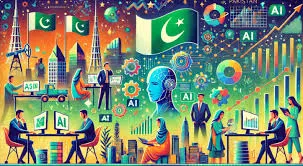
AI Becomes a Central Focus
Pakistan and China are increasingly focusing on artificial intelligence (AI) as a strategic area of collaboration. Applications range from industry automation and smart cities to healthcare, agriculture, and digital services. Analysts highlight that AI integration is essential for improving efficiency, boosting productivity, and positioning Pakistan as a competitive player in the regional technology landscape.
Industrial and Manufacturing Applications
AI-driven solutions are being implemented in manufacturing, logistics, and supply chain management. Predictive maintenance, quality control, and process automation powered by AI are helping Pakistani industries optimize operations, reduce costs, and improve competitiveness. Chinese expertise and technology transfer play a critical role in enabling these advancements.
AI in Agriculture and Food Security
Artificial intelligence is also being applied to agriculture to enhance crop management, yield prediction, and pest control. AI-powered tools analyze soil, weather patterns, and crop health to provide actionable insights to farmers. Collaboration with Chinese technology partners ensures that Pakistani farmers can adopt advanced solutions to improve productivity and food security.
Healthcare and Smart Services
In healthcare, AI applications include diagnostics, disease prediction, and patient management. Telemedicine platforms equipped with AI tools enable more accurate assessments and personalized treatment plans. Analysts note that integrating AI in healthcare improves efficiency, expands access, and enhances public health outcomes.
Smart Cities and Digital Governance
AI is playing a pivotal role in smart city initiatives and e-governance. Traffic management, energy optimization, waste management, and citizen services are being enhanced through AI-powered analytics and predictive modeling. Chinese collaboration provides technical expertise and platforms to implement these solutions effectively.
Capacity Building and Workforce Development
Human capital development is crucial for AI adoption. Training programs, workshops, and academic exchanges are equipping Pakistani professionals with skills in machine learning, data analytics, and AI model deployment. Analysts emphasize that developing local expertise ensures sustainable AI integration across sectors.
Strategic and Economic Implications
AI collaboration strengthens Pakistan–China ties while driving economic growth and industrial modernization. For Pakistan, AI adoption enhances productivity, supports technological innovation, and attracts investment. For China, it reinforces its role as a strategic technology partner and expands influence in emerging markets.
Challenges and Future Directions
Challenges include regulatory frameworks, data privacy, infrastructure readiness, and equitable access to AI technologies. Analysts stress the need for clear policies, cybersecurity measures, and continuous investment in human capital to ensure long-term success.
Conclusion
China–Pakistan cooperation in artificial intelligence is transforming industries, agriculture, healthcare, and urban governance. By combining Chinese expertise with local capacity building, the partnership is fostering innovation, technological advancement, and sustainable economic growth, positioning Pakistan for a future-ready digital economy.

