
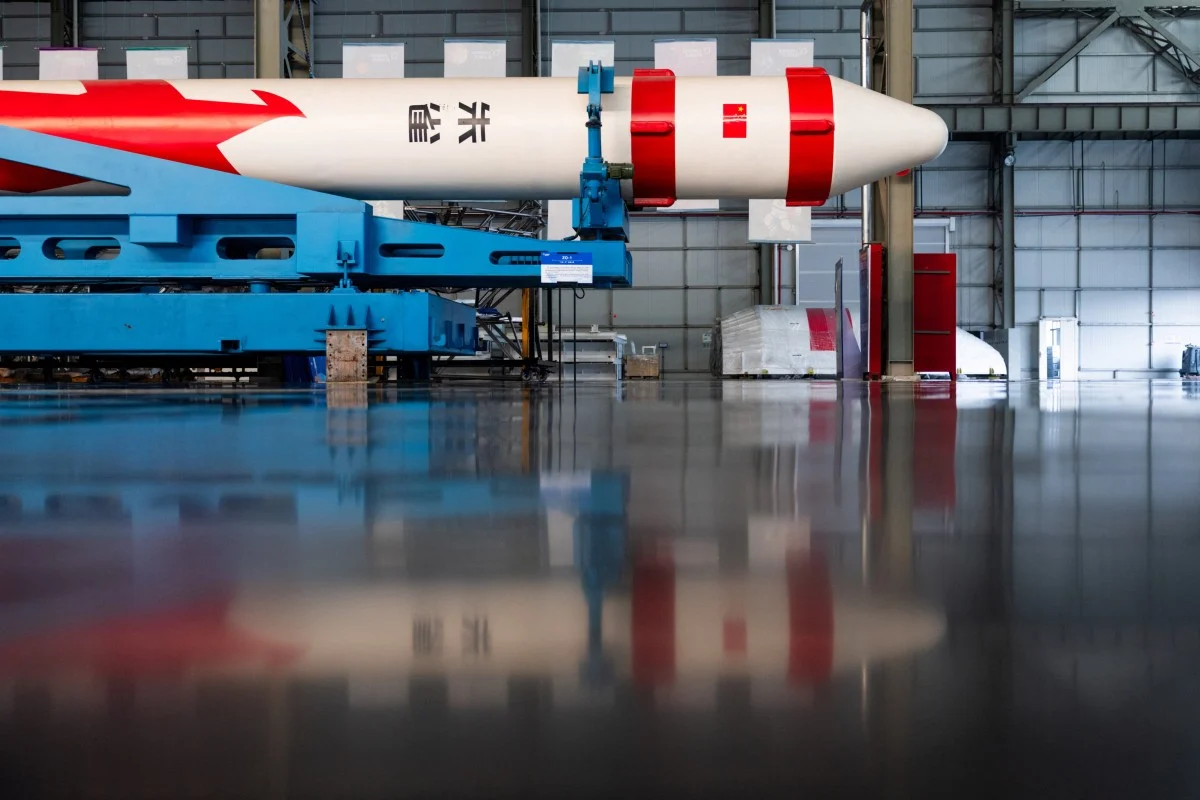
A milestone moment for China’s commercial space sector
Chinese rocket developer LandSpace has taken a major step toward a landmark public listing, signaling growing momentum in China’s private aerospace industry. The company plans to raise about 7.5 billion yuan, or roughly one billion US dollars, through an initial public offering in Shanghai. Its listing application has been accepted through a fast tracked approval process, making LandSpace the first domestically developed aerospace firm to reach this stage under the accelerated channel.
Fast track approval reflects strategic priorities
The acceptance of LandSpace’s IPO application highlights how China is prioritizing strategic technologies tied to national competitiveness. Fast tracked listings are typically reserved for companies operating in sectors considered critical to long term development. Commercial aerospace sits squarely within that category, combining advanced manufacturing, materials science, and propulsion technologies. Regulators’ willingness to move quickly suggests confidence in LandSpace’s technological credentials and its alignment with broader industrial goals.
From state dominance to private innovation
China’s space sector has historically been dominated by state owned enterprises, with private firms playing a limited role. Over the past decade, that balance has begun to shift as policymakers encouraged commercial participation to spur innovation and efficiency. LandSpace has emerged as one of the most prominent examples of this transition, positioning itself as a private counterpart to traditional aerospace players. Its progress illustrates how private capital and entrepreneurial structures are becoming more central to China’s space ambitions.
Why LandSpace matters to investors
For investors, LandSpace represents exposure to a sector with long development cycles but potentially high strategic value. Rocket manufacturing and launch services are capital intensive, requiring sustained investment before profitability can be achieved. However, demand for satellite launches, space infrastructure, and related services is expected to grow steadily over the coming decades. By securing substantial funding through a public listing, LandSpace would gain the financial runway needed to compete in a demanding global market.
Shanghai’s role in funding deep technology
The choice of Shanghai as the listing venue underscores the city’s role as a center for financing advanced technology companies. Shanghai’s capital markets have increasingly supported firms involved in semiconductors, biotech, and now aerospace. For LandSpace, listing domestically allows access to investors who are familiar with China’s policy environment and more willing to tolerate long term horizons associated with frontier technologies.
Competition and global context
Globally, private space companies have reshaped the aerospace landscape, particularly in the United States where commercial launch providers have lowered costs and expanded access to space. China’s private rocket firms operate under different constraints, including export controls and limited access to international markets. This makes domestic support and funding even more critical. LandSpace’s IPO effort signals that China is prepared to build its own commercial space champions largely within its own financial ecosystem.
Risks remain alongside opportunity
Despite the optimism, risks are substantial. Rocket development carries high technical failure rates, regulatory oversight is stringent, and revenue streams can be uneven. Investors will closely watch LandSpace’s ability to execute launches reliably, control costs, and secure long term contracts. Market enthusiasm for space related ventures can fluctuate, particularly if broader financial conditions tighten or if high profile failures occur.
A signal of what comes next
If successful, LandSpace’s listing could open the door for other private aerospace firms to pursue public funding. It would mark an important shift in how China finances its space ambitions, moving beyond purely state led models. More broadly, the IPO reflects a confidence that private companies can play a meaningful role in strategic sectors once reserved for government entities.
Looking ahead
LandSpace’s move toward a billion dollar IPO is about more than capital raising. It represents a test case for China’s commercial space strategy and its willingness to back private innovators in complex, high risk fields. As the listing process unfolds, it will be watched closely by investors, regulators, and competitors alike as a potential blueprint for the next phase of China’s aerospace development.

