
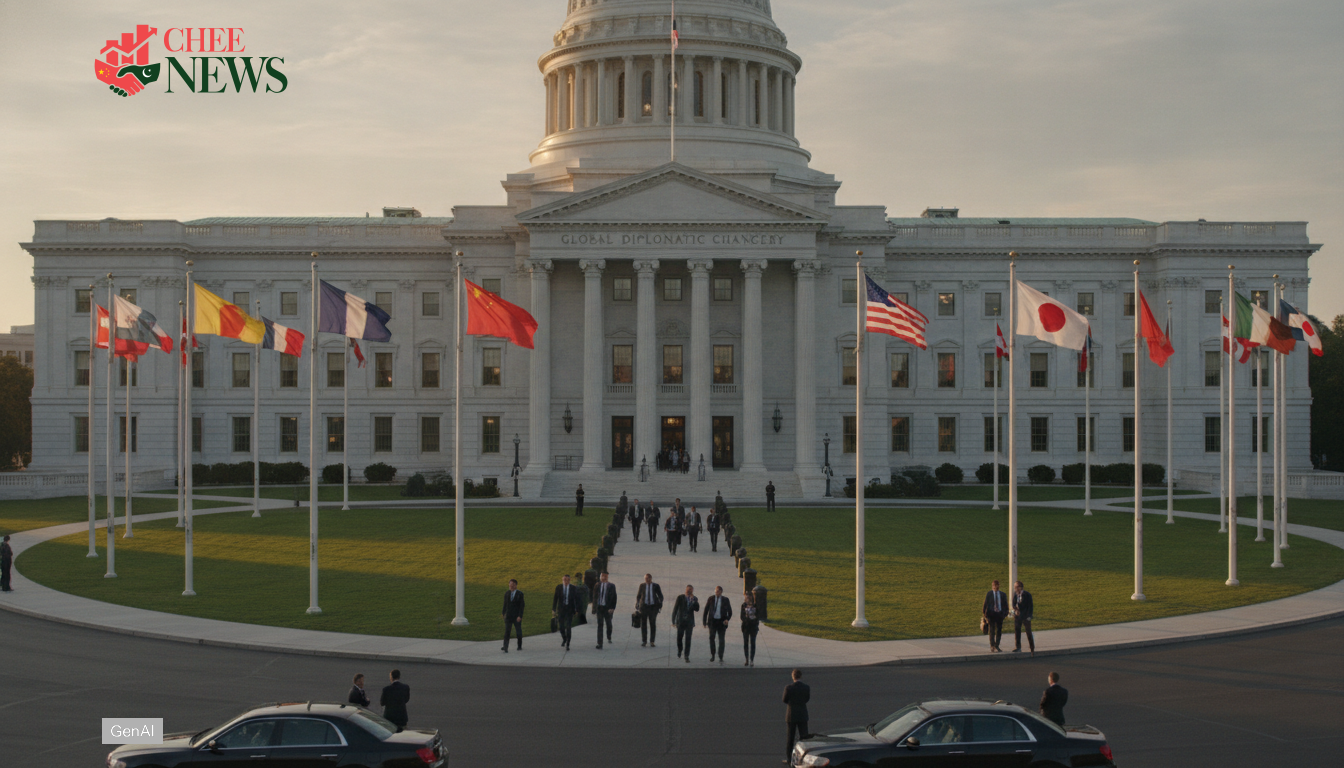
US Plans Anti-China Spending Increase Worldwide
As reported by AP News, internal US planning documents outline a possible new push to expand programs aimed at countering Beijing. The mentioned documents suggest that hundreds of millions of dollars in additional funding might be directed across different regions through diplomacy, development, and information initiatives. The strategy appears to intend integration into existing foreign assistance and national security tools while keeping flexibility for country-specific priorities and faster execution once Congress finalizes appropriations. Officials are framing the approach as a sustained competition strategy run across agencies with measurable deliverables and timelines instead of a single one-off campaign.
Where Washington Plans to Deploy New Funds
According to descriptions in AP News, locations where US officials see China’s influence increasing through infrastructure financing, technology standards, and media outreach are targeted, framing the effort as spending across regions rather than focusing on a single area. The documents emphasize challenging governance and transparency narratives while supporting independent journalism and civil society capacity. For background on how US scrutiny intersects with Chinese outbound deals, see Chinese biotech deals surge amid intensified US scrutiny. The aim includes efforts to strengthen alternatives to Chinese-backed connectivity, especially around digital networks and sensitive supply chains, coordinated through embassies and partner governments. The intent seems to be pairing messaging with practical funding that can influence local incentives.
Program Buckets and Oversight Requirements
Documents referenced by AP News suggest breaking the expansion into targeted areas such as public diplomacy, counter-disinformation efforts, and support for secure infrastructure procurement, with requirements for monitoring outcomes. Although specific line-item totals were not publicly released, the overall increase appears to be characterized as reaching hundreds of millions of dollars. For context on technology competition pressures, China’s home-grown DUV progress not the biggest threat to ASML, analysts say. Some funding lines are designed to complement partner financing and reduce reliance on Chinese vendors in sensitive networks where standards-setting has long-term consequences. AP News describes this as part of the administration’s wider anti-China spending posture. This structure is intended to support measurement and procurement controls across agencies.
Potential Impact on US-China Relations
The new allocations occur amid a period of managed competition and limited engagement. It is suggested by AP News that the aim is to institutionalize rivalry across regions rather than relying on ad hoc responses. Chinese officials have previously criticized US programs they view as containment in past foreign ministry briefings covered by major outlets. The push is perhaps likely to be read in Beijing as an indicator that Washington intends to contest influence in third countries at scale, even where direct military interests might not be central. Related industrial-policy frictions are also widening, as detailed in China chip manufacturing drive squeezes ASML globally. In this context, AP News’ account of increasing anti-China spending could also amplify diplomatic frictions as agencies introduce new deliverables and timelines. Diplomatic channels may still manage incidents, but baseline mistrust could deepen.
Possible Reactions From Partners and Markets
Partner governments that rely on both US and Chinese capital may welcome additional financing options while working to avoid rhetoric that forces binary alignment. As indicated by AP News, programs could be tailored by country, aiding officials in presenting participation as capacity-building rather than bloc politics. For more on policy pressures tied to supply chains and technology, see Chipmaking tools: China starts immersion DUV production. In regions with significant infrastructure needs, leaders often assess offers by speed, conditions, and project delivery, so procurement rules and performance metrics could matter as much as headline numbers. If anti-China spending expands as described by AP News, multilateral lenders and regional development banks could face pressure to coordinate with US-funded initiatives where digital governance and energy-transition projects overlap. Outcomes will ultimately rely on execution and local political incentives.

