
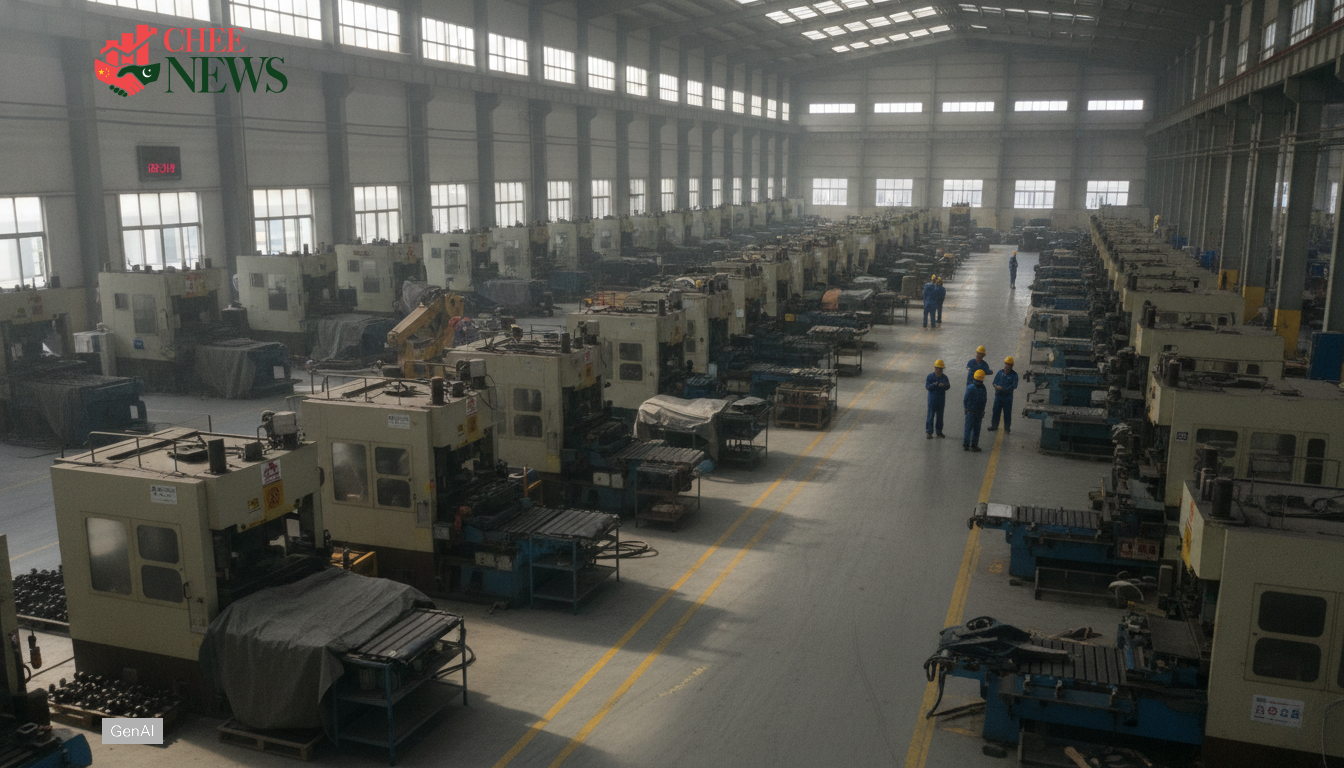
China factory activity slips into contraction in July
China factory activity weakened in July, extending a run of soft readings that has kept markets cautious. In a closely watched signal for industrial momentum, the factory sector slipped back into contraction territory as new orders and output cooled across multiple categories. The National Bureau of Statistics (NBS) reported its official manufacturing purchasing managers’ index at 49.3 in July, down from 49.5 in June, with readings below 50 indicating contraction. NBS details also pointed to weaker new orders and overseas demand, reinforcing the view that producers face tighter pricing power. Traders and corporate planners may read the slide as a warning that near term production schedules could remain cautious.
Orders, prices and jobs: what the PMI signals
The July contraction could be significant based on available reports because manufacturing still anchors hiring, cash flow, and tax receipts in many industrial provinces. With a demand slump visible in the PMI breakdown, factory managers often delay inventory rebuilding, trimming orders for upstream inputs and logistics services. In parallel, policy debate has intensified over how much support is forthcoming, and China financial policies signal restrained economic support has tracked signs that broad based stimulus remains measured. NBS also reported the non-manufacturing PMI at 50.1 in July, easing from 50.5 in June, which suggests services were only marginally expanding. If the manufacturing PMI stays below 50, firms are likely to prioritize cash preservation over capacity expansion into late Q3.
Supply chains and regional spillovers
The dip in factory momentum could influence trade timelines and procurement decisions across Asia and beyond. When China factory activity softens, exporters often compete harder on price, while importers wait longer to place replenishment orders, stretching lead times and complicating freight planning. Market sensitivity to technology supply chains has also risen amid wider strategic frictions, and the South China Morning Post examined how the global AI boom is affecting undersea infrastructure in its analysis of the US China undersea stand off. For electronics, machinery, and intermediate goods, smaller production runs can raise per unit costs and shift sourcing toward flexible suppliers in Southeast Asia. Related supply constraints and export rules are also discussed in US Robot Import Ban Reshapes Chinese Smart Vacuums, which highlights how trade measures can redirect investment and product mixes.
Policy response options as industrial demand cools
Policy makers are likely to keep leaning on targeted tools rather than a single sweeping package, because officials have repeatedly emphasized stability and risk control. The NBS PMI release highlighted pressure on demand and sentiment, and such signals typically shape the tone of coming credit and fiscal measures. Analysts note that weaker Chinese orders can alter inputs for energy and infrastructure procurement in nearby markets, a theme also explored in China economic stimulus stays cautious as trade shifts. For Pakistan-linked projects tied to the China-Pakistan Economic Corridor, procurement timing can shift when supplier utilization drops and pricing becomes more competitive, and Trade curbs reshape CPEC projects and corridor plans outlines how policy and trade frictions can affect corridor planning and timelines. Local governments may accelerate project approvals and consumption support while regulators prioritize relief for smaller firms facing cash flow strains.
Outlook for China factory activity in August and beyond
Forward indicators suggest factories will watch orders rather than sentiment surveys alone, with exporters especially sensitive to currency moves and overseas retail demand. China factory activity could stabilize if domestic consumption improves and inventory drawdowns end, but the NBS July reading of 49.3 implies the near term path may remain uneven. NBS signals of weaker new export orders indicate external demand is not yet a reliable offset for softer local buying, so price competition could persist even if volumes hold. Business leaders will also track input costs and delivery times for signs that competitive pressure is easing, since persistent discounting can squeeze margins. Over the next several weeks, investors will parse each policy signal and data release for evidence that the factory sector is returning to sustained expansion rather than short lived rebounds.

