
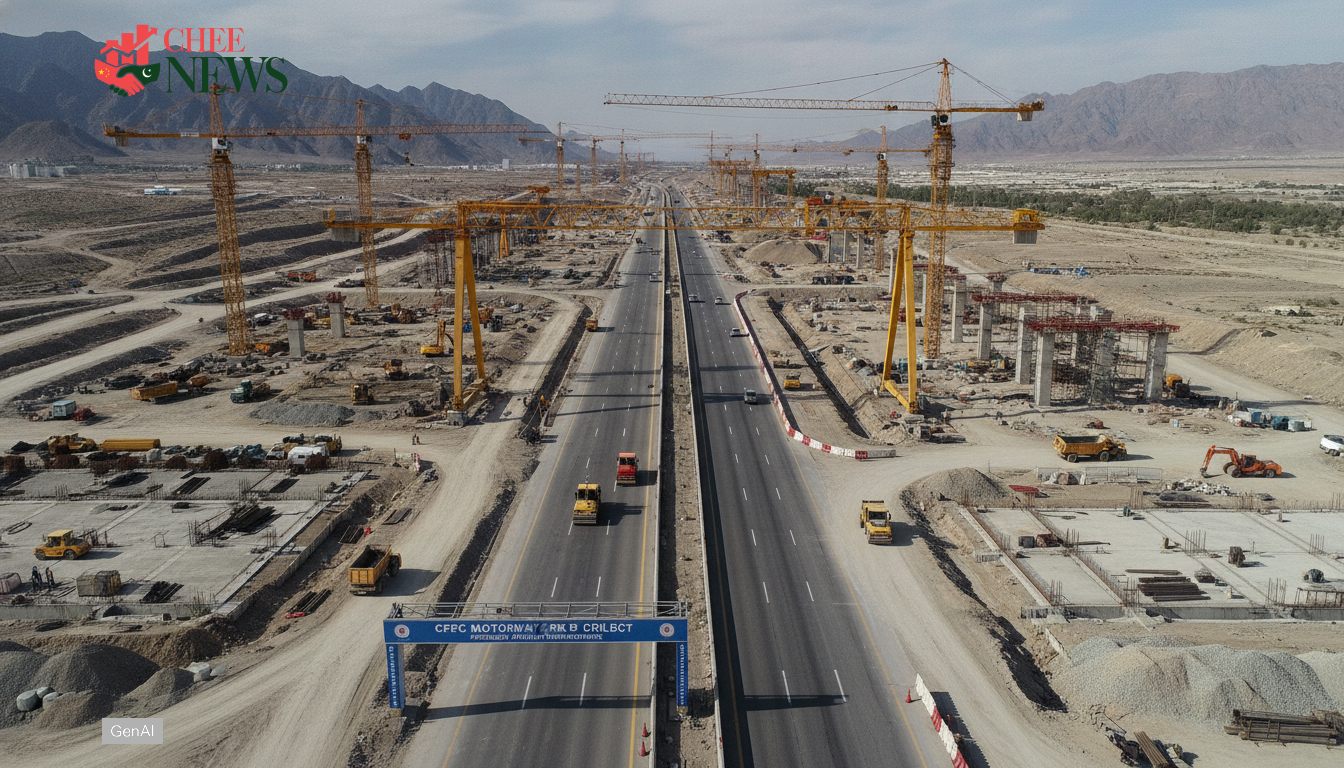
CPEC developments: current coordination efforts
According to available reports, CPEC project updates are shaped by coordination between federal agencies and provincial units, emphasizing sequencing and measurable delivery. Recent briefings by the Ministry of Planning, Development and Special Initiatives describe the current period as implementation-focused, prioritizing right of way clearance and standardized procurement templates to shorten tender cycles. Officials mentioned that CPEC project updates include reviewing contractual timelines to better align mobilization, customs clearance, and on-site utilities connections. The operational priority is reportedly to keep packages moving through approvals while maintaining audit trails for disbursement, ensuring that schedule changes can be justified and monitored.
Progress on key corridor components
Efforts across power, transport, and special economic zones are being managed through milestone tracking and tighter dependencies between packages. This management is crucial where land acquisition and utility relocation overlap with civil works. Recent steps focus on reducing procurement friction through reusable bid documentation and clearer timelines, as described by officials. In this phase, project reporting is tied to whether work fronts remain open and contractors mobilized, rather than just start dates or completion percentages. For risks influencing freight decisions, https://www.chinanewsweek.com/us-sanctions-on-chinese-shipping-tied-to-iran-oil-trade/ provides a related compliance backdrop.
Trade routes and logistics performance insights
For updates on connectivity and throughput, logistics planners are framing corridor delivery around China-Pakistan trade flows relying on predictable transit times, fewer handoffs between modes, and faster processing. The National Highway Authority views corridor linkages as beneficial for domestic producers and cross-border cargo, while the Federal Board of Revenue highlights risk-based clearance approaches. Instead of repeating broad claims, officials compare route reliability, queue time reduction, and interface performance at ports. Policy signals abroad can also influence shipping costs, according to market commentary from Islamabad and Karachi.
Investment, financing, and addressing delivery risks
Financing discussions are influenced by the structure of Chinese investment across sovereign-backed and project-level instruments, as well as Pakistan’s debt management and foreign exchange considerations, referenced in budget documentation. External policy shifts may influence infrastructure bid pricing and risk premia, with US Weighs Major Anti-China Spending Plans often cited for wider market sentiment. The reported focus has shifted towards cash flow predictability through clearer payment schedules and dispute resolution clauses, potentially reducing claims and slowdowns. Delivery risks, as described by implementing agencies, are centralized around land, utilities, contractor capacity, and security coordination managed through established federal and provincial mechanisms.
Future steps beyond 2026 for CPEC
In planning for 2026, CPEC updates focus on measurable regional development outcomes, such as industrial clustering near special economic zones and improved connectivity for secondary cities, as indicated by public sector planning discussions. The Board of Investment has stated that facilitation reforms are essential for attracting manufacturers needing stable inputs and export routes. Future stages of CPEC depend on transforming transport assets into predictable services, involving maintenance funding, axle load enforcement, and transparent tolling frameworks. Success is expected to depend on reduced trade logistics costs and more reliable exports, alongside industrial growth aligned with resource and urban planning capacity.

