
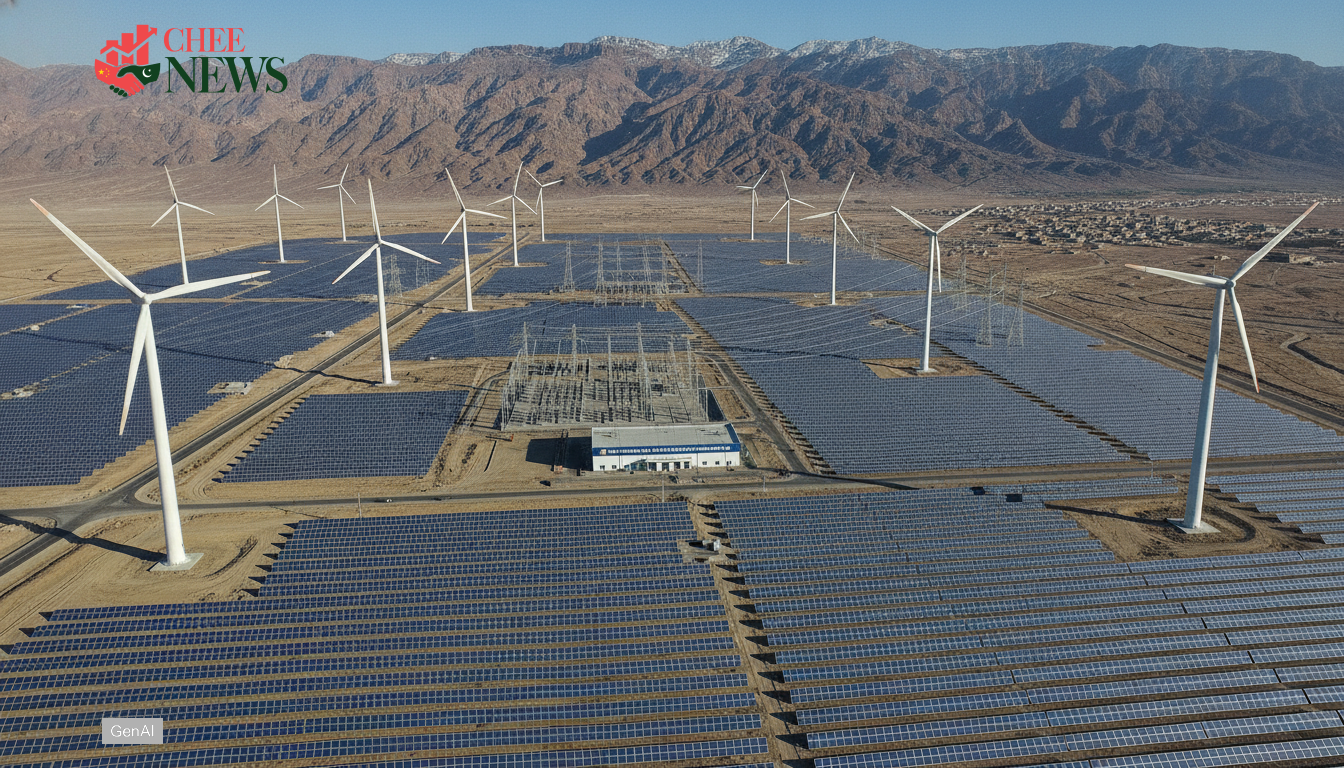
Chinese investment in Pakistan: grid-first energy priorities
Officials and sector stakeholders are increasingly discussing grid reliability, lower technical losses, and better dispatch as Islamabad seeks to make the power sector more bankable. In 2024, according to available reports from Pakistan’s Ministry of Energy, it has been suggested in public briefings and media comments that new approvals should reduce capacity payment pressure and improve how quickly generation can be delivered to end users. The emphasis is therefore described less as announcing new plants and more as completing, connecting, and stabilising existing assets through transmission and distribution upgrades. Chinese government and financing entities have also, in general terms, framed Belt and Road energy cooperation around delivery milestones and operational performance rather than headline announcements. This near-term agenda is often presented as focused on measurable outcomes such as fewer forced outages, stronger frequency control, and more predictable cash flows for lenders and operators, with Chinese investment in Pakistan positioned around these near-term deliverables.
CPEC pipeline: transmission, losses, and project execution
Within the CPEC energy pipeline, planning is frequently described by project participants as concentrating on clearing interconnection bottlenecks, stabilising fuel supply chains, and improving plant availability factors where lenders have exposure. Pakistan’s National Transmission and Despatch Company has, in its public communications and planning discussions, noted that evacuation capacity and reactive power support affect how quickly new megawatts translate into usable electricity. Execution planning can also be influenced by logistics and compliance risks that slow equipment delivery and raise insurance costs, as outlined in SCMP coverage of US sanctions on Chinese and Hong Kong shipping firms over Iranian oil deliveries. For broader context on how compliance can reshape procurement and contracting, see US sanctions on Chinese shipping tied to Iran oil trade, and these constraints can shape sequencing more than headline capacity figures.
Modernising the grid: metering, automation, and dispatch
For Chinese investment in Pakistan’s power sector, grid-side modernisation is increasingly discussed as a prerequisite for getting full value from existing and planned generation. Utilities are prioritising control systems, forecasting, and metering because distribution losses and weak visibility can erase gains from new generation, according to repeated sector commentary in Pakistan. Pakistan’s National Electric Power Regulatory Authority has, in determinations and public statements, highlighted the need for advanced metering infrastructure, feeder monitoring, and stricter performance standards in utility operations. The most practical upgrades are typically described as including grid automation, protective relays, and dispatch tools intended to help integrate variable renewables without destabilising frequency. Related monitoring and delivery challenges are tracked in CPEC project updates: progress, risks, and next steps, and substation modernisation and reactive power management can also reduce curtailment risk and voltage instability, improving utilisation of existing plants.
Economic impact: circular debt pressure and reliability gains
Pakistan’s central challenge is widely described by policymakers and analysts as reducing the fiscal drag of the power sector while maintaining service quality for industry and households. The Ministry of Finance has cited circular debt in budget documents and public remarks as a constraint on macro stability, and lenders typically seek clearer cash-flow mechanics, including payment discipline and enforceable contracts, according to market participants. Better reliability can deliver near-term economic benefits by cutting forced outages, improving industrial planning, and lowering reliance on backup diesel generation in manufacturing clusters, as commonly argued by industry groups. For readers comparing how external pressure can influence financing conditions and risk pricing, US Weighs Major Anti-China Spending Plans offers additional context on the wider policy environment, and efficiency measures can also reduce fuel burn per unit of electricity when thermal plants are running, potentially easing import requirements. These factors can shape the cost of capital as much as engineering choices.
Outlook: bankable contracts, storage pilots, and renewables
Forward planning is increasingly framed around projects that can be financed against measurable performance, including grid reinforcement, storage pilots, and selective repowering where heat rates are high, according to sector commentary. Pakistan’s Alternative and Renewable Energy Policy sets targets for higher shares of clean generation, and officials have urged agencies to accelerate interconnection readiness for wind and solar zones in public statements. In this pipeline, Chinese capital is often expected by market participants to hinge on bankable contracts, currency risk treatment, and clear dispatch rules rather than symbolic capacity targets. Public messaging from Chinese policy banks has also, in broad terms, stressed tighter risk controls and project quality in Belt and Road lending decisions. The practical implication is that developers who can demonstrate credible timelines, compliant procurement, and transparent revenue waterfalls may be positioned to reach financial close earlier and deliver earlier system benefits, including grid reinforcement tied to specific interconnection readiness for wind and solar zones.

