
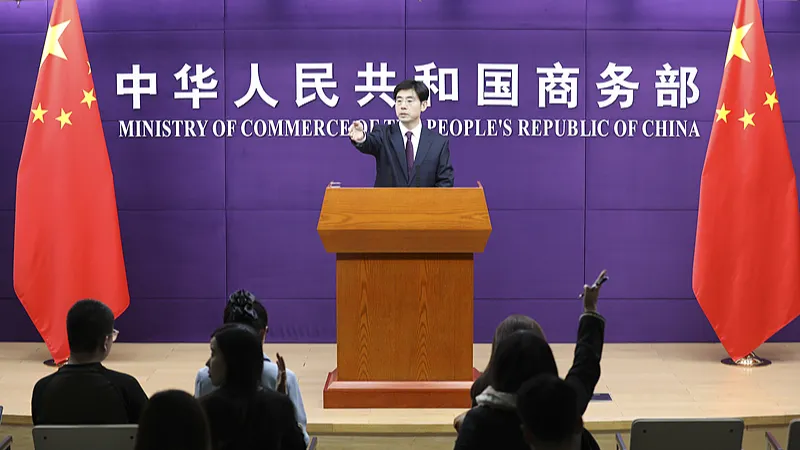
China’s decision to tighten export controls on dual use items bound for Japan marks a significant escalation in the diplomatic and economic friction between the two countries. Announced by the Ministry of Commerce, the new measures came into effect on Tuesday and reflect Beijing’s growing readiness to use trade and regulatory tools in response to political disputes. At the heart of the move lies China’s sensitivity over Taiwan related remarks by Japanese leaders, which Beijing views as interference in its internal affairs.
What the new export controls involve
According to the Ministry of Commerce, China will prohibit the export of all dual use items to Japanese military users or for military related purposes. The restriction also extends to any end users or applications that could enhance Japan’s military capabilities. Dual use items typically include goods, software, or technologies that can be applied for both civilian and military purposes. By broadening the scope of restrictions, Beijing is signaling a zero tolerance approach toward any transfer that could be interpreted as strengthening Japan’s defense capacity.
Why Taiwan is central to the decision
A spokesperson for the ministry stated that the export controls are a direct response to what China described as erroneous remarks by Japanese leadership concerning China’s Taiwan region. For Beijing, Taiwan is a core sovereignty issue and a political red line. Any external commentary that appears to challenge China’s position is treated not as a difference of opinion but as interference. By linking trade restrictions explicitly to Taiwan related statements, China has underscored how closely economic policy is now tied to political signaling.
Strategic messaging through trade policy
The decision reflects a broader pattern in China’s external relations, where economic measures are increasingly used to convey diplomatic messages. Rather than relying solely on statements or protests, Beijing is leveraging regulatory authority to create tangible consequences. Export controls, in particular, carry symbolic and practical weight because they are framed as matters of national security and compliance rather than retaliation. This allows China to justify its actions within an international legal framework while still exerting pressure.
Implications for China Japan relations
Relations between China and Japan have been strained by historical grievances, security concerns, and diverging regional alignments. The new export controls add an economic dimension to these tensions. While the immediate commercial impact may be limited to specific sectors, the political signal is clear. Trust between the two governments is fragile, and economic cooperation can no longer be insulated from strategic disagreements.
Regional and global considerations
The move also has implications beyond bilateral ties. East Asia is increasingly shaped by overlapping trade networks and security concerns. Export controls on dual use items are closely watched by other countries, particularly those involved in technology supply chains. China’s action reinforces the message that issues related to sovereignty and security can override commercial considerations. This may prompt companies and governments to reassess risk exposure in the region.
Japan’s likely response and constraints
Tokyo now faces a delicate balancing act. On one hand, it must respond to domestic political pressures and alliance expectations. On the other, it must manage economic relations with one of its largest trading partners. Japan’s options are constrained by the need to avoid further escalation while maintaining its stated positions. How it navigates this challenge will influence the tone of future China Japan engagement.
A sign of hardened positions
China’s decision to ban certain dual use exports to Japan illustrates how political disputes are increasingly translating into concrete economic measures. The linkage between Taiwan related rhetoric and trade controls suggests that Beijing’s stance is hardening. As strategic competition intensifies in East Asia, such actions may become more frequent, reshaping how diplomacy, trade, and security intersect in the region.

