
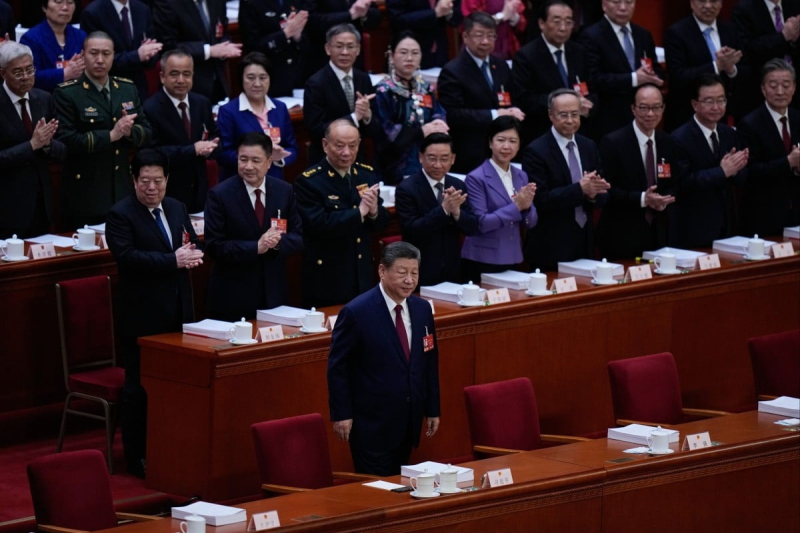
Chinese President Xi Jinping has called on the country’s most economically powerful provinces to take the lead in advancing technological innovation and strengthening resilience against global economic challenges. Speaking during the annual gathering of the National People’s Congress in Beijing, Xi emphasized that regional economic centers must play a crucial role in driving the next phase of China’s technological transformation. The meeting, often referred to as the two sessions, is one of the most important political events in China and sets the direction for national policy priorities including economic development, innovation strategies and industrial planning for the coming years.
During discussions with delegates from Jiangsu province, one of China’s most industrially advanced regions, Xi highlighted the importance of developing what he described as new quality productive forces. These emerging industries are expected to become key drivers of China’s future economic growth. The leadership believes that strengthening technological capabilities will help China maintain competitiveness in the global economy while reducing dependence on foreign technology. Officials also see innovation as a critical factor in protecting the country from external economic pressures and geopolitical uncertainties.
Jiangsu province was specifically encouraged to remain at the forefront of technological development due to its strong manufacturing base and dense network of specialized industrial firms. The region is home to thousands of high technology enterprises and small innovative manufacturers often referred to as specialized champion companies. These firms focus on niche industrial technologies and advanced components that support China’s broader manufacturing ecosystem. By accelerating innovation in these areas the government hopes to strengthen domestic supply chains and ensure more reliable access to critical technologies.
China’s leadership is increasingly focused on improving the ability of scientific research to translate into practical industrial applications. Xi emphasized that local governments and companies should explore new pathways that allow research breakthroughs to move quickly from laboratories into production and commercial use. Encouraging the efficient transformation of scientific achievements into market ready technologies is considered essential for building a stronger innovation driven economy. Policymakers believe that closer coordination between universities research institutes and private industry will play a major role in achieving this goal.
The push for technological advancement also reflects China’s broader strategy of modernizing its industrial structure. In recent years the government has prioritized sectors such as advanced manufacturing artificial intelligence semiconductors clean energy technologies and digital infrastructure. Strengthening these sectors is seen as necessary for sustaining long term economic growth while adapting to rapid technological change worldwide. Provincial governments are expected to play a key role in supporting these initiatives by attracting investment promoting research and nurturing high technology enterprises.
Economic planners view the involvement of major regional economies as essential for implementing national innovation strategies effectively. Provinces with strong industrial foundations and developed infrastructure are better positioned to test new technologies and scale up advanced production systems. As China continues to pursue high quality development the role of these regional powerhouses is expected to expand further. Their success in advancing innovation and strengthening technological independence will likely shape the direction of China’s economic development over the next decade.

