
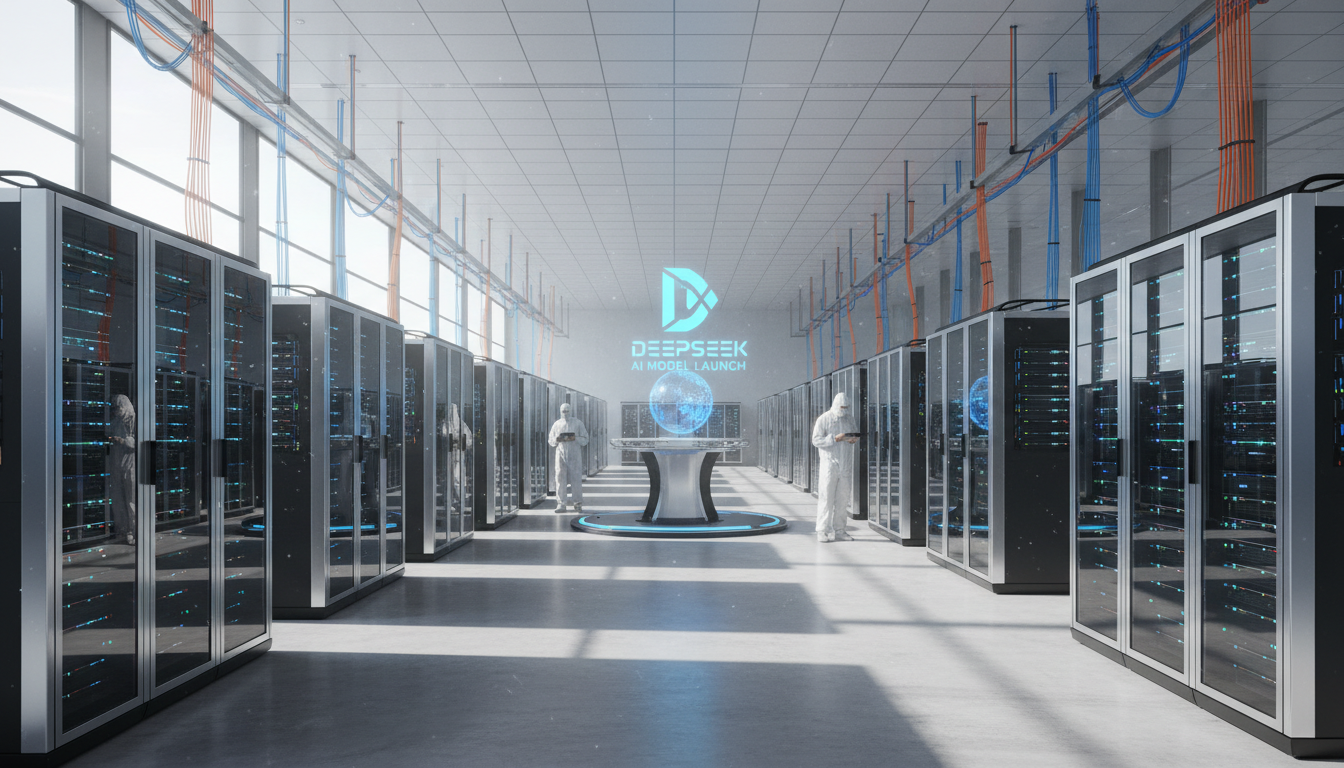
DeepSeek’s AI Model Launch Highlights
DeepSeek has released a long awaited new system that immediately intensified competition in China AI, with local developers and cloud firms watching pricing and access terms. Today the company framed the rollout as a production ready step, while analysts tracked early uptake across developer forums and enterprise buyers. In the first wave of coverage, the DeepSeek AI model was discussed as a signal that Chinese labs want faster deployment cycles, not just research milestones. Live monitoring of app integrations shows teams testing chat, coding, and retrieval workflows under real traffic. An Update from major Chinese tech commentators has focused on how quickly customer support, documentation, and APIs stabilize after launch.
Technological Advancements and Features
Early technical discussion has centered on capabilities that developers can verify quickly, including tool use, code assistance, and improved reasoning performance in common benchmarks. Today, engineers have compared deployment behavior and latency under typical enterprise prompts, emphasizing reliability over headline claims. The DeepSeek AI model drew attention for an aggressive commercialization posture, which has kept buyers focused on cost per request and contract terms. In a Live look at governance pressures on Chinese technology innovation, the South China Morning Post detailed DeepSeek mystery and leadership visibility in the company’s public facing communications. That reporting shaped an Update in how investors interpret accountability, disclosure, and long term product stewardship.
Implications for Sino-Pakistani Relations
For Pakistan, the immediate significance is commercial, not symbolic, because new Chinese models can be integrated into bilingual customer support, compliance screening, and industrial analytics. Today, Pakistani firms that already buy Chinese cloud and telecom services are assessing whether the DeepSeek release expands options for procurement, localization, and data residency. A broader Live shift toward exportable Chinese platforms is visible in adjacent sectors, including energy and mobility, described in Chinese Robotaxi and Energy Breakthroughs Signal Global Tech Shift. Decision makers weighing pilots are also tracking price competition; CheeNews covered DeepSeek pricing and the AI price war in the strategy. The next Update Pakistani CIOs want is clearer service level commitments for regulated workloads.
Industry Response to the New AI Model
China AI buyers have reacted with a mix of urgency and caution, because switching models affects security reviews, staff training, and vendor lock in. Today, major enterprises have asked for transparency on evaluation datasets, red teaming outcomes, and how sensitive logs are handled in managed deployments. Product managers following the DeepSeek release are also looking at competitive pressure from other Chinese labs, and at the policy environment shaping partnerships. A Live regulatory signal is visible in separate deal scrutiny, covered by CheeNews in China blocks Meta Manus deal. That context informs an Update in procurement playbooks, where firms increasingly demand contractual clarity on model updates, indemnities, and incident reporting windows.
Future Prospects and Developments
The next phase will be defined by operational evidence: uptime, model regression testing, and how quickly new versions land without disrupting production systems. Today, platform teams want predictable release channels, clearer compatibility notes, and strong monitoring hooks to track drift and misuse. In parallel, developers are watching whether the DeepSeek AI model can sustain momentum through frequent improvements while keeping costs stable for high volume users. Live rollout discipline will matter as customers adopt the model for customer service, coding assistance, and internal search across large document stores. An Update expected by integrators is expanded tooling support, including better function calling schemas and safer content controls for regulated sectors. Competitive responses across China AI will likely hinge on who can prove reliability at scale in 2026.

