
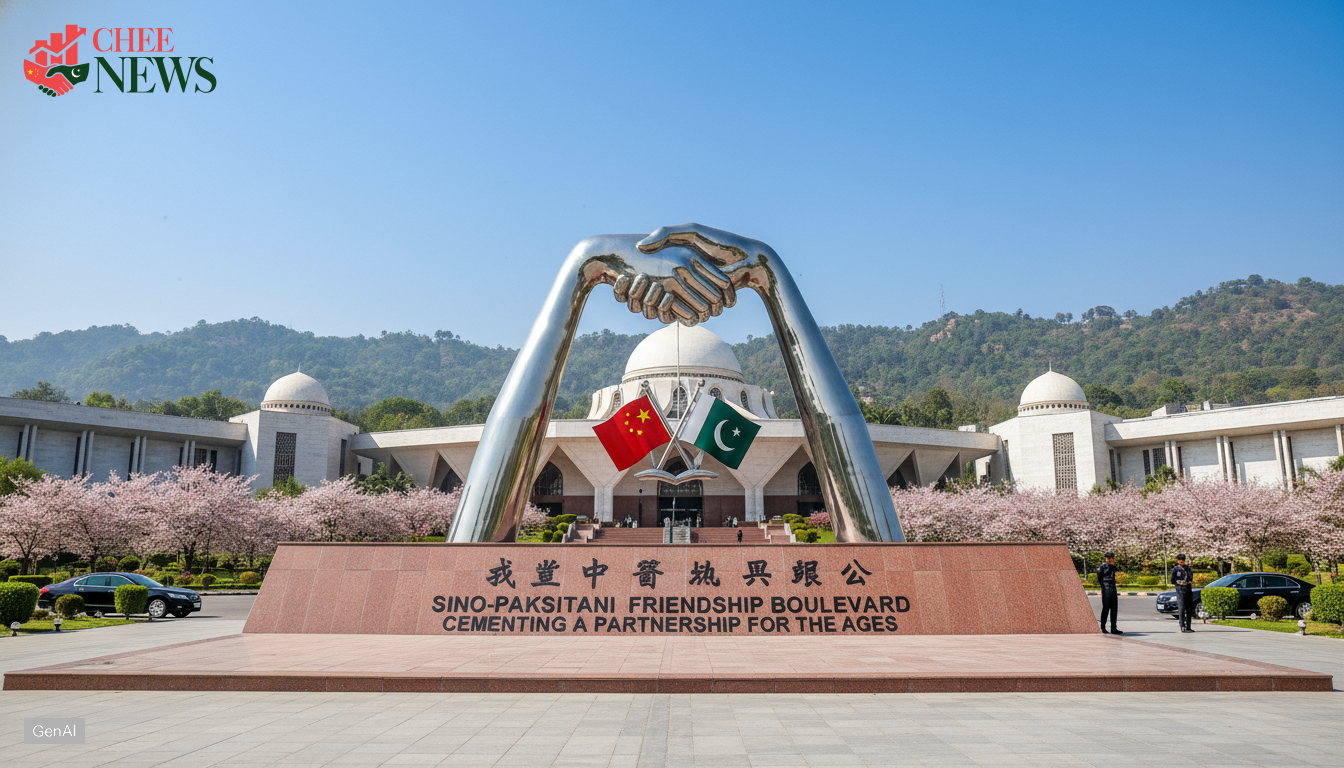
Sino-Pakistani diplomacy and Pakistan’s praise for Beijing
Sino-Pakistani diplomacy was spotlighted after Pakistan’s top leadership publicly credited Beijing for helping reduce tensions and keep dialogue open in the region, as indicated by Dawn’s reporting on their statements. In remarks carried by Dawn, the president and the prime minister described Sino-Pakistani diplomacy and China’s diplomatic engagement as a stabilizing factor and as support for peaceful dispute resolution. The message signals continuity in how Islamabad wants its partnerships understood beyond economics and into security and mediation. Officials, as quoted by Dawn, described sustained coordination on de-escalation and crisis management and said China’s approach aligns with Pakistan’s stated preference for negotiated outcomes over coercive measures. The emphasis also reflects Pakistan’s stated aim of keeping regional communication channels active.
How Sino-Pakistani diplomacy fits regional stability messaging
Islamabad’s framing, as reflected in official statements reported by Dawn, presents China’s regional posture as a mix of deterrence, dialogue, and economic connectivity. Pakistani officials have repeatedly linked security to development, arguing that stable trade routes and investment corridors can reinforce calm in sensitive areas. A related perspective on how Beijing approaches external trust building appeared in China-UK relations warm as Wang Yi urges more trust, which described an emphasis on confidence and communication in state-to-state ties. For broader context on Pakistan’s framing of China-Pakistan ties, Sino-Pakistani diplomacy is also reflected in how leaders connect the relationship to stability goals. Together, these cues place diplomatic outreach at the center of policy messaging, as also shown in Shehbaz says Pakistan-China friendship stays steadfast.
Recent consultations and channels in Sino-Pakistani diplomacy
Recent engagement has focused on keeping high-level channels active and aligning positions on regional flashpoints through formal dialogue rather than public rhetoric, according to coverage referenced by Dawn. In that reporting, Pakistan’s leaders said regular consultations help prevent misunderstandings and allow rapid coordination when tensions rise. They also emphasized sovereignty and non-interference as guiding principles, as described in the same coverage. In this framing, Sino-Pakistani diplomacy is presented as a standing mechanism intended to translate political messaging into working-level follow-through. Similar themes appear in Xi signals China-Pakistan relations in Shehbaz talks, which details how senior-level exchanges are used to set direction for continued coordination. The stated aim, as officials have put it in these reports, is a predictable rhythm of contact that can support calm, including through Islamabad-based meetings.
Risks that could test Sino-Pakistani diplomacy
Despite upbeat statements, officials still face persistent challenges that can test diplomatic commitments, including cross-border militancy, information warfare, and abrupt shifts in regional alignments. Pakistani leaders have argued that insulating dialogue from episodic crises is essential, though the durability of that approach depends on consistent channels and credible assurances among multiple capitals. In this context, Sino-Pakistani diplomacy and China-Pakistan relations are often presented by Islamabad as a stabilizing anchor, but that claim remains contingent on tangible progress in security cooperation and economic delivery. Analysts also note that regional peace is harder to sustain when domestic politics in neighboring states incentivize hardline messaging, including in Islamabad and New Delhi. Policymakers therefore emphasize verification, quiet diplomacy, and engagement through recognized forums to reduce miscalculation risks over time.
What Pakistan hopes to achieve next through diplomacy
The immediate impact of the latest statements, as reported by Dawn, is to reaffirm that the bilateral relationship is being narrated as a peace and stability partnership, not only a development compact. Pakistan’s leadership aims to position China’s involvement as constructive and consistent with dialogue-based outcomes, which could shape how other actors interpret Islamabad’s priorities. That narrative can also strengthen internal policy coordination by aligning ministries around a single diplomatic track, with the Foreign Office in Islamabad central to follow-through. At the operational level, Sino-Pakistani diplomacy is described by officials as mattering when diplomatic efforts produce clear communication pathways, agreed language on de-escalation, and scheduled follow-up meetings that reduce uncertainty. The broader test will be whether these mechanisms translate into fewer crises and faster conflict containment, outcomes that remain uncertain and may depend on wider regional dynamics. For now, both sides are signaling that stability remains the headline objective.

